



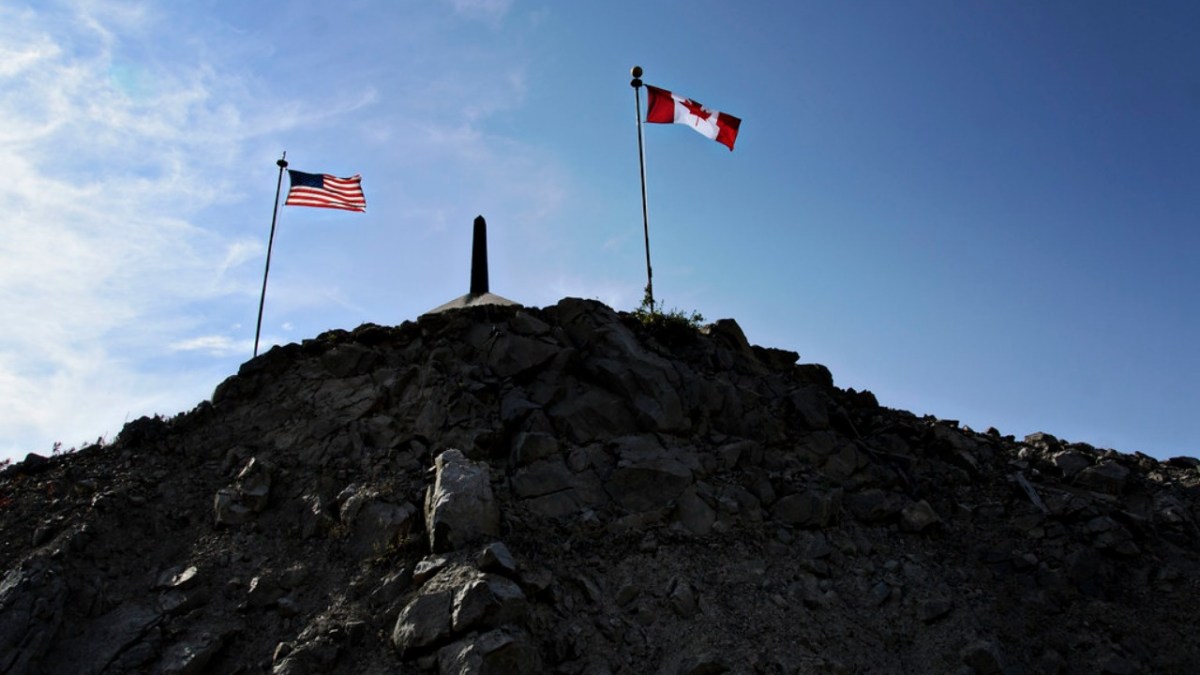

A U.S. ban on nearly $1 billion in Canadian goods took effect early Tuesday. The list covers alcoholic beverages, dairy products, and motorcycles. Ties between the two countries were already strained, and the ban is likely to make them worse.
According to ABC News, two-way trade between the United States and Canada runs about $880 billion a year, so the banned goods make up only a small share. Patrick Childress, a trade attorney at Holland & Knight and a former U.S. trade official, said the import ban “certainly won’t do anything to help the trade tensions between the United States and Canada.”
The dispute started in the summer. President Donald Trump reached back to a Great Depression law and placed 50% tariffs on about $20 billion of Canadian imports. He charged that Canada discriminates against U.S. dairy, auto and alcoholic beverage producers. Canada then set tariffs of 15%, 25% or 50% that matched U.S. imports dollar for dollar.
Alcohol makes up most of the banned goods after provincial shelf bans
Trump ordered the product ban as punishment after Canada answered his tariffs. It went into force at 12:01 a.m. Eastern time Tuesday.
Childress said the hit to the economy is likely to stay small. He pointed out that the same goods were already under Trump’s 50% tariffs. “For a lot of these goods, the 50% was already acting as a de facto ban by making importation from Canada into the United States uneconomical,” he said.
Jacob Jensen, director of trade policy at the American Action Forum, put the banned trade at $967 million using 2025 figures. He said 87% of that total is alcoholic beverages. Those drinks were targeted after some Canadian provinces pulled U.S. alcohol off store shelves.
Dairy items are also banned, including whey. Washington and Ottawa have long fought over Canada’s system of high tariffs once dairy imports pass a quota. Motorcycles are included too. Bombardier Recreational Products in Quebec confirmed that its three-wheel Can-Am Spyder and Canyon motorcycles “will be excluded from importation into the U.S.” BRP said the effect likely will not show up until next year because most of this season’s production and shipments are already done.
Jensen said, “This marks yet another escalation in the trade war that may result in further retaliation on the Canadian side.” He said Canadian exporters and U.S. importers affected by the bans “will be highly motivated” to press officials on both sides for a way out.
Renewal of the US-Mexico-Canada Agreement is now harder. Trump pushed Canada and Mexico into that pact in his first term and once called it “the most modern, up-to-date, and balanced trade agreement in the history of our country.” Most goods moved duty-free under the deal. After he returned to the White House last year, he announced a string of new tariffs that have left North American trade less certain.
Most of Trump’s public pressure has been aimed at Canada. He has said he wants Canadian factories to move south and has repeatedly floated the idea that Canada should become the 51st U.S. state. This escalating trade dispute has already led to specific threats, such as when Trump threatened 50 percent tariffs on Canadian cars, auto parts, and steel.
Mark Carney became Canada’s prime minister last year after campaigning on standing up to Trump. Ottawa matched the U.S. tariffs. China is the only other country that has done the same.
Carney has tried to shrink Canada’s dependence on the U.S. market, which took more than 70% of Canadian exports last year. “There is now a price to be paid for access to the United States market,” he said earlier this month.
He wants to double Canada’s trade with countries other than the United States over the next decade. He has also pursued associate membership in the European Union and said last week that talks with India are making “good progress,” with a target of finishing by the G20 summit in mid-December.
Earlier this year, Carney struck a separate deal with China. It would allow a limited number of Chinese electric vehicles into Canada at a sharply lower tariff if Beijing cut tariffs on Canadian canola. Gabriel Brunet, spokesman for Canada-U.S.
Trade Minister Dominic LeBlanc said, “We take note of the coming into force of the Administration’s previously announced trade measures.” He added, “Our first priority remains on protecting and supporting Canadian workers, farmers, families, and businesses from these unjustified actions. Our core focus is on what we can control: building strength at home, diversifying our partnerships abroad, and building Canada strong for all Canadians.”
Trump told reporters Monday that he expects Canada to give in. “They’re gonna come in and they’re gonna say, ‘Sir, we are sorry,’” he said. “They’ve treated the United States very, very badly. I think a deal will be made but it’s gonna be fair.”
Childress said the deadlock is likely to run for months rather than weeks. He said the bans and the tariffs so far “probably won’t cause enough economic upheaval to force either party back to the negotiating table.”




Published: Sep 29, 2026 08:00 am