



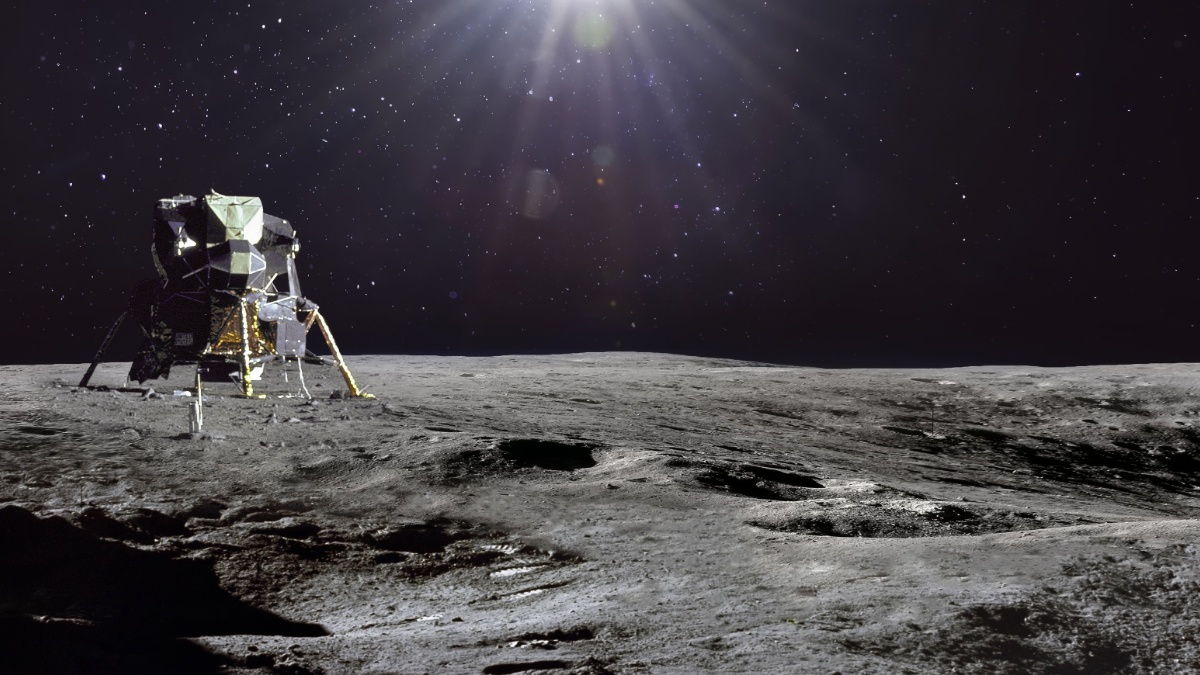

Space archaeologists are buzzing as two separate research teams claim they have finally located the long-lost Soviet Luna 9 lander, the first human-made object to achieve a soft landing on the moon. The story gained traction after being reported by The New York Times, which detailed how the competing claims point to two entirely different locations on the lunar surface.
There is a major catch. The two teams do not agree on where the spacecraft actually came to rest, prompting debate among experts familiar with early spaceflight records and lunar imaging. As space historian Anatoly Zak put it bluntly, only one of the proposed locations can be correct.
The disagreement underscores a long-standing mystery from the early space race. Luna 9 made history in 1966 when it bounced safely onto the lunar surface, unfolded its petal-like covers, and transmitted the first images ever taken from another world. Those photographs were crucial, proving the moon was solid enough to support landers and clearing the way for NASA’s later Apollo missions.
Finding a beach-ball-sized lander is harder than it sounds
Despite decades of improved lunar mapping, locating Luna 9 remains extremely difficult because of its size. The lander’s spherical core, which housed its instruments, measured only about two feet across, making it barely detectable from orbit. Mark Robinson, a geologist at Intuitive Machines and principal investigator for the camera aboard NASA’s Lunar Reconnaissance Orbiter, has explained that while the camera can resolve areas just a few square feet wide, identifying an object that small requires both patience and luck. Recent political news, like coverage of a Senate candidate’s bizarre claim in Nebraska, shows how varied reporting can be.
One team has relied on a largely manual approach. Led by Russian-born science communicator Vitaly Egorov, the group expanded the original estimated landing zone to a 62-mile-wide area due to the imprecision of 1960s tracking data. Egorov even crowdsourced the effort, live-streaming orbital imagery so viewers could search for unusual pixels across the lunar surface.
His most successful method involved comparing the panoramic images sent back by Luna 9 with modern orbital data using LROC QuickMap, a tool similar to Google Street View for the moon. Egorov said that one day the terrain suddenly matched what Luna 9 had photographed, leading him to believe he had found the correct area, though he acknowledged a possible error of several meters. Broader news coverage also includes major shifts in corruption rankings in the United States, where the country hit its worst position on a global index.
To verify the finding, Egorov has turned to India’s space program. The Chandrayaan-2 orbiter, which has been circling the moon since 2019, carries a higher-resolution camera, and Indian scientists have agreed to image his proposed site later this year.
A competing claim comes from a team led by Lewis Pinault at University College London’s Centre for Planetary Sciences. Instead of visual matching, the researchers used a machine-learning system known as You-Only-Look-Once–Extraterrestrial Artefact, or YOLO-ETA. Trained on known lunar artifacts such as Apollo landing sites, the algorithm identified several candidates, including one featuring a bright pixel that could be the lander and two darker shapes that may be remnants of its protective shell.
Not everyone is convinced by either result. Philip Stooke, a professor who has identified numerous lunar artifacts, has advised both teams and noted that neither site shows all expected components of the landing system. He added that a confirmed site would typically include multiple hardware elements and a disturbed patch of lunar soil from descent thrusters.
If Chandrayaan-2 imagery fails to resolve the dispute, the answer may simply require better cameras in lunar orbit. Anatoly Zak has suggested that with continued improvements in imaging technology, the true resting place of Luna 9 will eventually be identified, possibly within the current generation.








Published: Feb 10, 2026 07:15 pm