



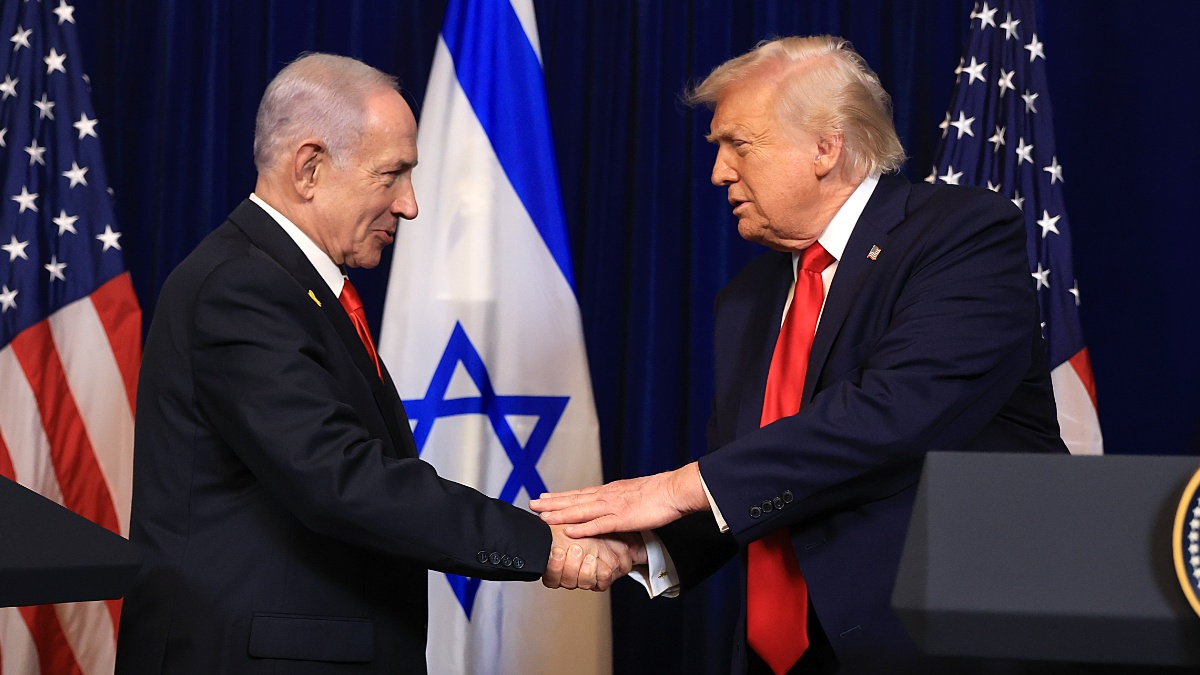

President Trump has announced the formation of a new Gaza “board of peace,” a seven-member executive body that the White House says will guide reconstruction and governance efforts in the territory. Trump will serve as chairman, with the board positioned as a central mechanism for overseeing the next phase of the US-backed postwar plan for Gaza.
The announcement and initial roster were first reported by The White House and later shared by The Guardian. The founding members include Secretary of State Marco Rubio, former British Prime Minister Tony Blair, Trump’s son-in-law and senior adviser Jared Kushner, special envoy and property developer Steve Witkoff, and World Bank president Ajay Banga.
Trump praised the group in sweeping terms, calling it the “Greatest and Most Prestigious Board ever assembled at any time, any place.” While the administration has indicated that more appointments are expected, the initial lineup has already prompted scrutiny over both its composition and its broader implications.
A powerful lineup that immediately sparked controversy
According to the White House, each board member will oversee a defined area tied to Gaza’s long-term recovery, including governance development, regional relations, investment strategy, and capital mobilization. The administration said the United States will support the framework while coordinating closely with Israel and key Arab partners.
The most controversial appointment is Tony Blair, whose role in the 2003 US-led invasion of Iraq continues to cast a long shadow across the Middle East. Blair previously served as a Quartet representative focused on Israeli-Palestinian peace efforts but stepped down in 2015 following criticism over his perceived closeness to Israeli leadership.
I do not see how this structure serves the Palestinian people, especially with figures like Blair playing a central role after decades of foreign intervention that have devastated the region. Appointing architects or defenders of past failures, while largely excluding the local Palestinian authority and values, raises red flags about whether this effort reflects genuine reconstruction or another top-down experiment driven by outsiders with little accountability to those who live there.
Trump himself acknowledged the sensitivity surrounding Blair’s inclusion last year, saying he wanted to ensure Blair would be “an acceptable choice to everybody.” That reassurance has done little to quiet concerns about how the board was assembled and what it represents.
Recent coverage of how the Trump administration’s Gaza strategy echoes past leadership criticisms highlights similar unease about the same officials resurfacing. Furthermore, the discussion of Trump’s broader peace plan push shows the administration’s continued emphasis on demilitarization as a condition for progress
The board’s creation falls under “phase two” of a broader US-brokered plan launched on October 10. Phase one resulted in a ceasefire and the release of all remaining hostages held by Hamas, but lawmakers have warned that implementation remains uneven, citing humanitarian aid gaps, continued Israeli military activity, and unresolved security concerns.
Separately, a 15-member Palestinian technocratic committee has been formed to manage day-to-day governance in postwar Gaza. The committee will be led by Ali Sha’ath, a Gaza native and former Palestinian Authority deputy minister, with the White House stating that the body is intended to handle civil administration as the broader framework moves forward.






Published: Jan 16, 2026 09:00 pm