



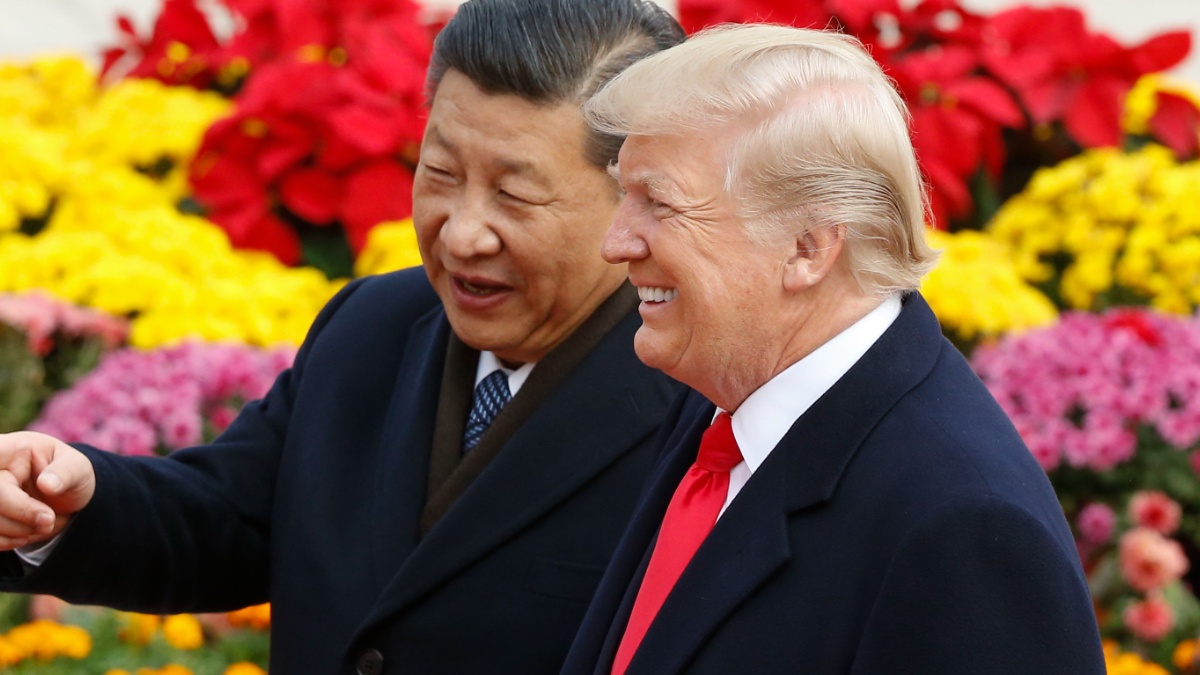

President Trump just dropped a truly massive foreign policy bombshell, stating that whether China moves militarily against Taiwan is entirely up to Chinese President Xi Jinping to decide, as per The Hill. This is a jaw-dropping departure from decades of established American policy, which has always prioritized maintaining the status quo and supporting Taipei’s defense.
The president stated that Xi views Taiwan “to be a part of China and that’s up to him what he’s going to be doing.” That phrasing alone is shocking because it implies the US is taking a neutral stance on what its own intelligence agencies view as one of the world’s biggest potential flashpoints. While President Trump gave his counterpart the ultimate authority, he did express personal reservations. He noted that he has told Xi that he would be “very unhappy if he did that and I don’t think he’ll do that. I hope he doesn’t.”
This conversation is happening against a backdrop of serious escalation. Over recent weeks, Beijing has been ramping up aggressive military actions dangerously close to the island. Chinese officials confirmed they conducted live drills that included a massive show of force. We’re talking about 130 aircraft, including fighters and bombers, 14 military ships, and eight other official vessels all operating in the area.
President Trump tried to draw a distinction between the China/Taiwan situation and the recent US operation to capture Venezuelan regime leader Nicolás Maduro
It’s no surprise that lawmakers in Washington are extremely concerned about these drills. The House Select Committee on the Chinese Communist Party immediately condemned the action, reiterating Washington’s firm commitment to its alliance with Taipei.
Committee Chair John Moolenaar (R-Mich.) and then-ranking member Raja Krishnamoorthi (D-Ill.) released a joint statement. They wrote that the drills are “intended to intimidate Taiwan and other democracies in the region and to undermine peace and stability across the Indo-Pacific.” They also argued that “By rehearsing coercive military scenarios and projecting force beyond its borders, the Chinese Communist Party is seeking to reshape the regional order through aggression and intimidation.”
The lawmakers made it clear that the traditional US position remains intact, stating, “The United States stands with Taiwan and fellow democracies and will continue to work with partners to preserve Taiwan’s security and uphold a free, open, and stable Indo-Pacific.” This sharp contrast between the president’s personal remarks and the formal stance of Congress highlights just how complex the situation has become.
He noted that Maduro’s capture followed signs of a “real threat” to the United States. Ultimately, the president seemed confident that Xi wouldn’t take action while he is in office. “He may do it after we have a different president, but I don’t think he’s going to do it with me as president,” Trump said.



Published: Jan 9, 2026 12:00 pm