



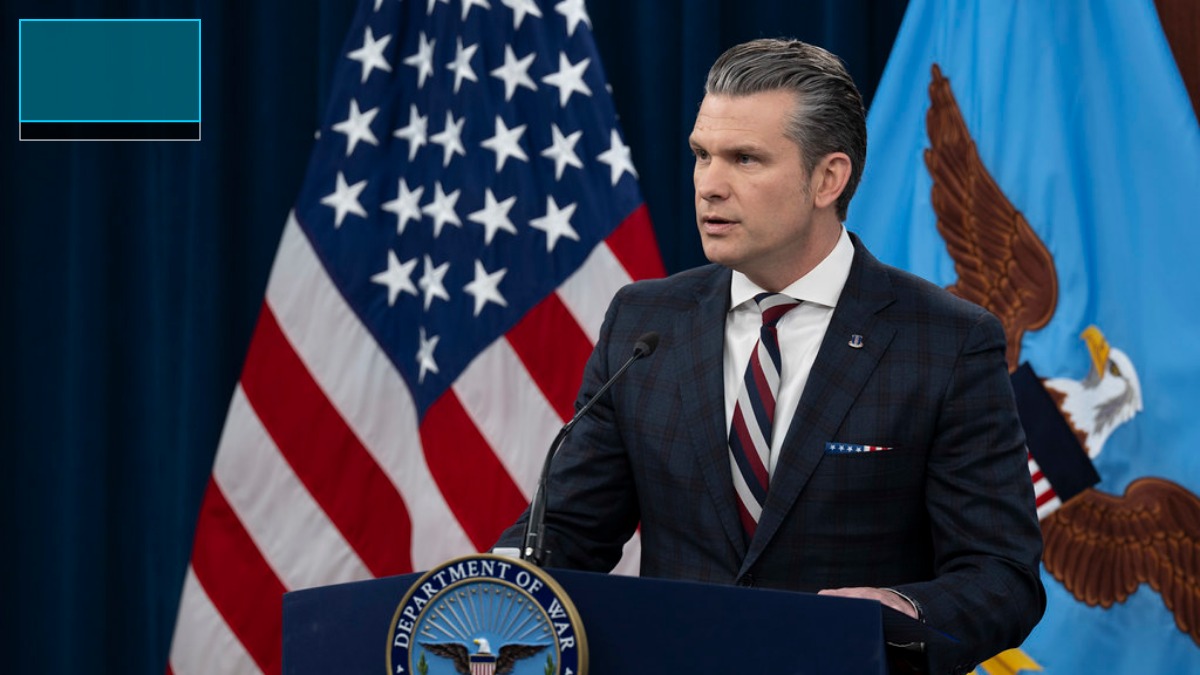

The annual flu vaccination is no longer a requirement for members of the United States armed services, marking the end of a policy that has been in place for more than 80 years. US defense secretary Pete Hegseth announced this major shift, signaling a new direction for military health policy that prioritizes personal choice over institutional mandates, The Guardian reported. This change is effective immediately and covers active duty personnel, those in the reserve component, and civilian personnel working within the Department of War.
In a video statement shared on social media, Hegseth described the previous mandate as being “overly broad” and “not rational” in its application. He further characterized the decision to drop the requirement as “seizing this moment to discard any absurd overreaching mandates that only weaken our war fighting capabilities”. This move fundamentally alters how the military manages routine health protocols, moving away from a long-standing tradition of mandatory influenza prevention.
The history of the flu vaccine in the military dates back to the early days of the Second World War. At that time, there was a deep-seated fear of a repeat of the 1918 influenza outbreak, which had devastating effects on combat capabilities and general military readiness. To combat this, the US Army took the lead by developing the first flu vaccine. The military actually served as the primary, large-scale test group for the program, with researchers at the University of Michigan spearheading the efforts.
Hegseth emphasized that while the mandate is gone, the option to receive the vaccine remains available for those who want it
By 1945, the vaccine received its first widespread license for use within the military, and it was eventually cleared for the civilian population as well. For over eight decades, receiving this annual shot has been a standard part of service life, though exceptions were occasionally granted for specific reasons like pregnancy, severe allergies, or sincere religious beliefs.
In his statement, Hegseth said, “If you, an American Warrior entrusted to defend this nation, believe that the flu vaccine is in your best interest, then you are free to take it”. He added, “You should. But we will not force you, because your body, your faith and your convictions are not negotiable”. This phrasing highlights a shift toward prioritizing individual autonomy within the ranks.
The formal details of this change were outlined in a memorandum released from the office of the Secretary of War. The document, addressed to senior Pentagon leadership and commanders of the combatant commands, confirms that the influenza vaccine is now voluntary for all active and reserve personnel, as well as Department of War civilian staff.
The memorandum also notes that the Under Secretary of War for Personnel and Readiness will handle the consolidation of any requested exceptions to this new policy. Component heads have been instructed to submit their exception requests through the Assistant Secretary of War for Health Affairs within 15 days of the publication of the memorandum. This process will eventually lead to an update of the existing Department of Defense Instruction 6205.02, which governs the immunization program.
This development follows a period of tension regarding military medical mandates. During the coronavirus pandemic, the military saw a significant impact from vaccine denialism. Records show that between 2021 and 2022, approximately 8,000 service members were separated from the military specifically for refusing the Covid-19 vaccine. In addition to those who were discharged, many others chose to leave the service voluntarily once their enlistment periods concluded.
The Pentagon eventually rescinded the Covid-19 vaccine mandate in September. Furthermore, a previous executive order allows for the return of service members who were separated under that specific mandate. Under that order, individuals who provide a written and sworn attestation that they voluntarily left or allowed their service to lapse rather than comply with the Covid-19 mandate can return to their positions without negative impacts on their rank, pay, or overall service status.
It is interesting to see such a long-standing tradition come to an end. For decades, the flu shot was just a routine part of the job for service members, but this update clearly signals that the current leadership is taking a different path, which has also been evident in RFK Jr’s anti-vax rhetoric or how measles cases surged recently. By framing the mandate as an overreach that impacts the readiness of the force, Hegseth is making it clear that he intends to reshape personnel policies to align with these new priorities.








Published: Apr 22, 2026 05:00 pm