



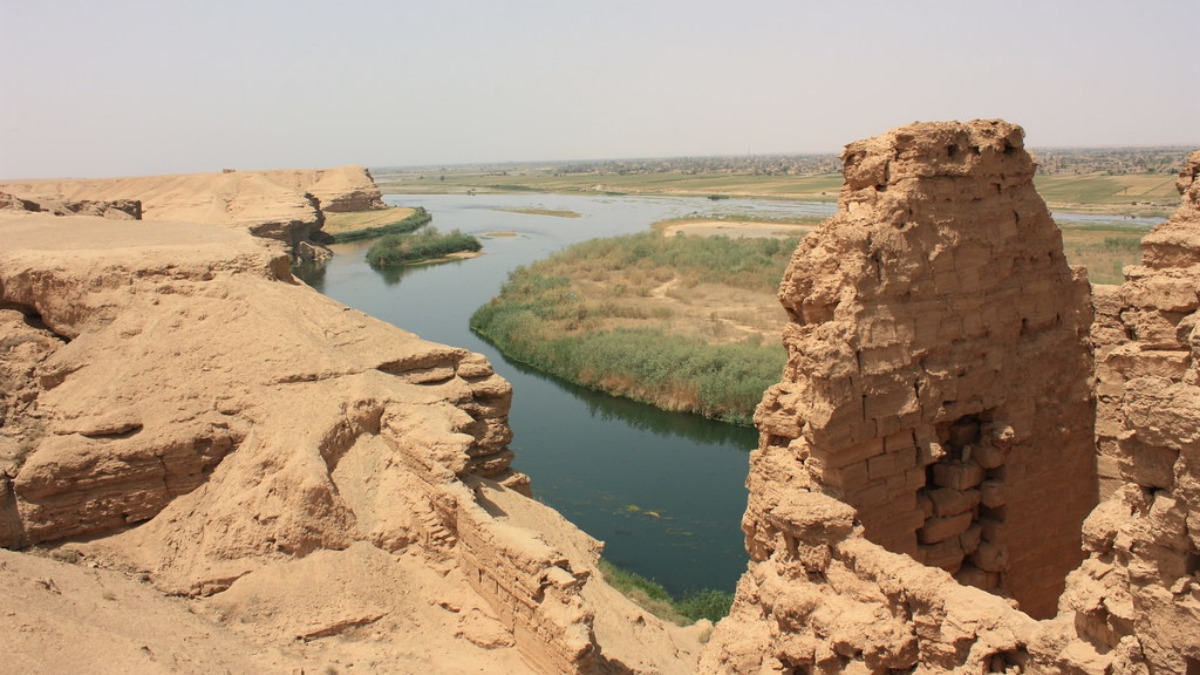

Climate scientists are warning that the Euphrates river could run completely dry by 2040. The potential disappearance of this ancient waterway carries deep historical and cultural weight, including a specific role in the Book of Revelation as a precursor to Armageddon. The Euphrates is the longest river in Western Asia, stretching nearly 1,800 miles from eastern Turkey through Syria and Iraq before joining the Tigris and emptying into the Persian Gulf.
The data tracking its decline is stark. Since 2003, researchers have recorded a loss of 34 cubic miles of freshwater from the region. Looking at the wider Tigris-Euphrates basin, the total loss reaches 90 cubic kilometers. NASA satellites from the Gravity Recovery and Climate Experiment, or GRACE, have been central to documenting this, with data showing that between 2003 and 2009 alone, 117 million acre-feet of fresh water disappeared from the basin. Around 60 percent of that loss was attributed to groundwater being pumped from underground reservoirs faster than natural processes can replenish it.
Jay Famiglietti, a hydrologist and professor at the University of California, noted that these basins currently rank second fastest in the world for groundwater storage loss, trailing only India. As highlighted by LADbible, he added that the volume of water lost is enough to meet the annual needs of tens of millions to over a hundred million people, depending on regional usage standards. The decline accelerated sharply after the 2007 drought, a period many areas in the region have never fully recovered from.
The drying of the Euphrates carries weight far beyond hydrology
The human cost is already unfolding across Iraq. Naseer Baqar, a climate activist and field coordinator at the Tigris River Protectors Association in Iraq, has flagged the public health consequences of the shortages, noting the spread of cholera, typhoid fever, measles, chicken pox, and diarrhea. He also noted that the government has stopped providing vaccines, compounding the risk further. The causes behind the decline include climate change, rising temperatures, population pressure, and a failure to coordinate water management across countries that share the basin.
The Euphrates has a deep presence in biblical text. The Book of Genesis identifies it as one of the four rivers flowing from the Garden of Eden, alongside the Tigris, Pishon, and Gihon. According to NASA’s Earth Observatory, the GRACE satellite data made this one of the most comprehensively documented freshwater losses on record. Beyond Genesis, the river also appears in Revelation, where its drying is described as a sign preceding Armageddon: “The sixth angel poured out his bowl on the great river Euphrates and its water was dried up to prepare the way for the kings from the East.” Amid recent questions about end-times prophecy gaining traction online, the convergence of scientific projections and ancient text has drawn renewed attention.
Famiglietti’s research makes clear that reversing the trend will require more than awareness. Demand for fresh water in the region continues to rise, while the countries that share the basin continue to operate under differing interpretations of international water law. The GRACE findings were among several NASA-related stories drawing attention in recent weeks, including a NASA scientist’s near-death account that circulated widely. Without binding international agreements and sustained infrastructure investment, researchers say the river’s decline is likely to continue toward the 2040 threshold.








Published: May 12, 2026 08:45 pm