



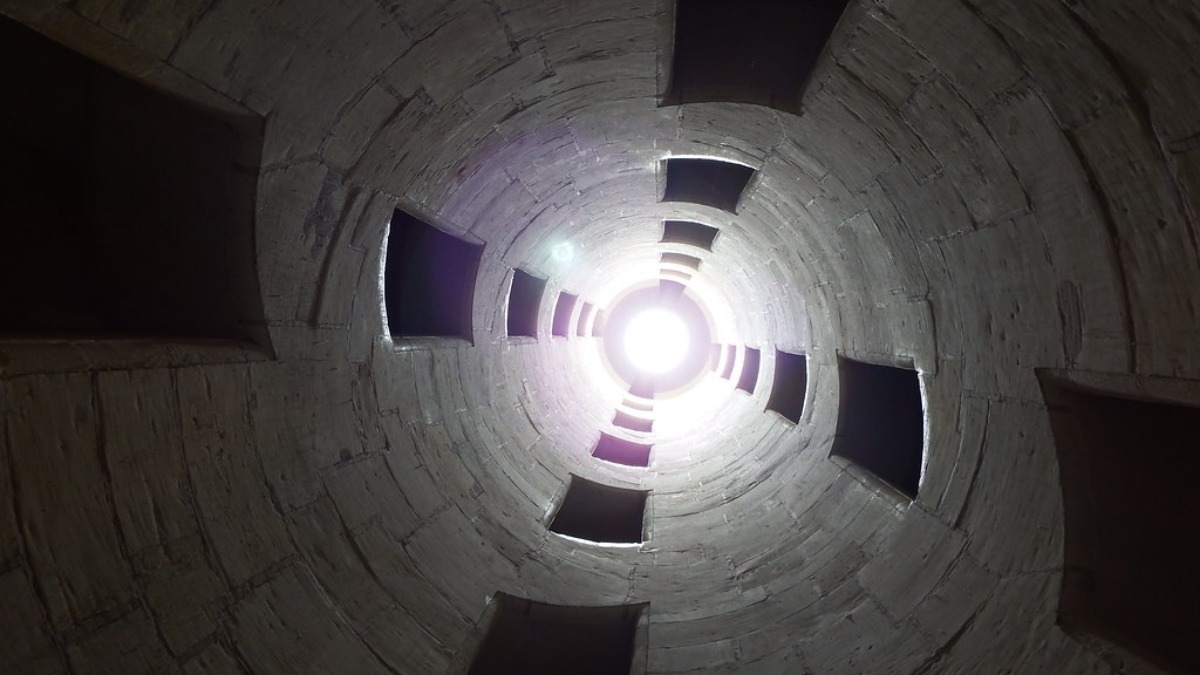

Ingrid Honkala, a 55-year-old oceanographer who has collaborated with NASA, says she hasn’t just had one near-death experience, but three distinct encounters over the course of 50 years. As detailed by the Daily Mail, what makes her account striking is not only how many times it happened, but how consistent her descriptions are across each event. It wasn’t a traditional afterlife scenario but a profound, calm state of existence.
Honkala’s experiences occurred at the ages of two, 25, and 52. She describes entering a state of complete calm where fear and the passage of time simply vanished. She says she felt a separation from her physical self, describing the sensation as becoming pure awareness, not just a person, but a field of light and consciousness.
Her first experience happened when she was just two years old in Bogotá, Colombia. After falling into a tank of icy water, she says the initial panic was quickly replaced by a sense of peace, and she recalls seeing her own body floating in the water while hovering elsewhere. She claims she could see her mother several blocks away and communicate with her without words. Her mother eventually found her unconscious in the water, which Honkala says aligned with what she witnessed while separated from her body.
Science hasn’t fully closed the case on what happens when we die
She later faced death again during a motorcycle accident at 25 and during a surgical procedure at 52 when her blood pressure dropped. Despite the different environments, the outcome was identical. She felt immersed in a vast, interconnected intelligence filled with clarity, love, and peace. For Honkala, these weren’t hallucinations, she insists they were more real than anything she has felt in her daily life.
The debate this sparks is well-established. Neuroscientists argue that near-death experiences, or NDEs, are purely biological, pointing to research such as a 2024 University of Michigan study that showed a surge of brain activity in dying patients. This activity, often in the gamma frequency range, is linked to consciousness, and researchers believe a massive release of neurotransmitters like serotonin and dopamine could explain the vivid visions people report. It’s a compelling theory for those who view the brain as a machine capable of triggering dream-like states under extreme stress, not unlike the questions raised when someone is left unmonitored during a medical procedure.
However, many experts aren’t fully convinced by the biological explanation alone. Professor Emerita Janice Holden, President of the International Association of Near-Death Studies, argues that brief brain emissions can’t account for the complex cognition reported in these experiences. She points to verified perceptions, where people accurately describe events occurring in other rooms or distant locations, as evidence that something more is at work.
The psychological impact of NDEs is also significant. Studies show that people who have had one often come back fundamentally changed, losing their fear of death, becoming less materialistic, and showing a deeper concern for others. Amid broader research into how the body responds to life-threatening situations, including cases like a near-drowning during athletic competition, some researchers are even using virtual reality to simulate NDE conditions and study whether they can produce similar shifts in perspective.
Honkala believes that science and spirituality don’t have to be at odds. She argues they might be different ways of exploring the same questions, a view she expands on in her upcoming book, Dying to See the Light: A Scientist’s Guide to Reawakening. She now views death not as an end, but as a transition in the continuum of consciousness.
NDEs have been documented for centuries, from 7th-century BC China to 19th-century Ghana, and as detailed by Science Focus, they remain a complex puzzle that continues to baffle researchers. For now, people like Honkala are helping push the boundaries of what we understand about consciousness.







Published: May 5, 2026 07:30 pm