



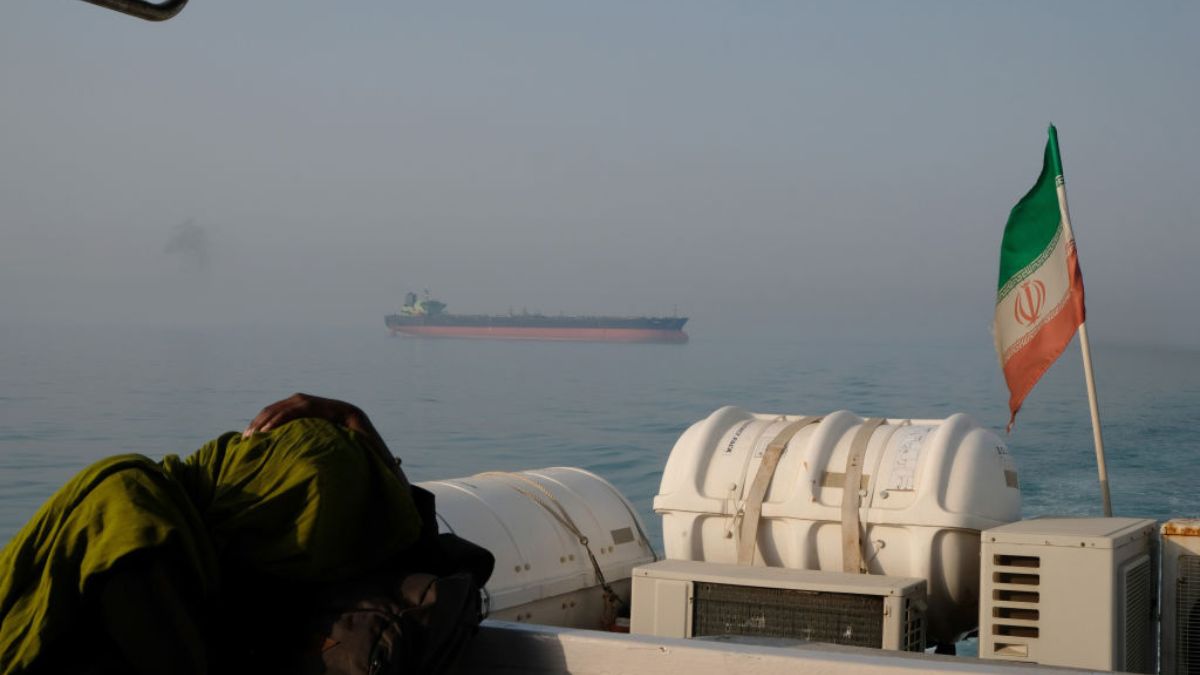

Iran has partially closed the Strait of Hormuz, one of the world’s most important oil chokepoints. The closure is temporary and is tied to military drills being carried out by Iran’s Revolutionary Guard in the waterway, which they are calling the “Smart Control of the Strait of Hormuz” exercise. State media cited “security precautions” as the reason for the closure, with the drill aimed at boosting Iran’s operational readiness and deterrence capabilities.
According to CNBC, the Strait of Hormuz sits between Oman and Iran and is a critical route connecting crude oil producers in the Middle East with markets around the world. In 2025, roughly 13 million barrels of crude oil passed through the Strait every single day, accounting for about 31% of global seaborne crude flows.
This is also the first time Iran has partially shut down parts of the Strait since President Trump threatened Tehran with military action in January. Both sides have increased their military presence in the region recently, raising the stakes around the ongoing diplomatic talks.
Iran’s military move adds pressure to already fragile nuclear negotiations with the US
Despite the closure, oil prices actually moved lower after the talks concluded, erasing some earlier gains. International benchmark Brent crude futures fell 1.8% to $67.48 a barrel, while U.S. West Texas Intermediate futures stood 0.4% lower at $62.65. As tensions in the region continue to shape political decisions in Washington, some lawmakers have been pushing to limit presidential powers on other fronts as well.
On the impact to shipping, Jakob Larsen, chief safety and security officer at Bimco, which represents global shipowners, said the temporary closure would likely cause “minor nuisance and delays” for inbound shipping headed for the Persian Gulf, but he did not expect any major disruptions.
Larsen explained that the exercise creates a live firing area that overlaps with the inbound part of the Strait’s Traffic Separation Scheme, essentially asking shipping to stay clear for a few hours. He expects commercial shipping to comply with Iran’s request to avoid the exercise area, given the current level of tension. Security concerns have been front and center across the US recently, including a security incident near the US Capitol that drew significant attention.
On the diplomatic side, Iranian Foreign Minister Abbas Araghchi told reporters that Iran and the U.S. reached an understanding on “guiding principles” during their discussions. However, he made it clear that this does not mean a formal agreement is close, and that more work still needs to be done. The situation reflects a careful balance between military signaling and diplomatic engagement, with the outcome of further talks still uncertain.








Published: Feb 18, 2026 12:45 pm