



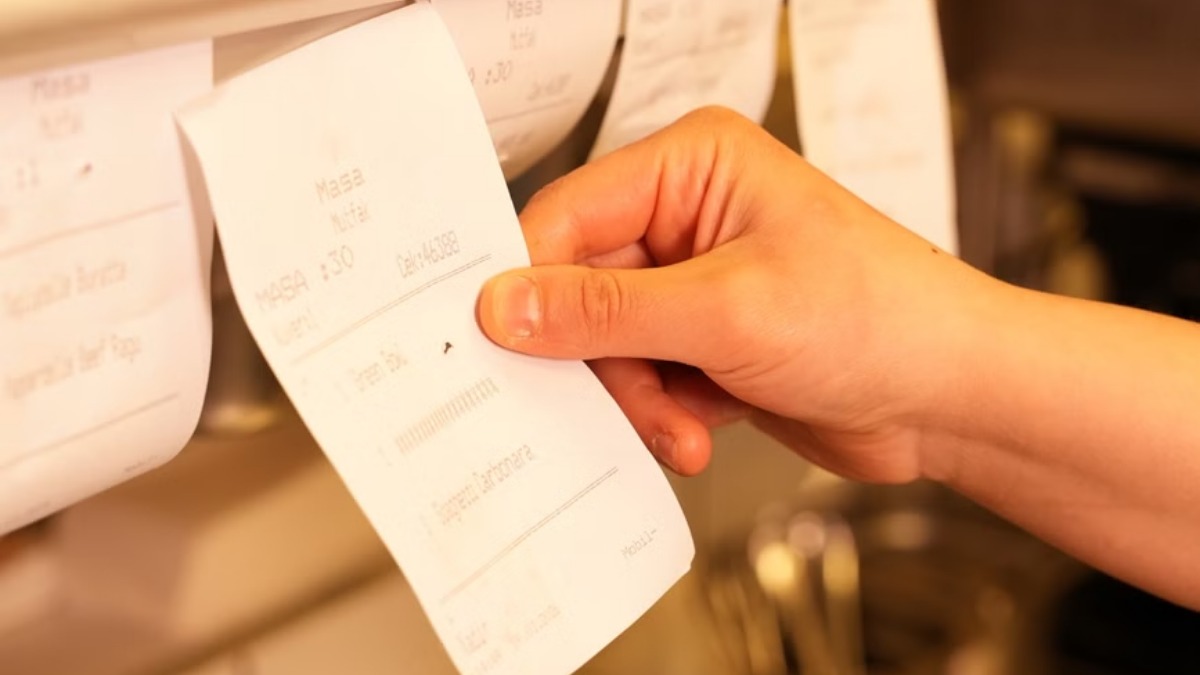

A viral video posted to X showed a customer’s receipt featuring a series of itemized labor charges, though internet sleuths quickly suggested the entire thing may have been fabricated. As detailed by Daily Dot, the receipt showed the diner had ordered salmon, mashed potatoes, asparagus and a drink, with the food items appearing standard. The charges at the bottom of the bill did not match, allegedly adding a $3 chefs cooking fee, a $3 host seating fee and a $3 bartender fee.
The post caused an uproar online, with the extra charges adding up to nearly $10 before any tip for the server. In the video, the man said he would not be leaving a tip because he had already paid the staff through those fees. He said he was “not gonna be able to leave a tip for the server” since the money had already gone toward paying employees.
The original X post asked why customers were being charged itemized labor costs on top of expected tips. While it captured a real frustration over the rising cost of dining out, many commenters were not convinced the receipt was genuine, with several calling the post fake outright.
The address on the receipt belonged to a tiny home, not a restaurant
The skepticism proved well founded. After some digging, people discovered that the address printed on the receipt actually belonged to a tiny home rather than a restaurant, suggesting the post was likely ragebait designed to capitalize on genuine frustration with the restaurant industry. Even with the receipt itself in question, the underlying irritation is real, as a growing number of restaurants have added service fees to cover costs like healthcare or wages, often leaving diners feeling nickel and dimed.
In cities such as Chicago and Los Angeles, diners have started compiling spreadsheets on Reddit to track which restaurants charge these surcharges and what they claim the fees cover, a pattern that echoes how Chicago and LA diners have organized around the issue. The data is crowdsourced and not always consistent, but some diners reported being told by staff that the fees do not go to employees at all. One entry in a spreadsheet claimed a bartender confirmed that a charge “does not go to staff,” describing it as an additional fee the restaurant collects.
The lack of transparency remains the central issue, since it is often unclear whether a surcharge covers credit card processing, employee benefits or something else entirely. Some diners have speculated that surcharges are taxed differently than menu items, which could let restaurants raise prices without it counting as income for tax purposes. Frustration with hidden fees has also surfaced in other viral posts, including one where a diner spotted an unusual kitchen appreciation fee added to a Hawaii restaurant bill.
Many diners say they would prefer restaurants bake these costs directly into menu prices rather than itemizing them at the end of a meal. The restaurant industry itself remains unsettled on the issue, as even prominent figures like Danny Meyer experimented with a no-tipping policy before walking it back in 2020.
Diners who want to avoid surprise charges can call ahead to check a restaurant’s fee policy before arriving. Those already at the table can ask management to remove a disputed fee, though servers are typically not the ones responsible for setting those policies.





Published: Jun 21, 2026 10:30 am