



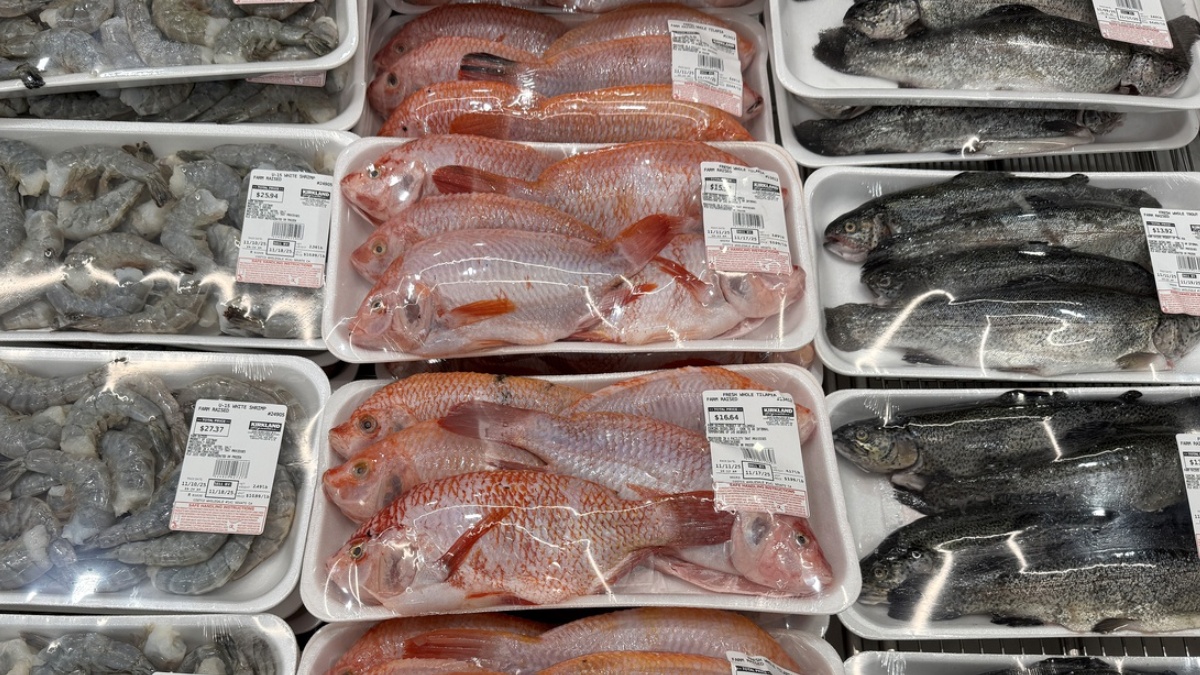

A former charter boat worker has gone viral after walking through the frozen aisle at Aldi and dropping some serious advice about which seafood you should absolutely skip. This worker, who spent 15 years on charter boats, specifically warned shoppers to skip tilapia entirely and avoid anything labeled farm-raised.
The worker, @spikekiller86, posted a video on TikTok that now has more than 5.6 million views, detailing his controversial rules for stocking your freezer. He didn’t mince words when he told viewers, “Do not ever buy tilapia.” He insisted that it’s a “s***-eating fish” and claimed, “It is not good for you.”
Moving past that initial warning, he laid out his primary method for reading labels. When you grab a bag of fish, he said you need to check the country of origin. If the package says “product of China,” he claims you should “throw it back on the shelf.” It’s important to note, though, that seafood imported from China is subject to FDA inspection and safety standards, just like fish coming from anywhere else.
This is definitely a case where the reality is far less sensational than the viral clip
His most emphasized rule was simple: “Do not eat anything that is farm-raised.” He demonstrated this by checking various packages, explaining that farmed fish are “raised in a pen where they’re all in their own s***.” He approved of a bag of fish that was a product of Taiwan because the label clearly stated “wild caught.” He repeated the process with shrimp, rejecting a package from India labeled farm-raised and instead choosing one from Argentina that gave detailed catch information and was wild-caught.
Experts emphasize that both responsibly farmed and wild-caught fish are incredibly nutritious food sources. The key, they say, is regulation and sourcing. FDA testing generally finds levels of pesticides and industrial chemicals in commercial seafood that don’t raise human health concerns. That’s why checking the Country of Origin Labeling (COOL) is crucial, but dismissing all fish from certain countries or all farm-raised products oversimplifies the issue.
Let’s talk about tilapia, because it’s definitely not the villain the video makes it out to be. Tilapia is a great source of protein, selenium, and other essential nutrients. A single fillet delivers 88% of your daily selenium value and is usually under 200 calories per serving. While tilapia used to be raised in questionable conditions years ago, farming practices have seriously improved.
Shoppers watching the video quickly pointed out the harsh reality of following the charter worker’s advice. One person noted the stark price difference, saying, “The second one he showed $22.00 for half the amount,” compared to a cheaper option at $6.99. It’s easy to say “only buy wild-caught,” but the price difference is often a major hurdle for most people, especially with affordability being a huge issue right now.
Another commenter pointed out the hypocrisy of focusing on tilapia when “crab, lobster, shrimp, oysters, crawfish all eat the dead of the sea,” suggesting tilapia isn’t necessarily better or worse than other popular seafood items we eat all the time. If you’re already eating hotdogs, fast-food burgers, or even worse, pure sugar horse treats, avoiding tilapia might be the least of your worries.









Published: Dec 26, 2025 06:00 pm