



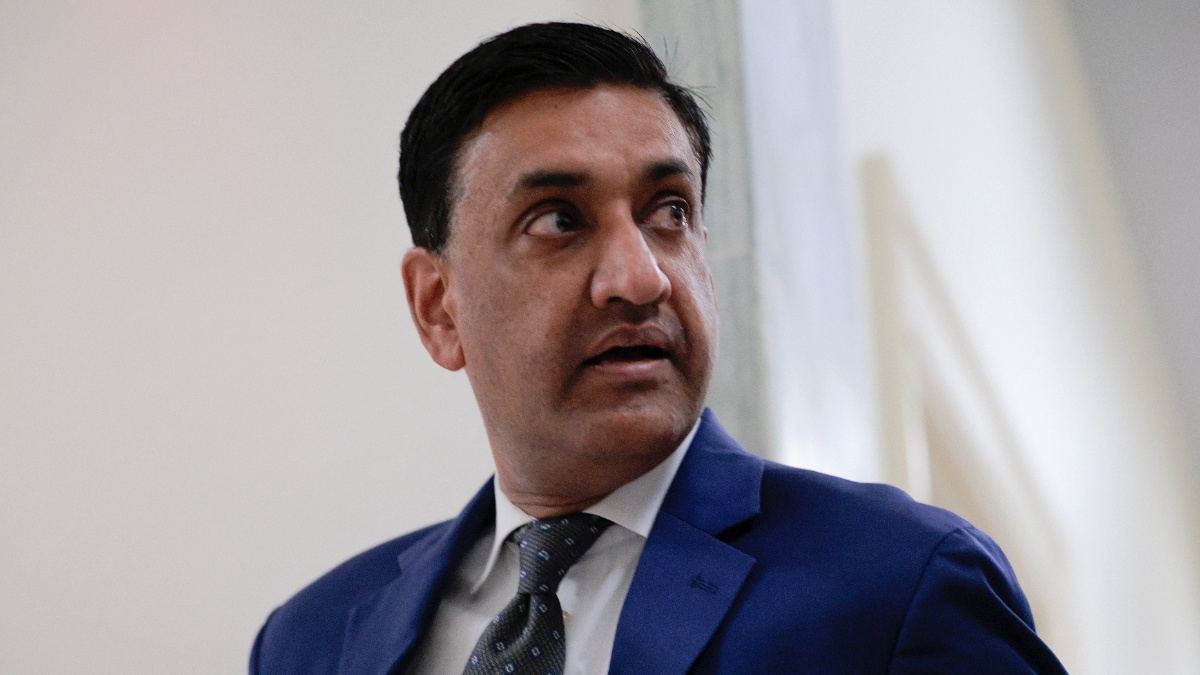

As reported by The Hill, Representative Ro Khanna just shared the names of six men on the House floor that he believes were “likely incriminated” in the Jeffrey Epstein files, identities the Justice Department appeared intent on concealing. The DOJ has been getting absolutely slammed for its bizarre redaction process, often shielding the identities of powerful individuals while sometimes failing to conceal the names of victims.
Khanna, a Democrat from California, and Representative Thomas Massie, a Republican from Kentucky, are the duo responsible for forcing the public release of the documents through their co-sponsored bill. They didn’t wait for the DOJ to fix its errors. Massie and Khanna went straight to a Justice Department office to review the unredacted files available to lawmakers.
The lawmakers told reporters that after just two hours of digging through the files, they found six names they believed warranted criminal scrutiny based on the documents’ content. Massie described this group as being “likely incriminated.”
It’s important to remember that the Epstein Files Transparency Act only allows for very narrow redactions, mainly to protect the identities of victims
Khanna didn’t mince words about the department’s conduct after revealing the names on the House floor. He immediately questioned why it took him and Massie going to the Justice Department to make these six men’s identities public. He pointed out that if they found six men being hidden in just two hours, you have to imagine how many more men the DOJ is covering up in those three million files.
Khanna believes the department is actively undermining the law they passed. The Epstein Transparency Act requires the DOJ to unredact the FBI files, but Khanna says the department told them they simply uploaded whatever the FBI sent over.
“And guess what? The FBI sent scrubbed files,” Khanna stated. “That means the survivor statement to the FBI naming rich and powerful men who went to Epstein’s Island, who went to his ranch, who went to his home and raped and abused underage girls or saw underage girls being paraded, they were all hidden. They were all redacted. It’s a little bit of a farce.”
This move came despite Massie’s initial reluctance to go public with the names. Massie had argued that the Justice Department should have the chance to “correct their mistake” first, essentially telling them, “They need to themselves check their own homework.”
The Justice Department didn’t take the criticism lightly. Deputy Attorney General Todd Blanche shot back at Massie, accusing the lawmaker of “grandstanding.” Blanche even posted on social media, defending some of the redactions. He pointed out that Massie knew an email address was redacted, and the law requires redactions for personally identifiable information, including email addresses. Blanche finished his post by telling Massie to “Be honest, and stop grandstanding.”


Published: Feb 11, 2026 12:00 pm