



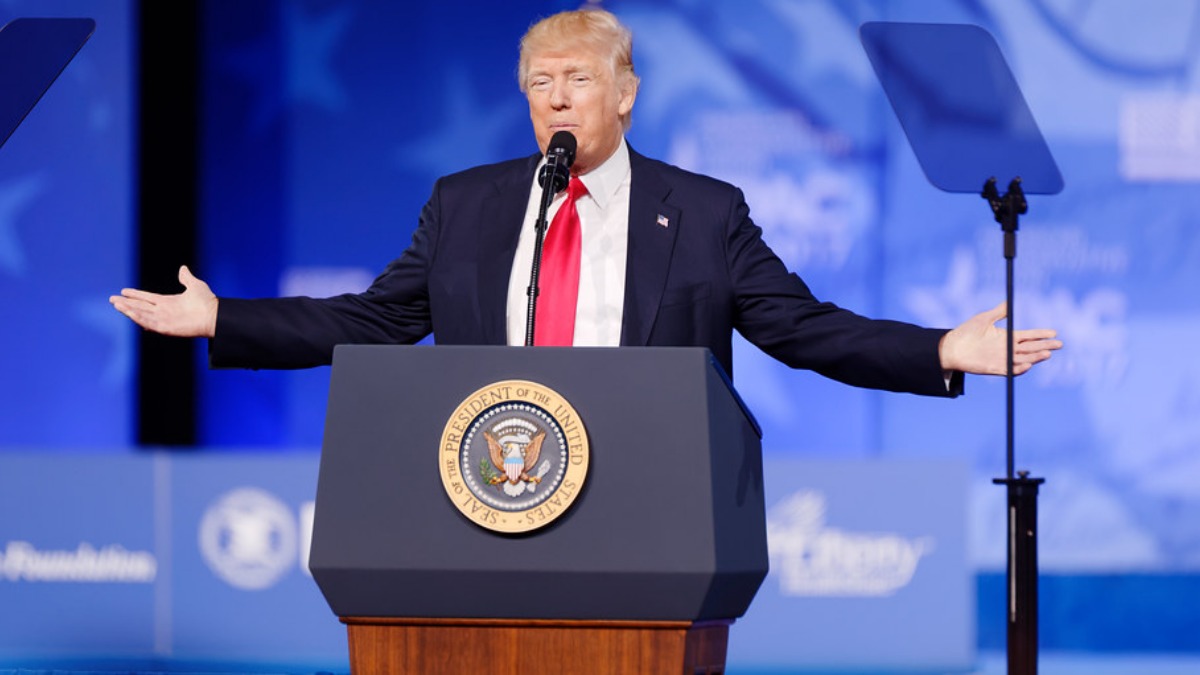

The U.S. is deploying 4,500 Marines and sailors to the Middle East. President Trump also issued a threat on Truth Social, saying the U.S. would “hit and obliterate” Iran’s power plants if the Strait of Hormuz isn’t “FULLY OPEN, WITHOUT THREAT” within 48 hours. Iranian forces have already responded with warnings of “naval surprises” upon the Americans’ arrival.
According to the Washington Post, the deployment includes an infantry battalion landing team supported by helicopters, F-35 fighter jets, and armored landing vehicles. The Pentagon fast-tracked the 11th Marine Expeditionary Unit from San Diego. An Israeli official, speaking anonymously, said, “Those Marines aren’t coming for decoration,” suggesting the forces are headed to take Kharg Island, Iran’s main oil export hub, and secure the Strait of Hormuz.
Taking Kharg Island could cut off Tehran’s oil revenue and give Trump a potential way out of the conflict by keeping the strait open. Earlier hopes of overthrowing Iran’s regime or permanently stopping its nuclear program now seem less likely, making control of the strait a top priority.
Securing the Strait of Hormuz will be a long and dangerous mission for U.S. forces
Iran launched two ballistic missiles at southern Israeli towns, including Dimona, near a nuclear research facility, injuring about 115 people. Iranian state television called it retaliation for a reported attack on Iran’s Natanz nuclear site. An Iranian military spokesman also threatened to hit U.S.-linked energy targets, IT infrastructure, and water desalination facilities in the Persian Gulf if Iran’s oil and gas assets are attacked.
Some U.S. senators have raised concerns. Senator Lisa Murkowski warned that sending ground troops would take the war “to a completely different level” and called for more engagement from the administration. Senator Thom Tillis said it’s a “real problem” that Congress doesn’t know the U.S. objective.
Senator Lindsey Graham, however, encouraged the president to “keep it up for a few more weeks,” adding, “Take Kharg Island… Control that island. Let this regime die on a vine.” Trump has also been pushing allies to reopen the Strait of Hormuz, with a backup plan that involves U.S. boots on Iranian soil.
Securing the strait is no easy task. Iran has used conventional weapons and asymmetrical tactics to nearly halt shipping traffic. U.S. strikes have targeted Iranian missile sites and small watercraft, but tanker traffic has not fully resumed. An operation to restore commercial traffic could take weeks, with U.S. forces facing coastal positions, submerged mines, and drones.
Gulf states are growing impatient. UAE political science professor Abdulkhaleq Abdulla called the strait an “international waterway” that Iran has “hijacked,” urging the world to take it back. Saudi Foreign Minister Prince Faisal bin Farhan Al Saud warned that Saudi Arabia’s “patience… is not unlimited” and ordered Iranian military attachés to leave the country.
Following Trump’s threat, Iran’s Mehr news agency warned Gulf states to “say goodbye to electricity,” publishing a map of power plants across the region. Notably, Iran has signaled that certain nations may pass through the strait under specific conditions, raising further questions about its intentions.
The IRGC stated it is “impatiently waiting” for the U.S. Marines, promising them “a close-up view of naval surprises.” Iran’s Health Ministry has reported around 1,500 deaths, including 208 children. In Lebanon, Israeli strikes have killed at least 1,029 people since March 2. Despite the deaths of Ayatollah Ali Khamenei and his inner circle, surviving IRGC leaders have consolidated power, and the newly designated supreme leader, Mojtaba Khamenei, is reportedly wounded and isolated.







Published: Mar 23, 2026 01:15 pm