



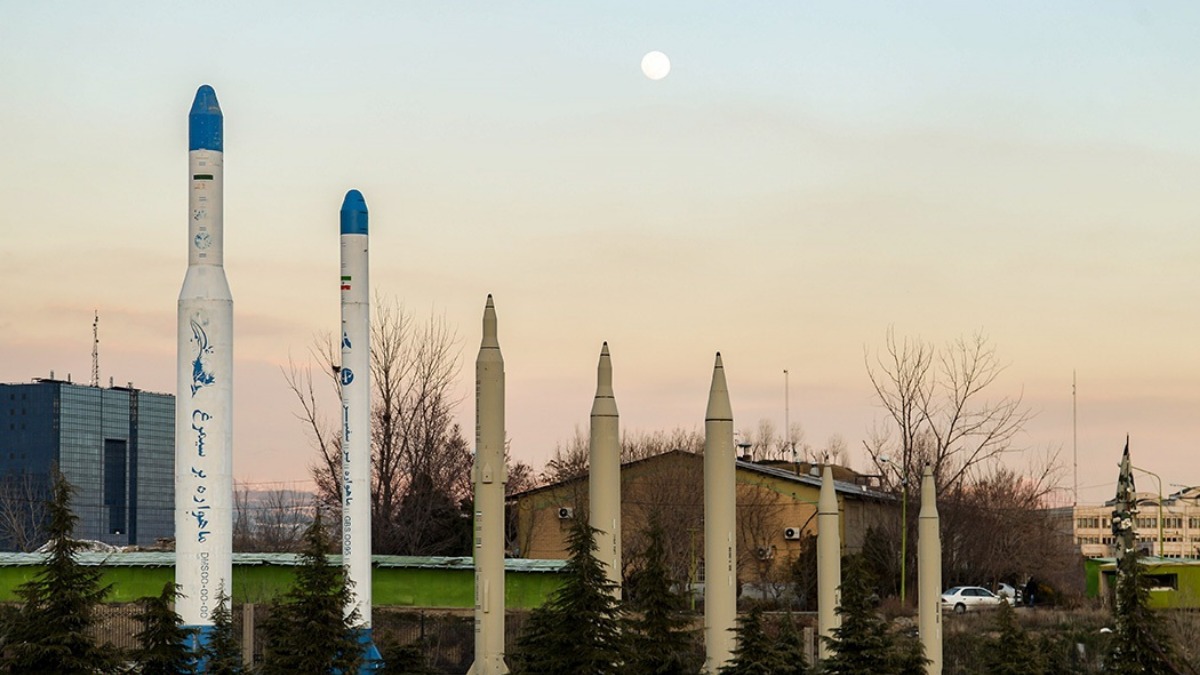

The US and Israel have been striking Iran’s ballistic missile infrastructure for three weeks, but Iran keeps launching missiles. The reason is not about strength above ground. Iran has built a massive network of underground bases carved deep inside mountains, and the bombs being used simply cannot reach them.
Operation Epic Fury has destroyed radar systems, collapsed tunnel entrances, and cratered ventilation shafts across dozens of sites. But hundreds of meters below the surface, Iran has built an extensive system of underground bases. Reports from as far back as 2020 described automated railway systems inside large tunnels, built to move ballistic missiles between assembly halls, storage vaults, and exits with blast doors.
According to The Statesman, satellite imagery covering 107 tunnels across 27 Iranian underground bases shows that the US-Israeli campaign has struck 77% of the visible tunnel entrances. But construction equipment appears at bombed sites within just 48 hours, digging out blocked entrances and restoring access to the underground systems.
Iran built its missile bases specifically to be beyond the reach of any existing weapon
Security researchers who have tracked Iran’s missile infrastructure for years found that strikes on surface infrastructure only temporarily disabled large missile launch bases, while anything located inside the underground facilities remained intact.
Independent analyst Shanaka Anslem Perera argued that the visible damage is only a small part of the story. He believes the deep tunnel system, which has blast doors as separate exit points and a rail network that reroutes when one portal is lost, remains fully operational. Meanwhile, Iran’s conditions for keeping the Strait of Hormuz open have sent shockwaves through global shipping markets.
The core issue is geological. Brigadier General Amir Ali Hajizadeh, a former IRGC Aerospace Force commander, stated that Iran built its missile bases at a depth of 500 meters. The most powerful US weapon for destroying hardened underground targets is the GBU-57 Massive Ordnance Penetrator, a 30,000-pound bomb that can only penetrate about 60 meters of reinforced concrete or roughly 40 meters of moderate rock.
Five hundred meters is more than twelve times that weapon’s maximum penetration depth. Perera summed it up clearly: “The mountain does not care how many sorties are flown above it. The railway does not care how many portals are sealed. The geology is the defence, and the geology has been there for 300 million years.”
As Perera further explained, “Every missile that hits Arad, Dimona, or central Israel was assembled underground, moved on rails to an exit, and fired from a door that may have been destroyed and rebuilt multiple times since February 28. The persistence of Iranian missile fire despite three weeks of intensive strikes is not resilience. It is infrastructure.”
Iran has continued firing ballistic missiles throughout Operation Epic Fury, including an attempted strike on the joint US-UK base at Diego Garcia. President Trump has said the operation is weeks ahead of schedule and that Iran’s military is finished.
But satellite imagery and research assessments suggest that while progress has been made above ground, the underground war, fought half a kilometer below the surface, has barely begun. Behind the scenes, Kushner and Witkoff drafting Iran peace terms points to growing uncertainty about who the US should even negotiate with.









Published: Mar 28, 2026 11:15 am