



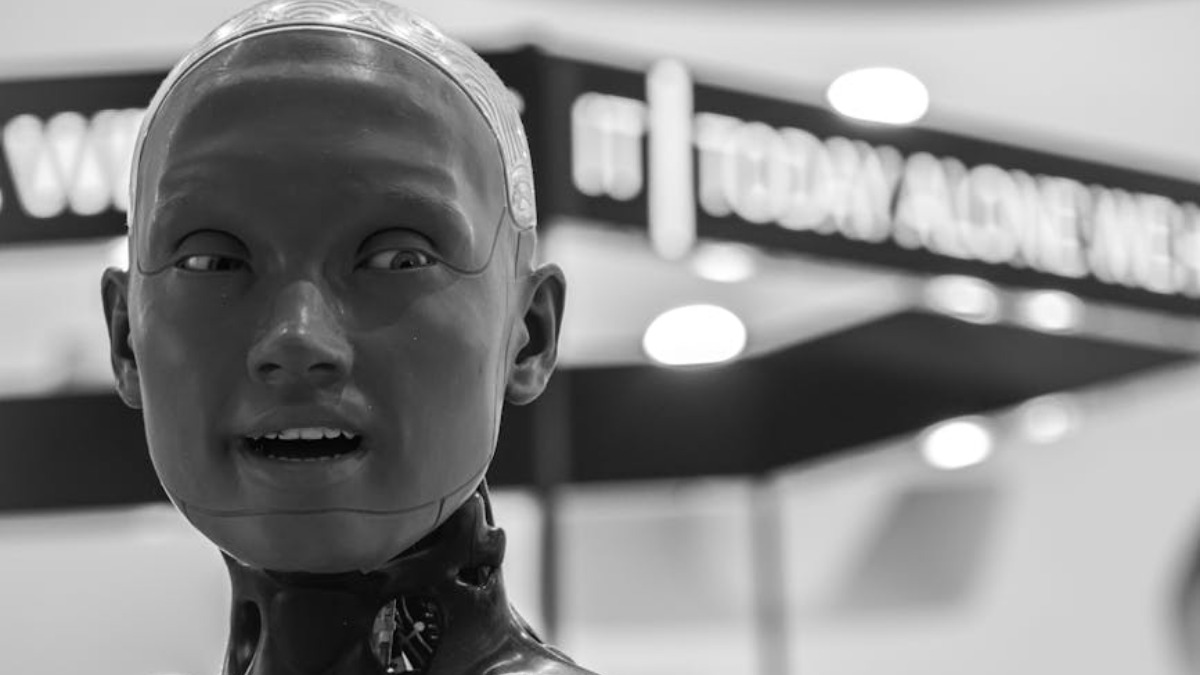

Joanna Stern is not your average tech enthusiast. The 42-year-old consumer tech journalist spent 12 years at the Wall Street Journal before deciding to put artificial intelligence to the most personal test imaginable, saying yes to more than 100 AI experiments over the course of a single year. She documented the journey in her new book, I Am Not a Robot: My Year Using AI to Do (Almost) Everything, published on May 12.
As detailed by UNILAD, Stern’s experiments covered a massive range of daily life, from the practical to the genuinely unsettling. She used AI to replace her human research assistant, navigate in a self-driving Waymo car, and act as her therapist, the last of which she did with guidance from her actual therapist. She also, with her wife’s consent, took on an AI boyfriend, and her one firm piece of advice on that front is direct: “Don’t fall in love with a robot.” The AI boyfriend tool, she confirmed, has not been switched on for months.
When speaking about her overall conclusion on the TODAY show, Stern described the experience as “very mixed, which is not how I expected this to go.” That admission alone says something about where the technology actually stands.
AI in a medical setting is where things got genuinely interesting
One of the most striking moments in her book came when an AI system detected something on her breast ultrasound that a human doctor might have missed. Because of her family history of breast cancer, her doctor took a closer look at the flagged area. Follow-up scans came back clear, but the impact of the detection was hard to dismiss. “They are able to see things that the human eye can’t,” Stern noted. “That’s a great example of seeing a doctor working side by side with AI and the doctor really believing ‘I’m better with this tool.'”
A medical expert she spoke to for the book echoed that view: “It saves lives of those people whose cancers are so subtle that the human would have missed them.” This connects to a broader pattern of diagnoses being delayed or dismissed when symptoms do not fit a doctor’s immediate expectations. In June 2025, the U.S. Food and Drug Administration granted De Novo authorization to Clairity Breast, the first AI-powered platform that predicts a woman’s risk of developing breast cancer over the next five years using only a standard mammogram.
Unlike traditional risk models that rely on age, family history, or self-reported questionnaires, Clairity Breast analyzes the mammogram itself. It uses advanced AI to detect subtle imaging patterns in breast tissue that correlate with future cancer development, even when the image appears normal to the human eye. Dr. Connie Lehman, the founder of Clairity and a breast imaging specialist at Mass General Brigham, has emphasized that while mammograms have saved lives for more than 60 years, these new advances in computer vision can uncover hidden clues invisible to human readers.
Despite these clear benefits in clinical settings, Stern came away from her year of testing with significant concerns about the next generation. “They are going to grow up with computers smarter than them,” she said. “They need to learn how to challenge the computers and work with them. They absolutely need to know the literacy of working with AI, but they need to be skeptical of it.” That concern is increasingly shared by researchers and lawmakers, amid ongoing debates about how platforms should handle young users, including Instagram’s move to alert parents about teens searching sensitive topics.
Her other major takeaway centers on the concept of control. Stern feels that leaning too heavily on these systems amounts to outsourcing too much of your own thinking. Her mantra coming out of the year is simple: “I will work with AI, but I am not working for it.”
After a year of testing everything, the one tool she has kept in her daily routine is a phone AI interface she uses in the car, primarily to research interview subjects and brainstorm questions on the way to meetings. Clairity Breast is currently rolling out to hospitals and imaging centers.



Published: May 18, 2026 08:00 pm