


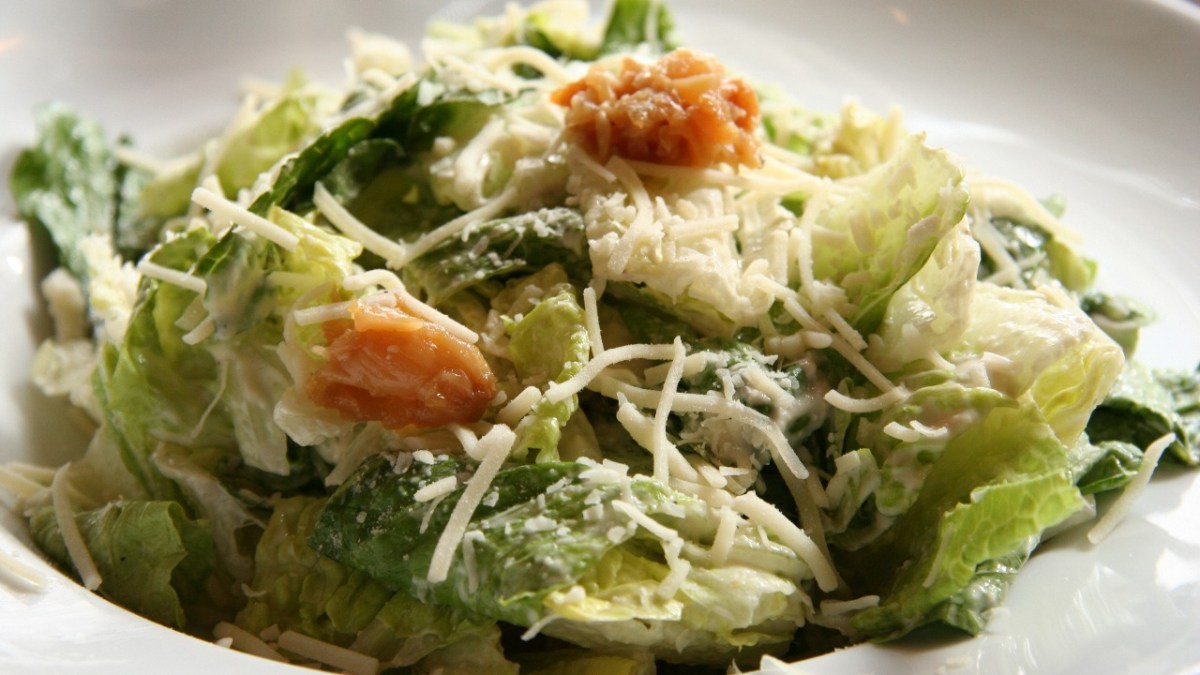

A $4.99 Caesar salad from Longo’s had one shopper questioning what she was actually paying for. Sol, who posts on TikTok, turned the container sideways in a grocery store aisle and discovered that the salad contained little more than a thin layer of greens.
The moment she rotated the package, Sol appeared stunned by its contents. Her amazement was summed up in the video caption, which read: “end stage capitalism strikes again.”
“Wait, wait, what? Oh, oh, oh, you’re lying!” she exclaimed, followed by a bewildered “What? How?” as she inspected the container.
Reports track size cuts in grocery packages
The scene fits a pattern known as shrinkflation, or product downsizing, which the U.S. Government Accountability Office described as manufacturers reducing the quantity inside a package without a matching drop in the shelf price. According to the GAO, the price may stay the same or fall slightly, yet the cost per unit still rises.
The agency reported that downsizing happened most often in 2015, dropped to its lowest levels in 2020 and 2021, and increased again from early 2022 as broader inflation rose. Even so, the GAO stated that the practice had only a minimal effect on overall inflation measures from 2019 to 2024 because the items involved made up a small share of tracked goods.
Manufacturers consider higher production costs and how shoppers might respond before they cut sizes, the GAO explained. Studies it reviewed indicated that people were less likely to notice or stop buying after a quantity reduction than after a clear price increase.
In its review of common household products, the GAO found that downsizing affected fewer than 5 percent of the items examined. Paper goods such as towels and toilet paper saw higher rates, and average per-unit price rises among downsized products ranged from 12 percent for paper towels to 32 percent for coffee. The agency noted that size cuts are not usually marked on packaging.
An Everything-PR index of 15 grocery and household packages flagged by Mouse Print between January and October 2026 found a median quantity reduction of 12.0 percent. If shelf prices had stayed flat, the median unit cost would have been 13.6 percent higher, according to the index. Examples included instant oatmeal that went from 10 packets to 8 and a Hershey’s chocolate assortment that dropped from 29 ounces to 23.9 ounces while remaining $19.99.
Viewers who commented on Sol’s video reacted to the thin layer of salad. One joked about the sparse contents by writing, “Your salad is on a diet.” Another described the package as barely qualifying as food and wrote, “it’s a concept of a salad.” A third compared the portion to other grocery options and commented, “but the junk food is cheaper and in big portions.”
Some took the thin layer further, with one writing, “You’re going to be so skinnny!” and another stating, “Prepping us for starvation.” One commenter pushed back on the frustration and wrote, “The beautiful part of capitalism is, you don’t have to buy that!!! You can shop around because there is free market competition!!!” Canned goods have drawn similar attention, including a woman who found the last StarKist can looked completely different from the rest of its four-pack.






Published: Nov 9, 2026 07:00 am