



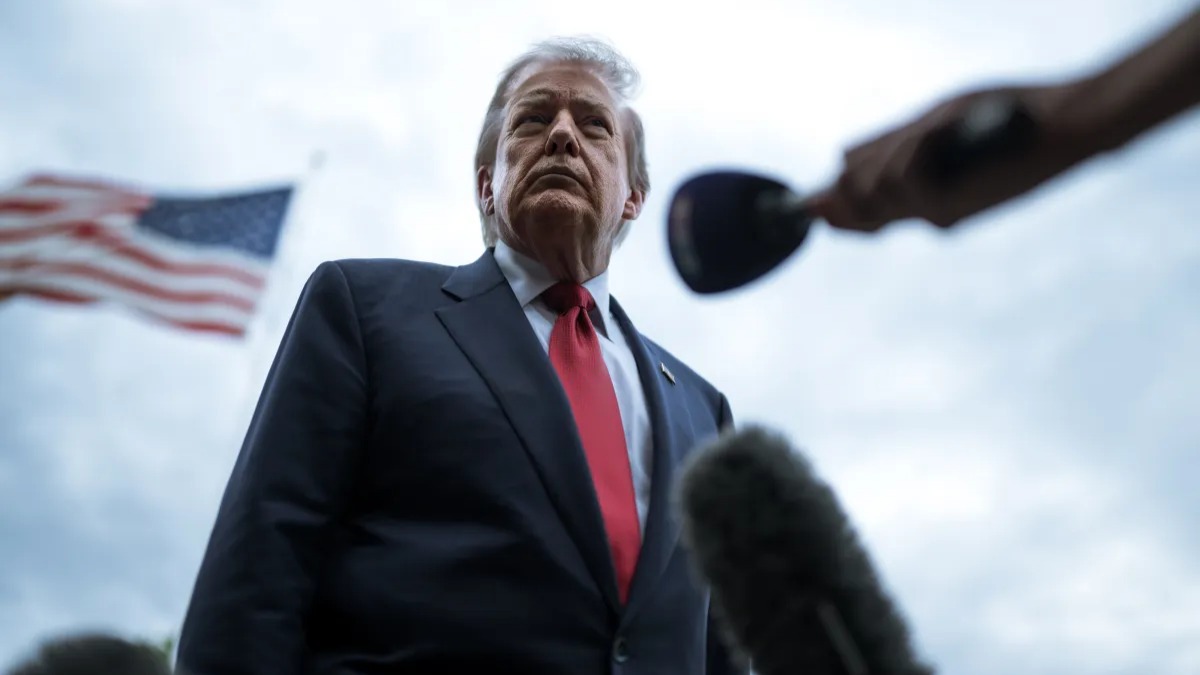

President Trump has officially moved to dismiss his massive 10 billion dollar lawsuit against the IRS, as reported by The Hill. This development, filed in a federal court in Miami, marks a significant shift in the legal battle regarding the unauthorized leak of the President’s tax return information.
The original lawsuit, which included his two oldest sons, Eric Trump and Donald Trump Jr., alongside the Trump Organization, sought an 11-figure payout from the federal government. It was based on a federal law that allows individuals to pursue damages from the government when their sensitive taxpayer data is breached.
The decision to drop the case is tied directly to a new initiative announced by the Department of Justice. The DOJ has unveiled a $1.7 billion Anti-Weaponization Fund. This fund is designed to process redress claims for people who believe they have been victims of lawfare from the IRS. While the President and his sons will not receive any direct payout from this new fund, they have been promised a formal apology as part of the agreement to end the litigation.
The formal dismissal of the suit signals that the administration is pivoting away from the courtroom and toward this new administrative process for redress.
The fund will be overseen by a five-member commission appointed by the attorney general, and it is scheduled to cease processing claims on December 15, 2028. Notably, the President retains the power to remove any member of this commission, though replacements must be selected using the same process as the initial appointment.
This move comes after months of legal wrangling. District Judge Kathleen Williams, an Obama appointee, had previously noted in an April order that both sides were working toward a resolution. However, Judge Williams had expressed significant reservations about the structure of the case. She pointed out that it is highly unusual for a sitting president to act as both a plaintiff and a defendant.
As she wrote in her order, “Although President Trump avers that he is bringing this lawsuit in his personal capacity, he is the sitting president and his named adversaries are entities whose decisions are subject to his direction.” She further questioned whether the parties were truly adverse enough to satisfy the constitutional requirements for a case or controversy.
The origins of this dispute date back to allegations regarding Charles Chaz Littlejohn, a former IRS employee who pleaded guilty in October 2023 to disclosing tax return information. Littlejohn is currently serving a five-year prison sentence for his actions. He admitted to leaking tax records to news outlets, including the New York Times and ProPublica.
The lawsuit alleged that the IRS and the Treasury Department failed in their duty to prevent these leaks. According to the complaint, Littlejohn testified in a 2024 deposition that he disclosed information about all the businesses owned by the President to ProPublica.
The plaintiffs claimed that reporting based on these leaked documents portrayed them in a false light and caused them significant reputational and financial harm. They specifically took issue with claims of fraud that appeared in reporting, which they argued unfairly tarnished their business standing.
A spokesperson for the Trump legal team previously stated, “The IRS wrongly allowed a rogue, politically-motivated employee to leak private and confidential information about President Trump, his family, and the Trump Organization to the New York Times, ProPublica and other left-wing news outlets, which was then illegally released to millions of people.” The spokesperson added, “President Trump continues to hold those who wrong America and Americans accountable.”
Treasury Secretary Scott Bessent had previously taken action regarding this issue by canceling all department contracts with the consulting firm Booz Allen Hamilton, which employed Littlejohn. Despite these steps, the lawsuit remained a complex legal hurdle, especially given the questions surrounding the President’s role in the litigation. The creation of the Anti-Weaponization Fund has now provided an alternative path to resolving the conflict.
However, the new fund is already facing pushback. On Sunday, Rep. Jamie Raskin expressed skepticism about the legality of such an initiative. “Creating this one point: seven billion dollar political slush fund at the Department of Justice in Congress would never pass that there’s no way he could get that through Congress,” Raskin said. He further stated, “So this is just an invention on his part, but even if Congress wanted to do it, I think it’s clearly unconstitutional on a number of grounds to begin with.”
As it stands,It is a major change in strategy for the President, who has previously sought compensation for investigations, including a reported 230 million dollar claim against the Department of Justice. For now, the focus shifts to how the newly formed commission will operate and whether it will face further challenges as it begins its work.








Published: May 18, 2026 06:30 pm