



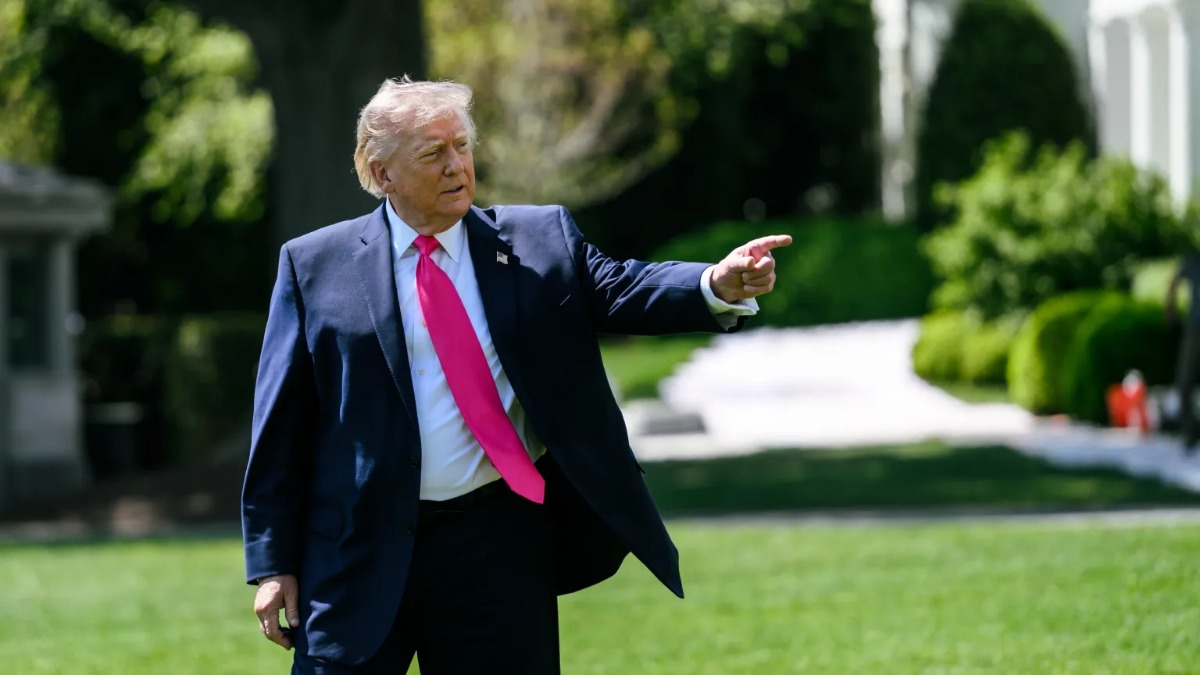

A federal judge is currently questioning whether a $10 billion lawsuit brought by Donald Trump against the Internal Revenue Service and the Treasury Department can actually move forward in court, ABC News reported. Judge Kathleen Williams raised significant concerns about the legal validity of this case in an order issued, specifically pointing to the fact that the president is effectively suing the very government entities he currently oversees.
The issue of whether the parties involved are sufficiently adverse to one another is at the heart of the judge’s skepticism. In her order, Judge Williams noted that Donald Trump, his sons Eric Trump and Donald Trump Jr., and the Trump Organization filed this lawsuit in January.
The core of the complaint revolves around the unauthorized disclosure of tax information during his first term. While the plaintiffs argue that the government failed in its duty to safeguard their confidential information, the judge is looking at the structural reality of the situation.
This development comes at a time when the legal landscape regarding executive authority and litigation is under intense scrutiny
“Moreover, although President Trump avers that he is bringing this lawsuit in his personal capacity, he is the sitting president and his named adversaries are entities whose decisions are subject to his direction. Indeed, President Trump’s own remarks about this matter acknowledge the unique dynamic of this litigation,” she wrote.
This unique dynamic, as the judge points out, creates a massive legal hurdle. Typically, a court requires that a dispute involves parties who genuinely face each other in an adversary proceeding. “Typically, adverseness is found in a situation where one party is asserting its right and the other party is resisting,” she noted.
Because the president is in charge of these agencies, the required adversarial relationship might simply not exist. Judge Williams highlighted that the president has signed multiple executive orders that tighten his control over executive agencies, including the Department of Justice. This creates a strange conflict of interest.
“One such employee of the executive branch, the Attorney General, has a statutory obligation to defend the IRS when it is hailed into court, but then is ostensibly required by executive mandate to adhere to the President’s opinion on a matter of law in such a case. This raises questions over whether the Parties here are truly antagonistic to each other,” Williams noted.
The lawsuit itself stems from the actions of Charles Littlejohn, a former government contractor who pleaded guilty in 2023 to stealing tax information from Donald Trump and many other wealthy Americans. Littlejohn leaked the stolen data to media outlets in 2019 and 2020. He was eventually sentenced to five years in prison in 2024. During that sentencing, a federal judge described his actions as “an attack on our constitutional democracy.”
While the gravity of that theft is clear, the current lawsuit alleges that the IRS and the Treasury Department lacked the necessary technical, employee screening, and security measures to prevent such a breach. The plaintiffs claim this failure caused them reputational and financial harm, including public embarrassment and a tarnished business reputation.
The situation recently took a turn when lawyers for the Trump side filed a request to extend a deadline in the case. They stated they were in discussions with the Department of Justice to potentially resolve the lawsuit. They requested a 90-day extension to engage in talks designed to resolve the matter and avoid protracted litigation.
However, Judge Williams denied the request to delay the case while these settlement talks are ongoing. Instead, she ordered both the legal team for the plaintiffs and the Department of Justice to submit briefs explaining why the case should proceed. She has also set a hearing for next month to address these concerns directly.
This case has already drawn attention from those outside the immediate legal teams. Last month, a group of former government officials filed an amicus brief expressing significant concerns about the ethics of a president suing his own government for such a large sum of money.
“This case is extraordinary because the President controls both sides of the litigation, which raises the prospect of collusive litigation tactics,” the amicus filing said. “To treat this case like business as usual would threaten the integrity of the justice system and the important taxpayer and privacy protections at the heart of this case.”
The court is now faced with the difficult task of determining if the lawsuit can even exist under these circumstances. If the government is essentially both the plaintiff and the defendant, the traditional foundations of the American legal system are tested in ways that rarely happen.








Published: Apr 27, 2026 02:30 pm