



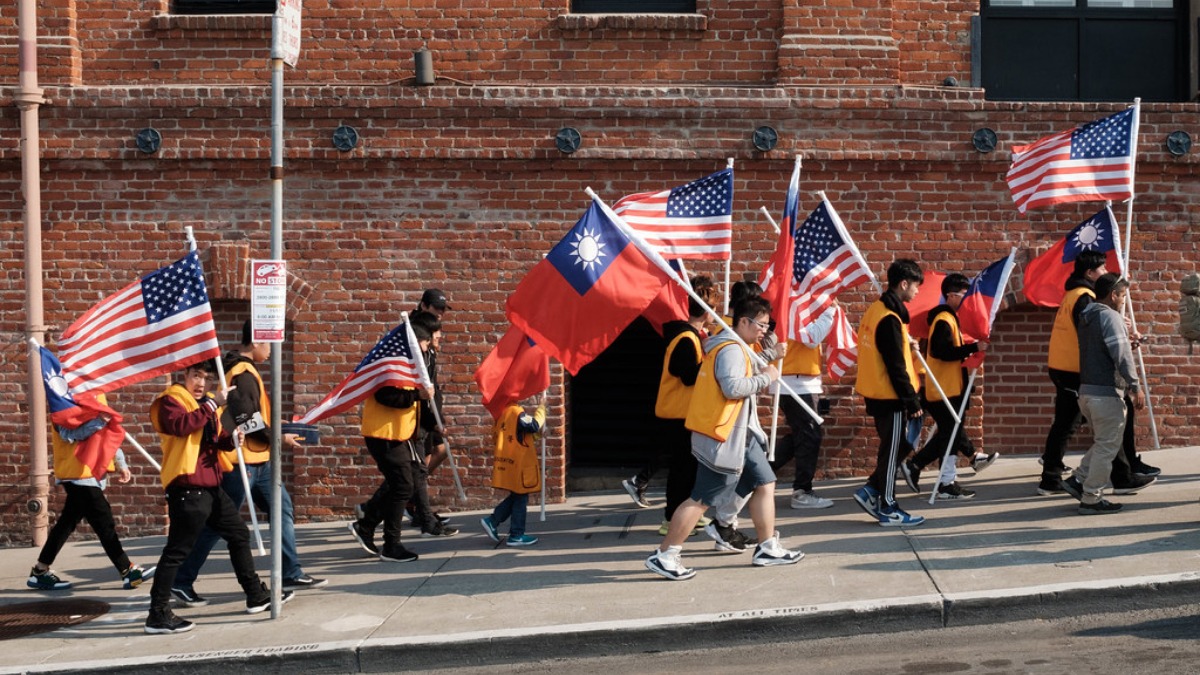

US President Donald Trump has made it clear that he does not want to get into a conflict with China over Taiwan. After a summit with Chinese President Xi Jinping in Beijing, Trump expressed his reluctance to get involved in any potential fight with China. His remarks carry serious weight for the already fragile balance of power in the region, and they have sparked debate about what US foreign policy on Taiwan will look like going forward.
During the meeting, the two leaders discussed Taiwan’s status as a self-governing island. Trump said that Xi “feels very strongly” about the island and “doesn’t want to see a movement for independence.” China has long been opposed to Taiwan’s independence, and Trump made clear that he understands where Xi stands on the matter and is not looking to challenge that position.
Rather than taking a firm stance, Trump signaled that he is comfortable leaving things as they are. According to the BBC, in a Fox News interview, he said, “I’m not looking to have somebody go independent. I’m not looking to have wars, and if you kept it the way it is, I think China’s going to be OK with that.” This suggests Trump is willing to maintain the status quo rather than risk a confrontation with China over Taiwan’s future.
Trump’s cautious approach on Taiwan could shift the regional power balance in China’s favor
Taiwan has long been a sensitive issue between China and the US. The US has maintained unofficial ties with Taiwan while stopping short of openly supporting its independence. Trump’s comments were likely welcomed in Beijing, but they have raised serious concerns in Taipei about how committed the US really is to Taiwan’s security and whether that commitment will hold under pressure.
Taiwanese President Lai Ching-te has previously said that Taiwan does not need to formally declare independence because it already sees itself as a sovereign nation. China, however, strongly disagrees and views the issue as a matter of national security.
Trump has also drawn scrutiny at home for other reasons, including instances where aides have had to deny statements attributed to the president, adding to the uncertainty around his foreign policy positions on sensitive matters like Taiwan. Trump also pointed to the risks of military involvement in a conflict so far from home.
He said, “The last thing we need is a war 9,500 miles away.” This statement shows that Trump is thinking carefully about the human and financial costs of getting pulled into a conflict with China, and that he prefers a cautious approach over a more aggressive one. For many observers, this marks a notable shift in tone compared to how previous administrations have handled the Taiwan question.
Taiwan’s Foreign Minister Lin Chia-lung has described Taiwan as a “guardian of peace and stability” in the region. China, meanwhile, has been increasing its military drills around Taiwan in recent years, which has heightened tensions and tested the careful balance the US has tried to maintain.
Trump’s statements have not done much to ease those concerns in Taipei. His administration has also faced scrutiny over financial dealings, with a company linked to Trump’s sons seeking Pentagon contracts worth hundreds of millions of dollars, raising broader questions about the administration’s priorities.
The concern now is that if the US appears less committed to defending Taiwan, China may feel more confident about taking a harder line on the issue. This could push the region closer to conflict and destabilize an area that has remained tense for decades.
Taiwan has consistently maintained that it wants peaceful relations but will not compromise on its sovereignty, making the situation even more delicate. At the same time, some see Trump’s tone as a deliberate effort to avoid escalating things with Beijing, though critics warn that it could come across as weakness rather than diplomacy, potentially encouraging China to test boundaries further.







Published: May 16, 2026 05:15 pm