



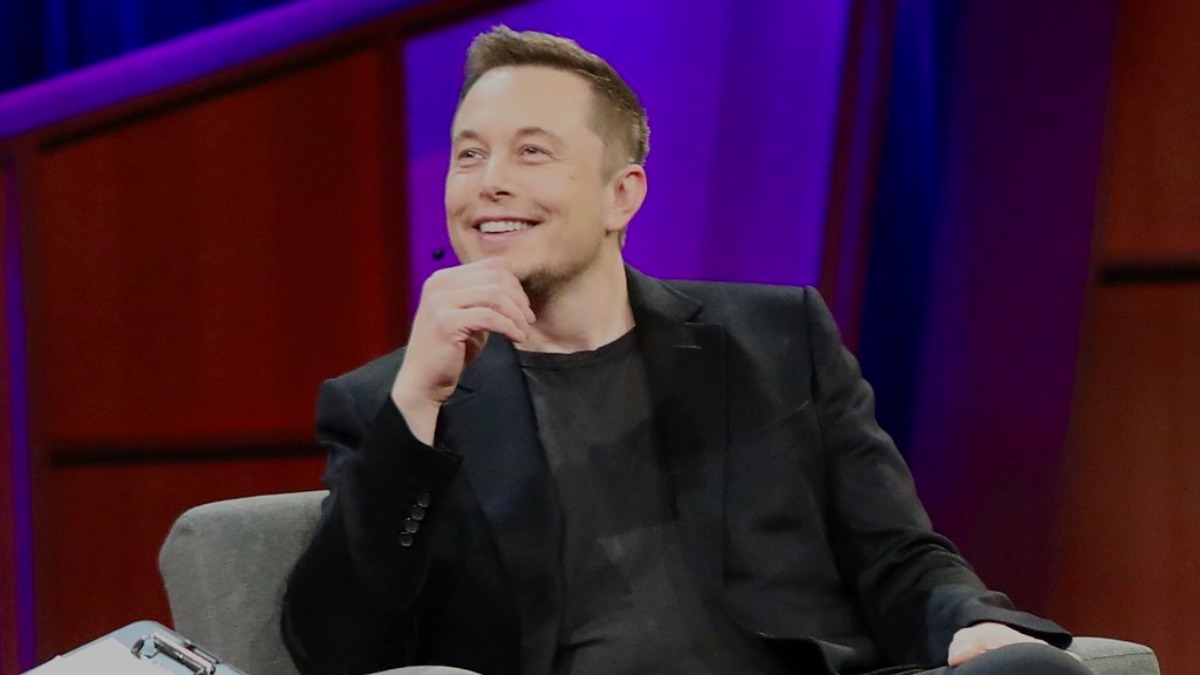

Newly released government emails reveal that the U.S. Marshals Service allowed members of Elon Musk’s private security team to skip standard training requirements, making them federal agents. The approval came in February 2025 and originated from the White House, allowing his bodyguards to carry weapons in federal buildings while he oversaw DOGE.
At least some of Musk’s security staff had not completed a basic law enforcement training program, nor did they have the required one year of law enforcement experience. According to NBC News, the waivers were authorized by Rich Kelly, the Marshals Service’s associate director for operations, and came to light through a Freedom of Information Act request filed by Democracy Forward, a progressive advocacy group.
The timing raised serious concerns. Just months earlier, a Justice Department inspector general audit had flagged the Marshals Service for deputizing ineligible people, after which the agency promised reform. Skye Perryman, president and CEO of Democracy Forward, said the emails “underscore the lawlessness with which Elon Musk was allowed to run around Washington, wreaking havoc and abusing government resources.”
DOGE’s real agenda went far beyond cutting government waste
Musk, who kept his roles as CEO of Tesla and SpaceX, served as a “special government employee” during this period. He entered Washington convinced that governments were “big dumb machines” that needed a complete overhaul, aiming to rewrite regulations and budget lines from within.
His office featured a gaming rig, and the DOGE website had a leaderboard to track spending cuts in real time. This was not the first time Musk faced scrutiny over how he misled investors over a major deal, with a jury previously finding him liable in connection with his Twitter acquisition.
DOGE owed its name to the popular Shiba Inu meme and the memecoin it inspired, with Musk famously calling himself the “Dogefather.” He often compared his work to video games, saying DOGE was like Captain Kirk reprogramming the unwinnable Kobayashi Maru simulation in Star Trek II. He promised to “speedrun fixing the federal government” using “any%” glitches and exploits, just like in his favorite games.
Minutes after President Trump’s second inauguration, DOGE programmers gained access to the computer systems of the U.S. Office of Personnel Management, obtaining files on millions of federal workers. Days later, they emailed all federal employees offering a stark choice: quit with paid leave or face likely termination.
According to The Guardian, Musk publicly declared his intention to “delete entire agencies,” saying “if you don’t remove the roots of the weed, then it’s easy for the weed to grow back.” DOGE’s operational approach focused on “delete, automate, and integrate,” pushing for zero-based budgeting where every department had to justify each expense from scratch, with AI tools handling much of the process.
Agencies like USAID were effectively shut down, fed into “the wood chipper,” as Musk described it. A key goal was centralizing all government data into a single system, with Peter Thiel’s Palantir securing over $113 million in government contracts for that data integration work, creating what amounted to a “God View” of the entire state.
DOGE also used AI scripts to cancel contracts at the Department of Veterans Affairs, which sometimes “hallucinated” and got contract values wrong, and to locate DEI language in government policies. By March 2025, Musk’s team was building a “master database” to track immigrants, pulling records from the Department of Homeland Security, IRS, Social Security Administration, and voting rolls.
The Trump administration also added thousands of people to the Social Security “death master file,” cutting off their access to credit cards and bank accounts, a tactic one former commissioner called “financial murder.” Around this time, Musk also made headlines for promising to cover legal costs for Epstein document whistleblowers, after his own name appeared in the latest document release.
Musk left DOGE at the end of May 2025 after his 130-day tenure. While DOGE’s website claimed $170 billion in savings, an investigation confirmed only a small fraction of that figure was accurate, and those savings were quickly wiped out by Trump’s subsequent tax cuts.
Tesla sales fell alongside Musk’s popularity, but his companies kept winning government contracts. In July 2025, his AI company xAI announced a contract with the Department of Defense for its “Grok for Government” products, and by 2026, xAI signed a deal to deploy Grok on classified military networks.







Published: Apr 6, 2026 11:00 am