



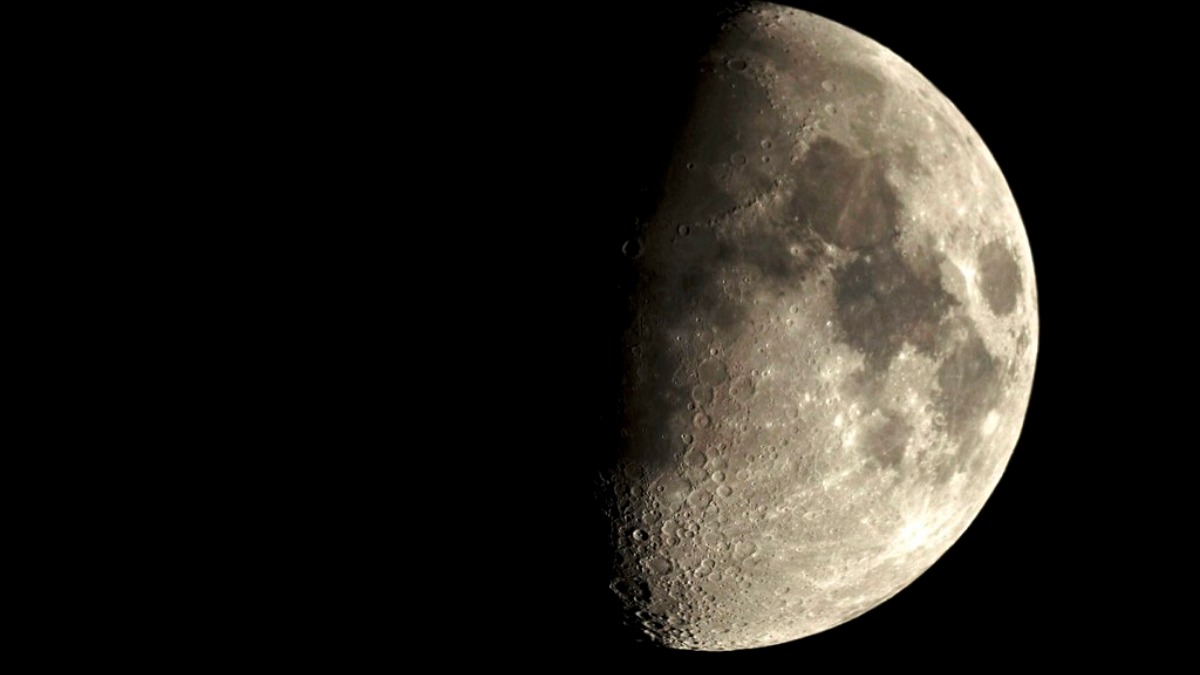

The Artemis II crew has captured its first views of the Moon’s far side, marking a major milestone in NASA’s first crewed lunar mission in over 50 years. The astronauts described the sight as “spectacular,” noting that the often-misunderstood hemisphere, sometimes called the “dark side,” actually receives plenty of sunlight, allowing them to observe its surface in detail. The capsule may even be able to spot traces of the Apollo Moon landings, which would serve as physical confirmation of those earlier missions for anyone still unconvinced.
As reported by LADBible, the Artemis II mission is an approximately 10-day journey around the Moon and back, serving as the first crewed test flight under NASA’s Artemis program. Astronauts Reid Wiseman, Victor Glover, and Christina Koch from NASA, alongside Canadian Space Agency astronaut Jeremy Hansen, launched from pad 39B at Kennedy Space Center in Florida at 6:35 PM EDT on April 1. The primary goal is to test the Orion spacecraft’s systems in a deep space environment with a crew aboard, building on the uncrewed Artemis I flight test.
Dr. Megan Argo, a Senior Lecturer in Astrophysics at the University of Lancashire, explained that the crew would get a view of the South Pole Aitken Basin, one of the largest observable impact craters in the solar system. She noted this marks the first time human eyes have directly seen this particular basin. The Artemis II crew is farther from the far side than the Apollo 13 astronauts were, so they will not get as close a look, but they will gain an unparalleled perspective of the entire hemisphere.
The crew broke a 55-year-old distance record on the way around
On Sunday, April 5, the crew entered the lunar sphere of influence, where the Moon’s gravitational pull became stronger than Earth’s. That day also involved spacesuit testing ahead of re-entry. Monday, April 6, was the lunar flyby itself. The crew passed around the far side of the Moon, pushing farther from Earth than any human has ever traveled.
During the flyby, they surpassed the record set by the Apollo 13 crew in 1970. Apollo 13 reached 248,655 miles from Earth; Artemis II is set to reach a maximum distance of 252,760 miles, exceeding that mark by about 4,105 miles. There was a 40-minute communications blackout as Orion passed behind the Moon.
From Tuesday, April 7, through Thursday, April 9, the crew begins the return journey to Earth. Tuesday is a scheduled day off after several intense days. On Wednesday, the crew will practice building a radiation shelter, a safety measure for potential solar flares, and test compression garments designed to prevent dizziness upon return. They will also get to manually pilot the spacecraft. The Project Hail Mary directors recently described their own high-stakes test screening in terms that suggest even Hollywood understands the pressure of proving something works under real conditions.
The crew has access to 189 unique menu items during the mission, including coffee, smoothies, tortillas, barbeque beef brisket, macaroni and cheese, and cookies. NASA is holding daily mission status briefings live from the Johnson Space Center in Houston and offering a separate live stream of views from the Orion spacecraft and inside the capsule.
Splashdown is expected off the coast of San Diego at approximately 8:07 PM EDT (5:07 PM PDT) on Friday, April 10. The Orion spacecraft will face temperatures up to 1,650 degrees Celsius during re-entry before parachutes deploy for a Pacific Ocean landing. NASA and the U.S. Navy will recover the crew using helicopters, delivering the astronauts to the USS John P. Murtha for post-mission medical evaluations.
The total expected travel distance from launch to splashdown is 695,081 miles. The Orion spacecraft carries 32 cameras and devices, including 15 mounted to the spacecraft and 17 handheld units operated by the crew, all used for engineering, navigation, crew monitoring, and lunar science. With Marine reservists already facing possible mobilization amid a tense geopolitical backdrop, the Artemis II mission stands as one of the few unifying moments in an otherwise divided national conversation.









Published: Apr 6, 2026 07:39 pm