



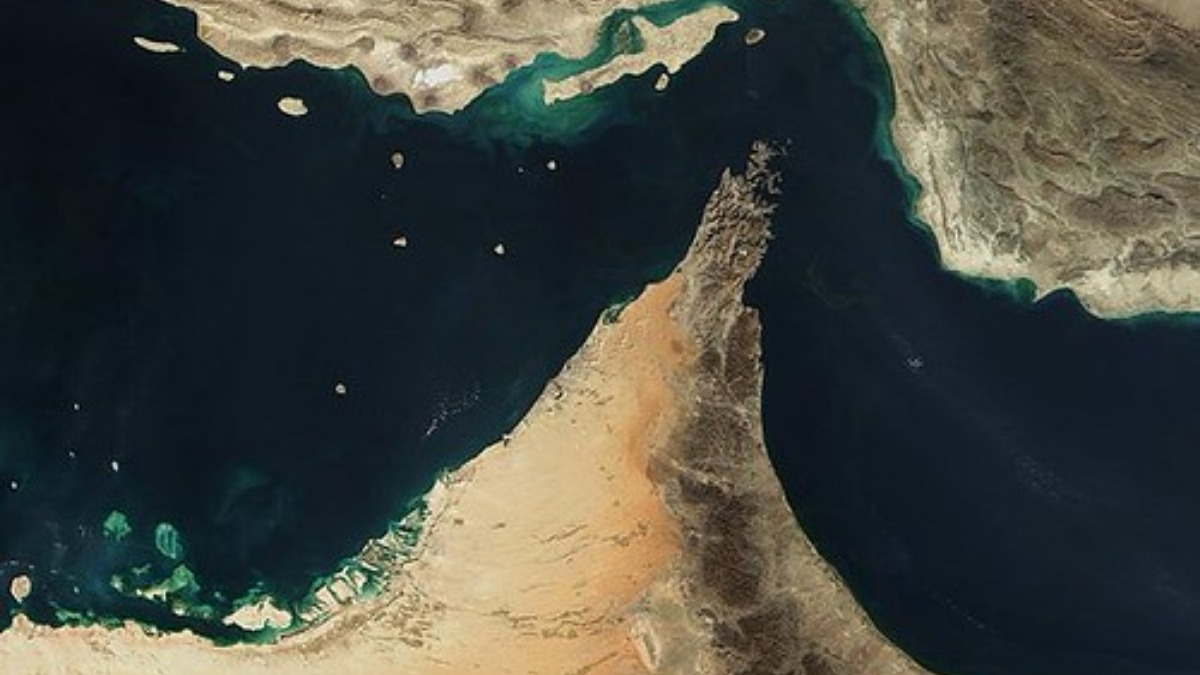

The U.S. military blockade of the Strait of Hormuz officially went into effect Monday, but ship-tracking data revealed that multiple vessels continued to move through the waterway in the hours that followed. As reported by the New York Times, the blockade is intended to cut off Iran’s oil income following the breakdown of peace talks between the two countries. How American naval forces plan to enforce the prohibition remains unclear.
The blockade applies to all maritime traffic heading into or out of Iranian ports and coastal areas. It went into effect at 10 AM Eastern on Monday, and the two sides are currently observing a two-week truce set to expire on April 21.
Ship-tracking data showed that several vessels passed through the strait on Monday, both before and after the deadline. Some had departed from Iranian ports, were carrying Iranian products, or were already under U.S. government sanctions, according to the trade analysis firm Kpler. It is unclear whether those ships were given a grace period, received permission to pass, or bypassed the blockade entirely.
Several sanctioned ships made it through anyway
One example is the Christianna, a Liberia-flagged cargo ship that exited the Persian Gulf through the strait Monday night. Kpler noted the vessel had just departed from the Iranian port city of Bandar Imam Khomeini and was not carrying cargo. The Elpis, a methanol carrier, traversed the strait around the same time the blockade took effect; ship-tracking data showed it had been at the Iranian port of Bushehr. The Elpis had previously been sanctioned by the United States under its former name, Chamtang, due to its connections to the Iranian oil trade.
Additional vessels were flagged by ship-tracking data from Bloomberg and Vesselfinder. The Murlikishan, an oil tanker, entered the Persian Gulf via the strait early Tuesday after departing from Fujairah in the United Arab Emirates without cargo.
It had previously been sanctioned for transporting Russian and Iranian oil under its former name, MKA. The Manali, a Panama-flagged bulk carrier, left the Persian Gulf through the strait Tuesday morning and did not appear to be under U.S. sanctions or to have recently docked at an Iranian port.
The blockade did appear to deter at least some traffic, though not consistently. Hours before the deadline, two ships approaching the strait turned back.
One, the Guan Yuan Fu Xing, a bulk carrier linked to China, made an abrupt U-turn near the strait while traveling from the Omani coast and remained in the Gulf of Oman on Tuesday. The episode drew attention amid broader questions about how the Trump administration is handling sensitive diplomatic and strategic operations in the region.
The other vessel, the Rich Starry, an oil products tanker also linked to China, appeared to turn back about an hour before the blockade deadline. It then reversed course again and successfully exited the gulf hours later.
The Rich Starry, previously known as Full Star, had been blacklisted by the U.S. Treasury Department in 2023 for allegedly helping Tehran evade sanctions, the same sanctions regime that collapsed US-Iran nuclear negotiations were meant to address.









Published: Apr 14, 2026 08:15 pm