



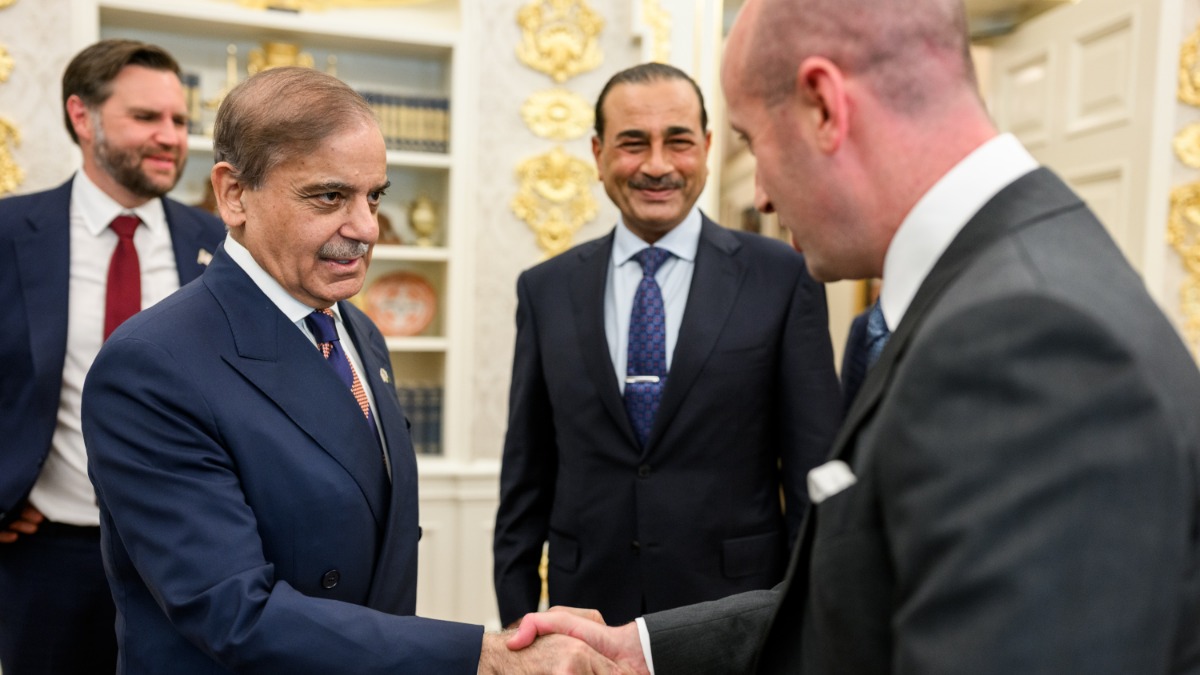

A two-week ceasefire between the United States and Iran is set to expire imminently, with peace talks in Islamabad hanging by a thread. As detailed by The Guardian, diplomats are scrambling to bring both sides back to the table before the window closes entirely. The two nations cannot even agree on when the deadline falls, with Iran placing expiry in the early hours of Wednesday and Trump setting it at the end of Wednesday in Washington. Since Tehran is 7.5 hours ahead, the discrepancy adds another layer of confusion to an already volatile standoff.
Trump made his position clear Tuesday, telling CNBC that the US military is “raring to go” and that he has no intention of extending the ceasefire. He framed the US position as one of strength, describing it as an opportunity to secure what he calls a “great deal.” He has previously suggested that any renewed military campaign could target key civilian infrastructure, including power stations.
Iran has shown no sign of softening. Iranian state television confirmed Tuesday that no delegation had traveled to Islamabad. Parliamentary speaker and chief negotiator Mohammad Bagher Ghalibaf accused Trump of trying to turn negotiations into a “table of surrender,” stating that Iran does not accept talks “under the shadow of threats,” and warned that Iran is preparing “to reveal new cards on the battlefield.”
Pakistan is under enormous pressure to keep the process alive
Pakistani Information Minister Attaullah Tarar posted on X that the country “has made sincere efforts to convince the Iranian leadership to participate in the second round of talks, and these efforts continue.” Security in Islamabad has been significantly tightened, with government offices and schools closed and thousands of personnel deployed. Political analyst Nusrat Javed noted it would be an “embarrassing situation” for Pakistan if the talks fail to materialize.
The energy stakes could not be higher. According to the IEA, nearly 20 million barrels per day of crude oil and petroleum products moved through the Strait of Hormuz in 2025 alone, representing roughly 25% of the world’s seaborne oil trade. About 20% of global LNG trade passes through the same route, and IEA head Fatih Birol has described the Strait’s closure as “the biggest crisis in history” in global energy markets. For countries such as Bangladesh, India, and Pakistan, which depend heavily on LNG imports through the Strait, the disruption is particularly acute. Ghalibaf had previously contradicted Trump directly on the Strait’s status, insisting the waterway will not remain open as long as the US blockade holds.
The US has imposed a naval blockade on Iranian ports and recently seized an Iranian cargo vessel. On Tuesday, US forces boarded an oil tanker previously sanctioned for smuggling Iranian crude. Iranian foreign ministry spokesperson Esmaeil Baghaei condemned the actions as “piracy at sea and state terrorism,” questioning whether Washington has any genuine interest in a diplomatic solution.
Saudi Arabia and the UAE have some pipeline capacity to route oil around the Strait, but nowhere near enough to replace the lost volume if it remains closed. Alternative export routes are limited, meaning a prolonged disruption could trigger significant physical shortages and a sharp spike in global oil prices. The conflict has also produced a mounting human toll, with Iranian authorities reporting at least 3,375 deaths since fighting began in February, when a wave of bombings killed then-Supreme Leader Ayatollah Ali Khamenei. In Lebanon, the war between Israel and Hezbollah has killed 2,454.
The internal dynamics on the US side have also drawn scrutiny, with a Wall Street Journal report published Sunday detailing how aides deliberately kept Trump out of the Situation Room during critical operations, citing concerns about his impatience. Trump told reporters Tuesday that the US has “taken out their navy, we’ve taken out their air force, we’ve taken out their leaders,” framing any return to hostilities as a manageable course of action. Iran’s leadership has responded with open defiance, leaving Pakistani mediators as the only force still holding the door to talks open.






Published: Apr 21, 2026 04:00 pm