



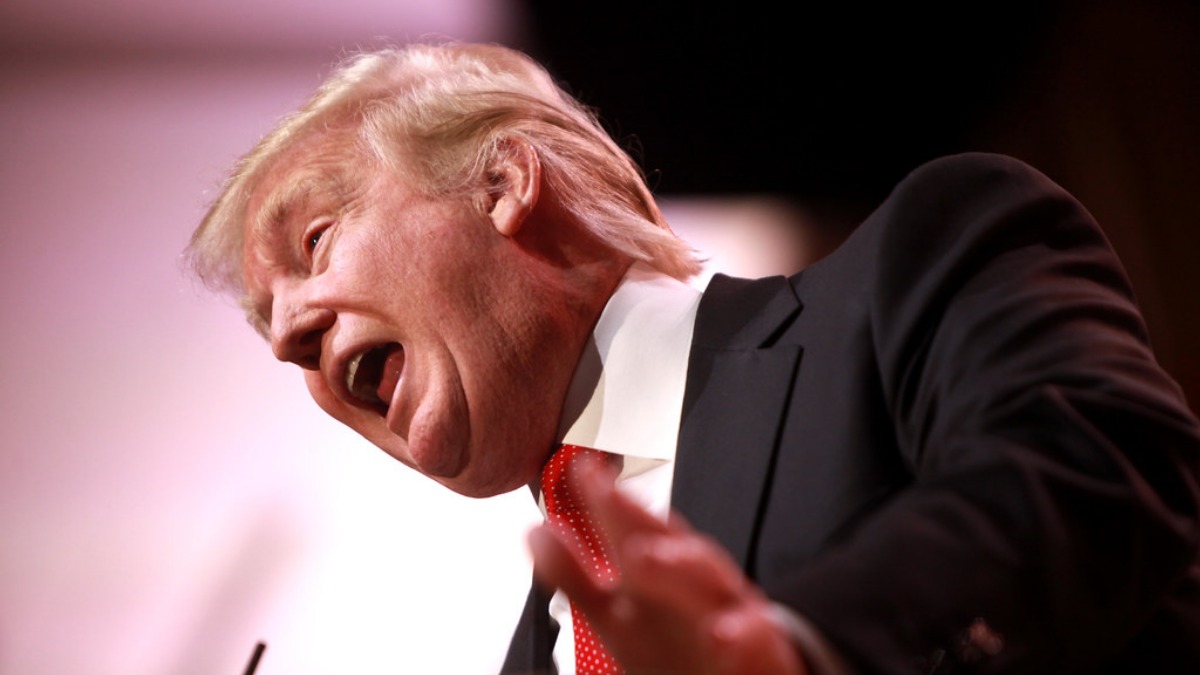

Iran’s Parliament Speaker Mohammad-Bagher Qalibaf declared Friday that the Strait of Hormuz will not remain open, directly contradicting President Trump’s assertion that the critical waterway was “open for business.” The statement came as Trump was delivering a speech in Arizona, underscoring a sharp divergence in messaging from the two nations over one of the world’s most important shipping routes. As detailed by The Hill, the exchange reflects broader legal and diplomatic disputes that remain unresolved.
Qalibaf made his remarks in a post on X, writing, “With the continuation of the blockade, the Strait of Hormuz will not remain open.” He added that any passage through the strait would be “conducted based on the ‘designated route’ and with Iranian authorization,” and dismissed Trump’s framing by stating that Iran “is not affected by those tricks.”
Earlier that day, Trump had announced on Truth Social and in phone interviews that Iran had agreed the Strait was “open for business,” while maintaining that the U.S. blockade would stay in effect. The announcement prompted a stock market rally and a 12 percent drop in oil prices. Trump also claimed in a Bloomberg interview that Iran had agreed to an “unlimited” suspension of its nuclear program and to hand over its enriched uranium.
Iran’s own state media questioned its foreign minister’s announcement
Trump’s statements followed a post from Iranian Foreign Minister Abbas Araghchi, who indicated the Strait was open “for all commercial vessels … for the remaining period of ceasefire.” Even within Iran, however, the message was contested. The Fars News Agency, an Iranian state outlet, questioned Araghchi’s post, characterizing it as having plunged “Iranian society into an atmosphere of confusion.”
The Strait of Hormuz handles roughly 100 to 140 major vessels per day and carries approximately 20 percent of global oil supply. The U.S. blockade, first announced by Trump on Sunday, was directed against shipping trying to enter or leave the strait, and was reportedly a response to Iran’s rejection of a peace settlement proposed by Vice President JD Vance during talks in Islamabad. Experts have noted that the blockade’s economic impact on Iran may not be sufficient to force a political outcome. U.S. Central Command later clarified it would “not impede freedom of navigation of vessels transiting the Strait of Hormuz to and from non-Iranian ports,” indicating the operation is intended as a targeted economic measure against Iran rather than a blanket halt to all traffic.
Iran’s proposed routing scheme redirects sea lanes toward its own coastline near the island of Larak, requiring ships to stop for inspection by Revolutionary Guard forces and pay a toll reportedly reaching $2 million per vessel. Trump responded by threatening that any third-party tanker paying the toll could face arrest and seizure by U.S. forces. The toll requirement is considered a direct violation of international transit passage rules, which prohibit charging any fee simply for the right of passage. Iran also appears to waive the tariff for states it considers friendly, which legal experts say conflicts with the requirement that passage rights cannot be subject to discriminatory considerations.
Neither the U.S. nor Iran are parties to the 1982 UN Convention on the Law of the Sea, which complicates the legal picture. The U.S. maintains that transit passage is a binding right under international custom, while Iran argues it is only required to grant the more limited right of innocent passage, which it believes can be suspended. Iran also asserts that foreign warships must coordinate access with its authorities, a position the U.S. Navy has consistently rejected through its freedom of navigation program since 1979. The U.S. naval blockade was announced after peace talks in Islamabad collapsed over Iran’s nuclear capabilities.
Professor Marc Weller, Director of the International Law Programme at Chatham House, has characterized the blockade as an act of war and warned it further threatens the fragile truce. The UN Security Council, in resolution 2817 (2026), confirmed that the littoral Gulf states are not parties to the hostilities, meaning shipping from those states and their allies should not be subject to wartime restrictions. Iran’s Deputy Foreign Minister Kazem Gharibabadi has argued that “wartime conditions cannot be governed by peacetime rules,” though legal experts note that direct attacks on neutral merchant vessels remain prohibited even under maritime warfare law.









Published: Apr 17, 2026 07:00 pm