



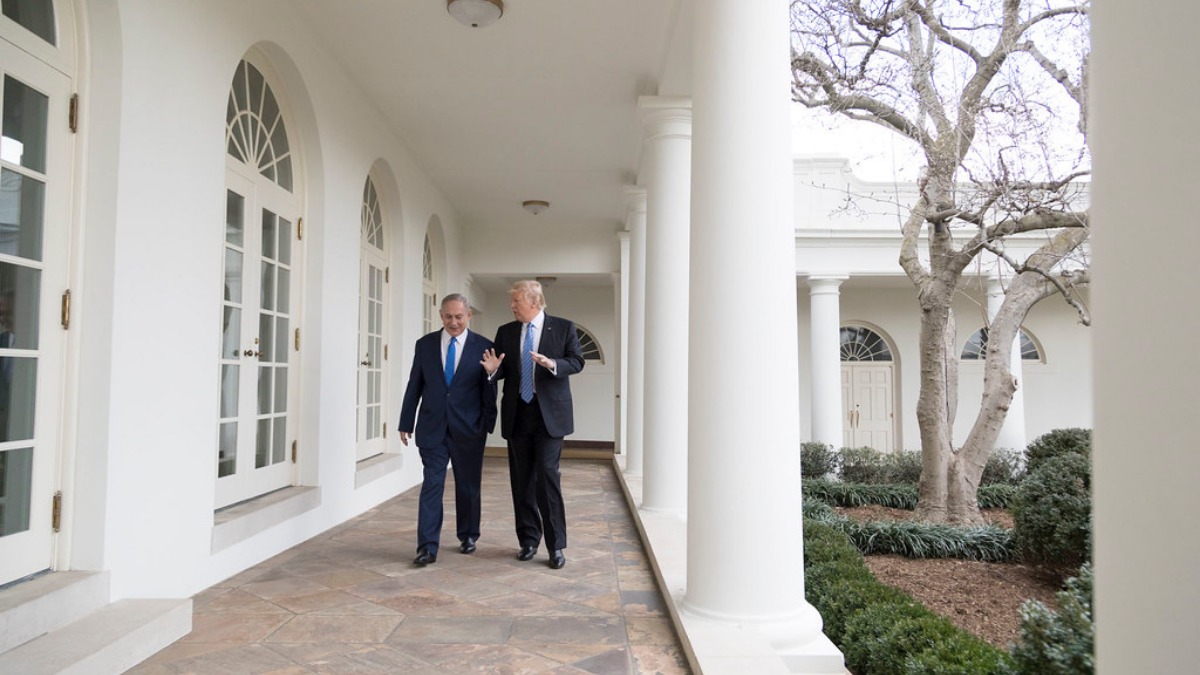

Before the February 28 attack on Iran, Prime Minister Benjamin Netanyahu was not just present in the Situation Room with President Trump; he was leading the discussion. He predicted that a joint US-Israeli strike could bring down the Islamic Republic. But just weeks later, those assurances proved wrong, and Israel was almost completely cut out of the ceasefire talks between the United States and Iran.
Israeli intelligence had proposed sending Kurdish fighters into Iran from Iraq and supported the plan by bombing targets in northwest Iran to help clear the way. Trump publicly backed the idea but reversed course two days later. “I don’t want the Kurds going in,” he said on Air Force One. “I don’t want to see the Kurds get hurt, get killed.” This left Israel feeling demoted from an equal partner to something closer to a subcontractor for the US military.
The sidelining of Israel carries serious consequences, especially for Netanyahu, who faces a tough re-election battle this year. He has long sold himself to Israeli voters as someone uniquely capable of keeping Trump’s support. But in recent weeks, it has become clear that this partnership has come at a steep price, reports the New York Times.
Israel’s three war goals remain out of reach, and a US-Iran deal could mirror the 2015 Obama accord Netanyahu once opposed
Netanyahu set three goals at the start of the war: toppling the Iranian regime, destroying its nuclear program, and eliminating its missile program. None have been achieved. Instead of ending Iran’s nuclear ambitions, a recent American proposal called for a 20-year suspension of Iranian nuclear activity.
This raises the possibility that any final deal could look a lot like the Obama administration’s 2015 nuclear accord, the very deal Netanyahu fought against, and that Trump later walked away from. Israeli officials have had to learn about the back-and-forth between Washington and Tehran through their contacts with regional leaders and diplomats, as well as their own surveillance inside Iran.
They spoke on the condition of anonymity to discuss sensitive matters. The shift in Israel’s position was made plain when Defense Minister Israel Katz said on April 23, as Trump threatened to resume bombing Iran back to the “Stone Age”: “We are only waiting for the green light from the US.”
That statement was a stark contrast from the early days of the war, when both countries had air supremacy and were so confident that they urged the Iranian people to topple their own government. Many in Trump’s inner circle had always viewed regime change as unrealistic.
Trump’s relationship with his inner circle has also drawn scrutiny in other areas, for instance, how Trump handled a private family event raised questions about his decision-making. And once Iran closed the Strait of Hormuz, sending oil prices soaring, Trump came under pressure and agreed to a ceasefire. Iran has emerged from the war with its government intact.
The Islamic Republic has acted as though it won simply by surviving. One of Israel’s biggest concerns now is that a final deal could include lifting economic sanctions on Tehran, potentially flooding Iran with billions of dollars it could use to rearm and help groups like Hezbollah rebuild their weapons supplies. According to the Times of Israel, Senior Republican senators have also voiced concern over the reported terms of the deal Trump is negotiating with Tehran.
Senator Lindsey Graham of South Carolina, chair of the Senate Budget Committee and a vocal supporter of the war, warned on X: “If a deal is struck to end the Iranian conflict because it is believed that the Strait of Hormuz cannot be protected from Iranian terrorism and Iran still possesses the capability to destroy major Gulf oil infrastructure, then Iran will be perceived as being a dominant force requiring a diplomatic solution.”
He added: “This combination of Iran being perceived as having the ability to terrorize the Strait in perpetuity and the ability to inflict massive damage to Gulf oil infrastructure is a major shift of the balance of power in the region and over time will be a nightmare for Israel.”
On May 18, Trump told reporters that any agreement would include opening the Strait of Hormuz, but did not mention Iran’s nuclear program. Around the same time, Trump’s administration has also been making headline-grabbing moves on other fronts, including restricting entry from countries with Ebola risks while setting special conditions for returning American citizens.






Published: May 24, 2026 09:00 am