



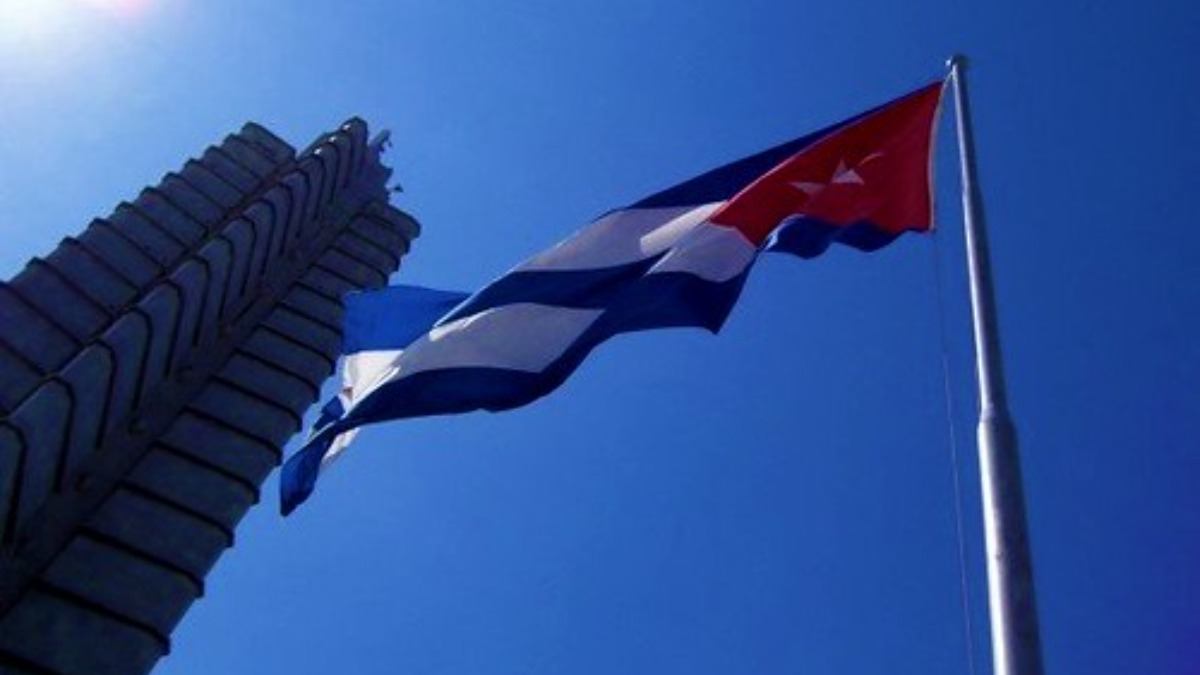

Cuban Ambassador to the U.N. Ernesto Soberón Guzmán stated that Havana is ready to defend itself if attacked, The Hill reported. This declaration arrives following months of an oil blockade and persistent threats of political intervention from the Trump administration. The rhetoric from the ambassador highlights a growing tension between the two nations, setting the stage for what many observers see as a critical period in U.S. and Cuban relations.
During an appearance on Fox News, Guzmán made it clear that the Cuban government has no intention of backing down. “If someone thinks that words like ‘give up,’ ‘surrender’ or ‘collapse’ are in the Cuban people’s dictionary, that person — those people are sorely mistaken,” Guzmán said. He emphasized that the national sentiment remains focused on endurance and autonomy. “In the Cuban dictionary, you will find words like ‘resilience,’ ‘resistance,’ ‘defense of our sovereignty’ and ‘defense of our independence,’” he added.
The pressure on the island intensified on Friday when President Trump issued an executive order. This order places additional sanctions on Cuban officials identified as corrupt, as well as those working within the energy, defense, financial, or security sectors. In response, Cuban Foreign Minister Bruno Rodríguez labeled the move as both illegal and abusive. The diplomat argued that the proliferation of unilateral coercive measures and the occupation of territories are plunging the world into a multidimensional crisis.
The diplomat specifically noted that Cuba is in the crosshairs of U.S. imperialism
Secretary of State Marco Rubio has been a central figure in the push toward regime change in Havana, a goal that leadership on the island has largely rejected. Rubio has argued that the long-standing U.S. embargo is tied to political change on the island. While noting that the law is codified, Rubio has been blunt about his assessment of the country’s current state.
“The law is codified, but the bottom line is, their economy doesn’t work. It’s a nonfunctional economy,” Rubio said, pointing out that Cuba has historically relied on subsidies from the former Soviet Union and Venezuela. Because those subsidies are no longer arriving, Rubio believes the current leadership is unable to manage the situation. “They don’t get subsidies anymore, so they’re in a lot of trouble, and the people in charge, they don’t know how to fix it, so they have to get new people in charge,” he added.
The economic reality on the island is becoming increasingly difficult for the average citizen. Energy and power shortages, which have been significantly aggravated by the embargo, are now affecting essential services. Reports indicate that these disruptions have impacted hospital services for those with chronic illnesses and have fundamentally altered the daily lives of many Cubans.
Despite these hardships, Guzmán indicated that Havana remains open to accepting aid from the U.S. if it were offered. He also pointed to recent public displays of support for the current government. “You know that we had a parade last Friday … as part of our celebration of the labor date, and there were 500,000 people in Havana, more than 5 million people all around the country, saying that we are ready to talk with the U.S. but ready to defend our sovereignty, our independence,” he said.
Ambassador Guzmán maintained that any future diplomatic engagement must be based on a foundation of mutual respect. He stated that relations should be “based on reciprocity, based on equal footing, based on respect, sovereignty and independence, and based on no interference in the internal relations.”
This stance comes as the Trump administration continues to signal that it is closely watching the situation. President Trump recently spoke to reporters, suggesting that he views the nation as significantly weakened and that he feels he has a free hand in determining U.S. actions toward the country. “Whether I free it, take it, I think I can do anything I want with it,” Trump said. “You want to know the truth, they’re a very weakened nation now.”



Published: May 5, 2026 01:45 pm