



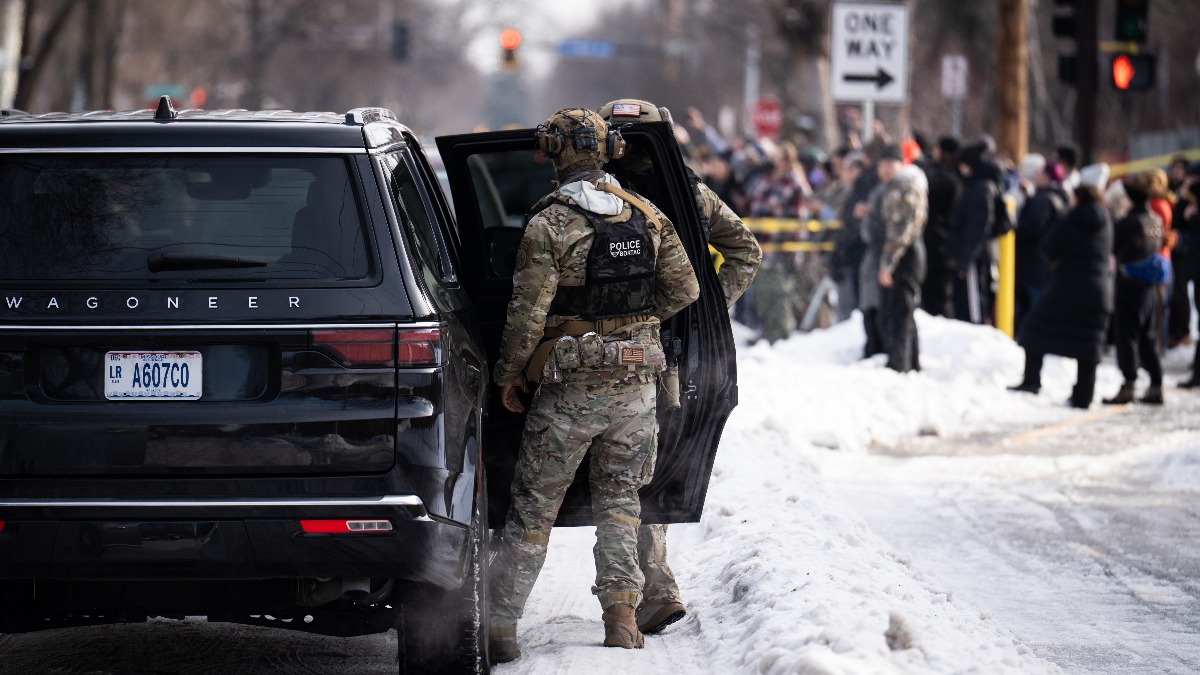

The Department of Homeland Security has quietly shut down the Office of the Immigration Detention Ombudsman (OIDO), the only office responsible for investigating abuse and misconduct in immigration detention. The closure comes as the Trump administration has been pushing to increase detention capacity. Over 30 people died in ICE custody last year, making it the deadliest year since 2004.
According to an internal email obtained by HuffPost, the closure means public signage will be removed and inspections will stop. The office’s public-facing website, which helped families and attorneys of detainees file complaints, has already been taken offline. A DHS spokesperson said Congress was responsible for the closure by failing to fund the office, but the text of the appropriations bill did not actually require the closure.
The number of people held in detention facilities currently stands at around 60,000, a record high under the Trump administration. This year is already on track to be even deadlier than last, with 18 reported deaths in just the first four months, as per CBS News. Detainees have already been facing poor conditions inside these facilities, including inadequate medical care and insufficient food, and the removal of oversight is expected to make those conditions harder to challenge.
The closure of the immigration detention ombudsman’s office is likely illegal and leaves detainees with no one to turn to
Adam Isaacson, co-author of a recent report on the dismantling of DHS oversight bodies, says the move appears to be a deliberate effort to reduce oversight of the detention system. “If you’re trying to make detention as miserable as possible… then you’re going to do what you can to get rid of the ombudsman’s office,” he said. DHS has faced several misconduct allegations involving its own officials, raising further questions about internal accountability at the department.
Isaacson also argues that shutting down the OIDO is likely illegal, since the office was created by Congress through legislation. “It’s right there in the law: Congress created this office, so only Congress can take it away,” he said. He also noted that the office likely had enough funding left over from previous appropriations bills to continue operating, meaning the closure was not financially necessary.
In March, a court filing revealed that the OIDO had only five employees remaining, down from over a hundred at the start of last year. The office was originally established in 2019 and was designed to serve as a dedicated oversight body for the immigration detention system. DHS Secretary Kristi Noem has also been at the center of a string of controversies surrounding DHS leadership, adding to growing concerns about the overall direction of the department.
Without the OIDO, there is now no dedicated office to investigate allegations of abuse and misconduct inside immigration detention facilities. Detainees who experience mistreatment, denial of medical care, or other violations have lost their primary formal channel for raising complaints.
Isaacson described the broader pattern of cuts this way: “It’s death by a thousand cuts, and this is just one more way that they’re trying to get people out of the immigration system.” The closure also has direct consequences for families on the outside.
Attorneys and relatives of detainees previously used the OIDO’s website and complaint system to flag urgent issues, including medical emergencies and mistreatment. With that system gone, it is now much harder for people to report problems or get responses from the government about conditions inside facilities.
The closure leaves detainees, their families, and their attorneys with no clear path to file complaints or seek help when problems arise inside detention facilities. With deaths in ICE custody already rising and no oversight office in place, advocates warn that the situation inside detention centers is likely to get worse before it gets better.







Published: May 5, 2026 12:00 pm