



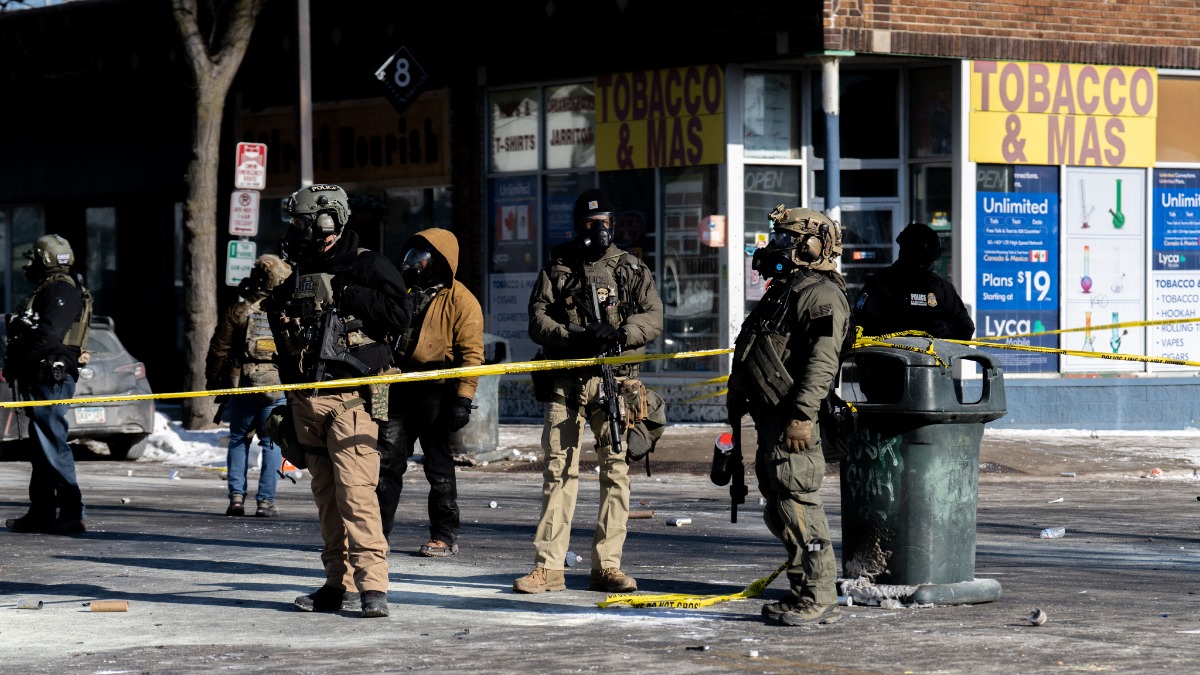

New York just dropped some of the toughest rules in the country on federal immigration agents, and the list of restrictions is long. The state’s new budget deal bans ICE agents from wearing masks while on duty, blocks them from using local jails to hold detainees, and stops them from searching homes, hospitals, churches, or schools without a judge-signed warrant, the New York Times reported. It also cuts off formal and informal cooperation agreements between state or local officials and Immigration and Customs Enforcement.
Gov. Kathy Hochul didn’t hold back when she talked about why these changes were necessary. She pointed straight at the Trump administration’s immigration crackdown, calling out tactics that went way beyond targeting “hardened criminals and gang members.” Instead, she said, agents were separating nursing mothers from their infants and dragging an 85-year-old widow out of her home in her nightgown.
“They didn’t just target them—they used intimidation to evade responsibility,” Hochul said. “New York will no longer stand for it.” Even with the new rules, she made it clear that law enforcement could still coordinate on public safety matters, but the days of unchecked ICE operations in the state are over.
The mask ban is one of the most standout parts of the package, but it doesn’t stop there
Under the new law, all state and federal officials, including ICE agents, are prohibited from wearing masks on duty unless there’s a specific safety need. Federal officials have argued that masks protect agents from harassment, but supporters of the ban say they allow agents to act without accountability.
California tried a similar law last year, but a federal judge struck it down, ruling that restricting it to federal officers was discriminatory. New York’s version is broader, applying to more officials, and lawmakers are hoping that’ll help it survive legal challenges. If it does, it could set a precedent for other states looking to rein in federal immigration enforcement.
The package also includes a provision that lets families sue if they believe government agents violated their constitutional rights to life, liberty, or property. That’s going to be a major point of contention in the courts, and Democrats are fully expecting legal battles. Those cases won’t just be about the specifics of New York’s law; they’ll be a real-time test of what happens when states push back against federal immigration enforcement.
Andrea Stewart-Cousins, the majority leader of the State Senate, called the package a “hard-won compromise” that balances individual rights with public safety. Assemblyman Tony Simone, a Manhattan Democrat, was even more direct: “New York must never back down to Trump and his masked ICE thugs. This is a massive win for our constitutional rights, safety, and accountability in policing.”
Not everyone is celebrating, though. Tom Homan, who served as President Trump’s border czar, threatened to respond with force if the measures were approved. “We’re going to flood the zone,” he said during a speech in Phoenix earlier this week. “You’re going to see more ICE agents than you’ve ever seen before.” Hochul didn’t back down from the threat. “I don’t take well to threats,” she said. “They’re going to find that out. We’re going to pass what we think is important to protect New Yorkers.”
The new rules also ban 287(g) agreements, which deputize local officers to enforce immigration laws. That’s a big deal for Hochul, who’s facing an election in November against Bruce Blakeman, the Nassau County executive. Blakeman has been vocal about his county’s cooperation with ICE, and he’s already promised to challenge the new law in court.
“In the last year, because we were with ICE, we have not raided one school, we have not raided one church, not one hospital, not one day care center, and we removed 2,000 illegal migrants with criminal records,” he said. He argues that local cooperation makes communities safer, but Hochul and her allies see it differently. They point to cases like Nurul Amin Shah Alam, a blind Rohingya refugee who died after immigration agents left him alone outside on a cold Buffalo night.
The city’s medical examiner ruled his death a homicide, and Hochul referenced it when announcing the budget deal. “Come on, that’s not who we are,” she said. “Not as New Yorkers, not as Americans.”







Published: May 7, 2026 07:15 pm