



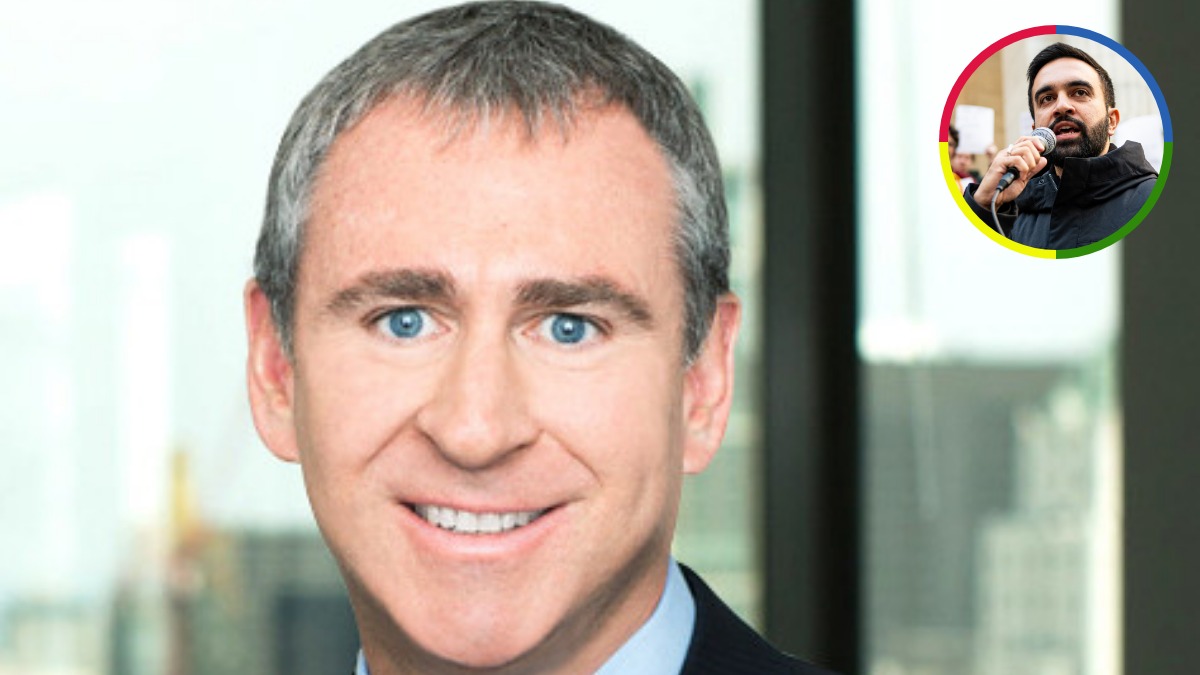

A high-stakes battle over the future of New York City’s tax policy is currently unfolding, pitting Mayor Zohran Mamdani against billionaire hedge fund manager Ken Griffin. The conflict centers on a proposed annual fee for luxury properties known as a pied-à-terre tax, which aims to target second homes in the city valued at more than $5 million.
This proposal has sparked a sharp reaction from the business community, with Griffin explicitly stating that he plans to focus on growing his business interests in Miami rather than Manhattan, claiming that under the current political climate, “New York doesn’t welcome success”.
The tension reached a boiling point at the Milken Institute Global Conference in Beverly Hills, California, where Griffin described a video produced by Mamdani as “creepy and weird”. In the video, which was posted on social media to coincide with tax day in April, the mayor stood outside the skyscraper on Central Park South that houses Griffin’s $238 million penthouse, the BBC reported.
During the clip, Mamdani declared his intent to tax the rich, specifically highlighting the penthouse as an example of a property used to store wealth that sits empty for much of the time
Griffin expressed concern that such rhetoric creates security risks, referencing the nearby shooting of UnitedHealthcare chief executive Brian Thompson. He noted that “anything that creates, like an agitation, in the extremist on either side of the aisle is a frightening dynamic”.
Despite the backlash, the mayor’s office remains firm in its stance. Press secretary Joe Calvello stated that the mayor wants all New Yorkers to succeed and recognizes the contributions of entrepreneurs who make the city an economic engine. Calvello noted that this includes figures like Griffin, who is a major employer in the city.
However, he emphasized that this does not change the reality that the city’s tax system is fundamentally broken. According to the mayor’s office, the status quo is “unsustainable and unjust” and “rewards extreme wealth while working people are pushed to the brink”.
The core of the issue lies in a property tax system that experts say is deeply flawed. While buildings like the one housing Griffin’s penthouse were built at a cost of $1.5 billion, they are often significantly undervalued for tax purposes. Because the city assesses luxury condos and co-ops based on hypothetical rental income rather than market value, these properties often pay far less than their worth suggests.
This systemic issue has persisted for decades, with various mayors failing to implement comprehensive reforms. While a pied-à-terre tax is projected to generate at least $500 million annually from an estimated 11,200 second homes, some housing experts like Moses Gates of the Regional Plan Association argue that it is not a substitute for broader property tax reform.
The debate also touches on the broader question of whether tax hikes drive wealthy residents away. While critics of the mayor warn that higher levies will push business leaders out of the city and ultimately lower the total tax revenue, research suggests the migration patterns are more complex.
Sociologist Cristobal Young of Cornell University has pointed out that while tax flight is not a myth, only about 15% of millionaires who move actually secure a lower tax bill. Instead, many wealthy individuals remain rooted in places where they have built strong social and professional connections. Data from the non-profit Fiscal Policy Institute suggests that the primary driver of out-migration in New York is actually the ongoing affordability crisis, which disproportionately affects families with young children rather than just the ultra-wealthy.
Mamdani’s broader agenda goes well beyond the pied-à-terre tax. He has suggested that raising taxes on the wealthy could eventually provide as much as $9 billion for his policy initiatives, including an increase in the corporate tax rate from 7.25% to 11.5%.
However, these more ambitious plans have met with resistance at the state level, with Governor Kathy Hochul rejecting such tax hikes. For now, the implementation of the luxury property tax remains a central focus of the mayor’s efforts to address what he views as an unfair distribution of the city’s economic burden.






Published: May 7, 2026 06:45 pm