



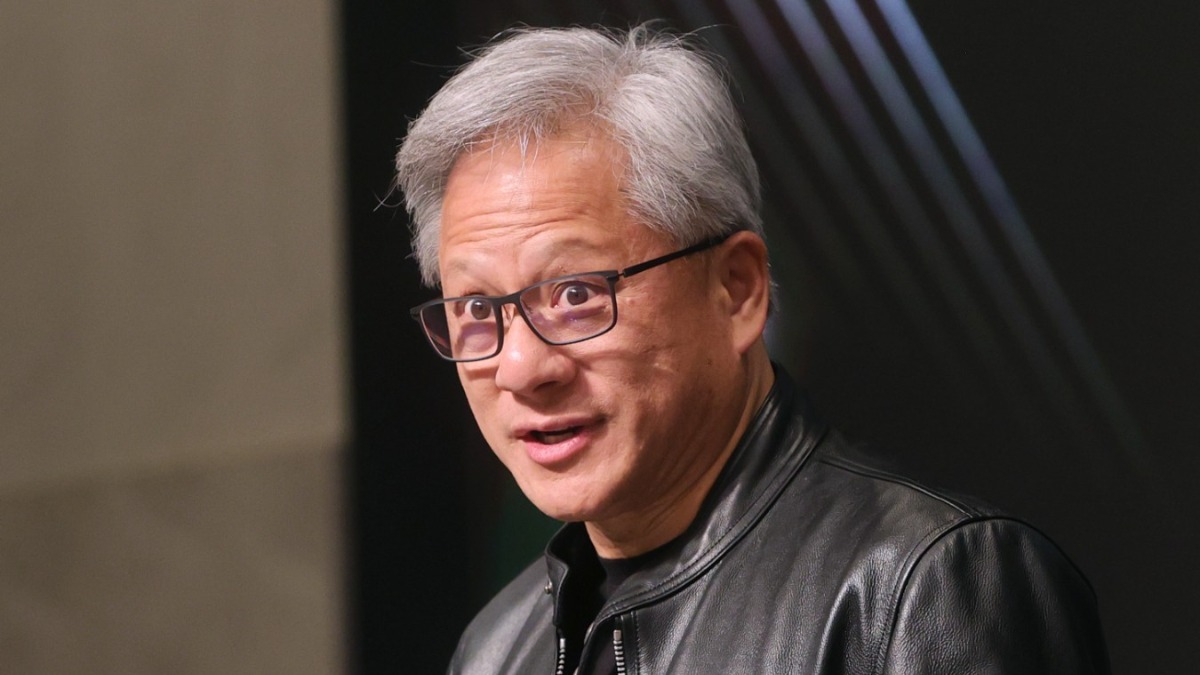

Nvidia CEO Jensen Huang is taking a stand against the trend of high-profile billionaires leaving California, even as the state considers implementing a significant wealth tax. While other major figures in the tech industry are heading to states like Nevada and Florida to avoid potential financial hits, Huang is actively encouraging his peers to stay put in the Golden State, Fortune reported.
He shared his perspective during a conversation with Congressman Ro Khanna at the Stanford Graduate School of Business last week. Even though the state faces criticism for having some of the highest taxes in the world, Huang remains unfazed by the prospect of paying more.
The debate over the proposed wealth tax has been heating up for some time. In March, Congressman Khanna and Senator Bernie Sanders introduced the Make Billionaires Pay Their Fair Share Act, which aims to set a 5% annual wealth tax on U.S. billionaires. Furthermore, a specific ballot initiative in California seeks to impose a one-time 5% wealth tax on the state’s wealthiest residents.
Ro Khanna has been a vocal supporter of these measures
Khanna famously used a post on social media to invoke Franklin D. Roosevelt’s stance against wealthy individuals who threatened to leave the country. He noted that if Silicon Valley billionaires chose to exit the state, he would miss them very much.
This sentiment did not sit well with the tech elite. Many former donors and allies of Khanna revolted, leading to a primary challenge launched by venture capitalist Ethan Agarwal. Other heavy hitters, such as former Google chairman Eric Schmidt, have started supporting a super PAC to oppose the measure and back a competing initiative that would block the tax.
Even California Governor Gavin Newsom has expressed that he is adamantly against the proposal. Palmer Luckey, the founder of Anduril Industries, also voiced his frustration on X, stating, “You are fighting to force founders like me to sell huge chunks of our companies to pay for fraud, waste, and political favors for the organizations pushing this ballot initiative.”
Despite the backlash, Huang’s position is particularly striking given his status as the eighth-richest person in the world. With an estimated net worth of around $167 billion, the proposed one-time tax would cost him over $8 billion personally. Regardless of the massive sum, Huang has been consistent in his message for months.
Back in January, he told Bloomberg that he was perfectly fine with the tax and hadn’t even thought about it once. He emphasized that the primary reason companies like Nvidia remain in Silicon Valley is the access to a deep talent pool. He noted that while the company maintains offices all over the world, they go where the talent is located. During his talk at Stanford, he reiterated this commitment, saying, “We chose to live in Silicon Valley, and whatever taxes they would like to apply, so be it.”
The future of the tax remains uncertain, as it has yet to be officially placed on the ballot. Proponents of the initiative must secure approximately 875,000 valid signatures by June 25 to qualify for the November 3 election. While people like Governor Newsom have raised concerns about how such a levy might impact the state’s tax base, the conversation continues to evolve.
Beyond the tax debate, Huang also used the platform to address the growing anxiety surrounding artificial intelligence and its impact on the job market. He argued that the narrative suggesting AI will destroy jobs is not only unhelpful but factually incorrect. He acknowledged that while technology inevitably changes the nature of work, it does not necessarily lead to mass unemployment.
To illustrate his point, he brought up the field of radiology. In 2016, Geoffrey Hinton, often called the Godfather of AI, predicted that radiologists would be replaced because AI would become proficient at analyzing scans. Huang noted that while Hinton was right about AI permeating the field, the outcome for human workers was the exact opposite of what was feared. The number of radiologists has actually increased over the last decade. He explained that the tasks within a job are not the same thing as the purpose of the job itself.
As an example, he pointed to his own daily life. He spends much of his time typing and talking, two tasks that AI can now perform at a superhuman level, yet he finds himself busier than ever.









Published: Apr 24, 2026 07:00 pm