



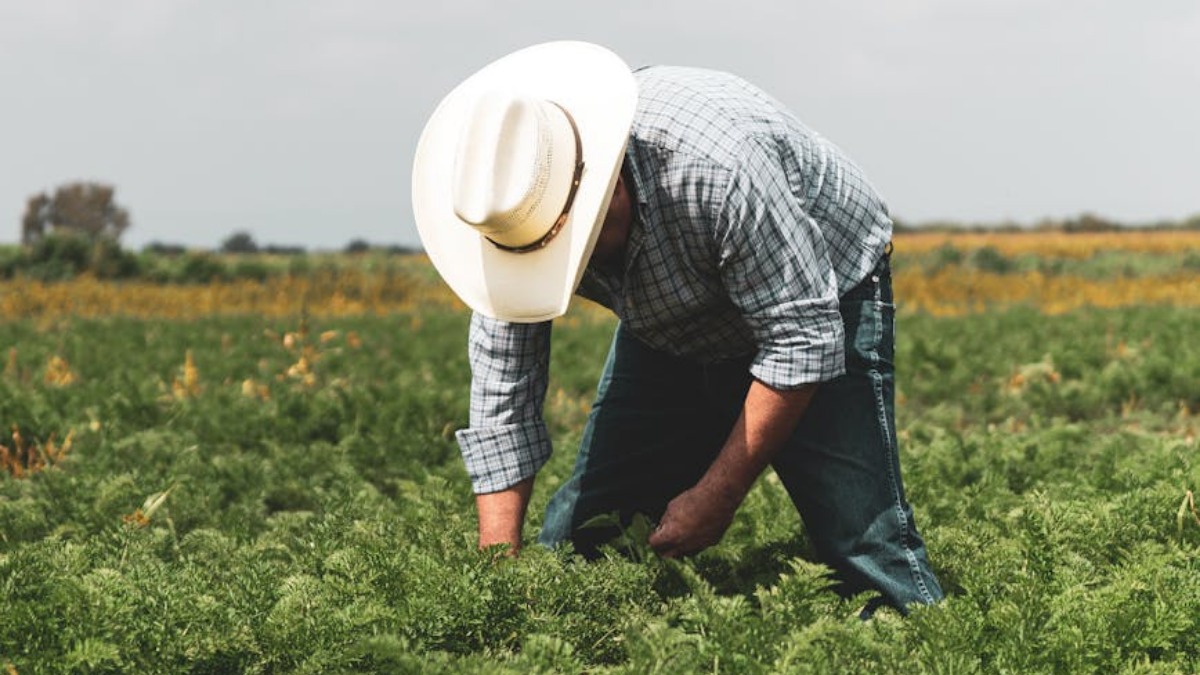

The cost of diesel has surged to $5.64 per gallon, creating a massive financial burden for American farmers as they grapple with the most severe drought conditions in recent history, MS Now reported. This dramatic price hike of roughly 48 percent since February 28, when the United States and Israel launched a joint war effort in Iran, is making it nearly impossible for agricultural operations to maintain their normal planting and harvesting schedules.
Farmers like Vaughn Willoughby, who has managed Pritchett Farms Nurseries for several decades, are currently facing a double threat. On one hand, the lack of rainfall has turned pastures brown, leaving fields that should be lush with grass in April looking barren and dry.
On the other hand, the rising cost of fuel needed to power tractors and irrigation pumps is eating into already thin margins. Willoughby noted that he uses up to 500 gallons of diesel just as the spring planting season ramps up. For larger operations, that number balloons into the thousands of gallons each month, especially when dealing with crops like tobacco or corn.
It is a tough situation for producers who rely heavily on fuel to keep their equipment running during the most critical times of the year
This fuel crisis is inextricably linked to the ongoing conflict in Iran and the Strait of Hormuz. Because this region plays such a vital role in the global supply of crude oil, the current instability has choked off a significant portion of the world’s supply. The impact is felt everywhere, from the gas station to the farm gate.
When you consider that these tractors are often attached to irrigation pumps that run for hours at a time, you can see why the fuel price spike is so devastating. It is not just about moving equipment around; it is about the very survival of the crops through a period of extreme water scarcity.
The United Nations has highlighted that a third of the world’s fertilizer supply moves through the Strait of Hormuz. With blockades currently in place, the cost of this essential commodity has skyrocketed. The American Farm Bureau Federation recently reported that 70 percent of farmers across the country simply cannot afford the amount of fertilizer they need for their upcoming seasons. The data shows that this pain is not distributed evenly, as more than 80 percent of farmers specializing in cotton, peanuts, and rice are struggling to secure the supplies necessary for their operations.
Plastic prices are also climbing, adding yet another layer of complexity to the situation. Crude oil is a core ingredient in the manufacturing of these materials, and costs for certain commodity-grade plastics have risen by as much as 20 percent since the start of the conflict. Willoughby mentioned that farmers rely on plastic wraps during the winter months to shield their crops from harsh cold. He was proactive enough to purchase his supplies ahead of time, but many others are not in such a fortunate position.
Looking at the broader environmental picture, the situation is dire. According to the U.S. Drought Monitor, 95.5 percent of North Carolina is currently facing severe drought or worse as of last week. This is a staggering shift from early April, when only 1 percent of the state was experiencing similar conditions. Nationwide, the impact is just as widespread, with over 60 percent of the continental United States covered by drought. This is the highest percentage recorded for this time of year since the Drought Monitor began tracking these trends in 2000.
For Willoughby, the daily reality is a struggle to keep his cattle fed while the pastures remain brown. He explained, “We’re using up resources right now that we don’t have a replacement for.” He further added, “If it doesn’t rain, we’re not going to be able to cut more hay because there won’t be more hay to cut. So we’re burning through bales of hay every day feeding the cattle that we got, because clearly there’s not a lot of grass out here for them to graze on.”
The dry conditions are so extreme that Willoughby described it as the driest spring he has ever seen in his life. He told MS NOW, “This is probably the driest I’ve ever seen in my life. In April. It’s drastic. Very shocking to see how dry, how brown all the pasture is.” As he waits for relief, he holds onto the words of his grandfather. “Granddaddy George used to say it’ll always rain one day before it’s too late,” Willoughby said. “Well, we hope that it will. It’s time now.”








Published: May 5, 2026 04:15 pm