



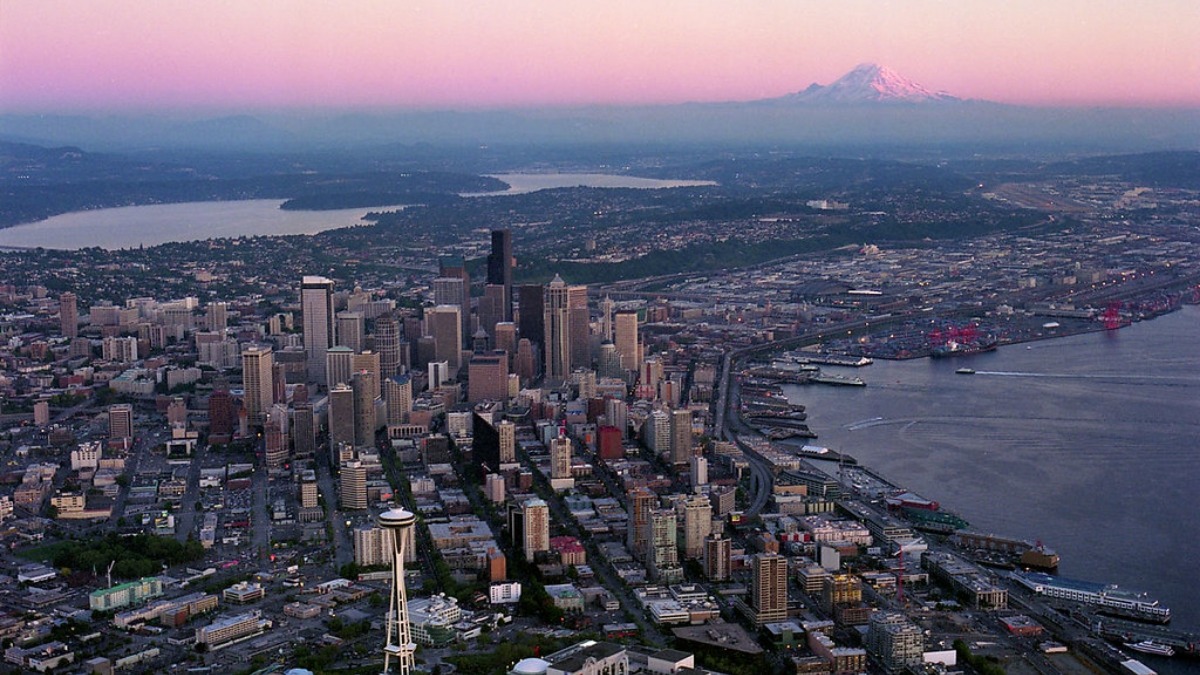

Scientists are currently warning that Washington’s Mount Rainier could unleash a catastrophic mudslide that has the potential to devastate three large towns within minutes, Popular Mechanics reported. While the mountain is often viewed as the crown jewel of Washington postcards, it holds a much more menacing reputation in the scientific community.
Standing over 14,000 feet tall, it is considered the most dangerous volcano in the United States. This designation comes down to its massive height, frequent seismic activity, and its precarious location directly upstream of a population center that includes over 100,000 people.
While many people online have speculated that Mount Rainier is about to erupt, experts clarify that magma is not the primary threat here. The true danger lies in what are known as lahars. These are highly destructive, fast-moving slurries of water, volcanic ash, rock fragments, and debris that rush down the slopes of a volcano. They can reach speeds of over 100mph and grow to be hundreds of feet tall. As National Autonomous University of Mexico volcanologist Lizeth Caballero García explained, “They are complex phenomena that change a lot during transport. They can grow, they can dilute.”
Lahars can travel over fifty miles from their origin point, leaving a path of destruction in their wake.
The physical makeup of Mount Rainier makes it particularly susceptible to these events. The mountain contains 25 major glaciers, which harbor more than five times as much snow and ice as all the other Cascade volcanoes combined. Because of this, even a minor thaw could trigger a lahar of massive proportions.
The forecast path for such a disaster cuts directly through Pierce County, a region home to 150,000 people and located just 60 miles from Seattle. If a mudflow were to trigger, it would likely run roughshod over the towns of Orting, Puyallup, and Sumner in just 30 minutes. This scenario could impact as many as 60,000 residents, with Orting facing the highest risk due to its limited evacuation routes.
Perhaps the most unsettling aspect of this threat is that a major eruption is not required to set these events in motion. Experts have highlighted the danger of a no-notice lahar, which can be triggered by heavy rainfall, rapid snow melt, or even a sudden dam failure. These events are notoriously difficult to predict because they occur without the typical warning signs of volcanic activity. Former Cascades Volcano Observatory geophysicist Andy Lockhart expressed the gravity of this risk, stating, “[No-notice lahars are] the thing that goes bump in the night. It creeps me out.”
History shows us just how deadly these phenomena can be. In November 1985, the Nevado del Ruiz volcano in Colombia produced a torrent of mud, rocks, and icy water that inundated the town of Armero. That single event resulted in the deaths of over 23,000 people in just minutes. More recently, the Hayli Gubbi volcano erupted in northern Ethiopia’s Afar region. While Mount Rainier has a history of these events, with a significant one occurring over 5,000 years ago that caused a massive amount of material to slide from the summit, the threat remains very real today.
To mitigate the risk of a similar calamity, the Cascades Volcano Observatory has installed a sophisticated network of monitors throughout the region. These devices are designed to detect seismic activity and the onset of lahars, transmitting that information immediately to disaster responders. Preparation is also happening at the community level.
Two years ago, over 45,000 students and staff from more than 20 schools in communities west of the mountain participated in one of the world’s largest lahar drills. These simulations have consistently shown that fleeing on foot is the most effective way for residents to get out of harm’s way, given the extremely short timeframes they would have to react.
It is important to keep this information in perspective. Although Mount Rainier has erupted in the past, there has not been a large eruption for hundreds of years. The current concern is not about lava or fire, but about the massive volume of water and debris that sits perched on the mountain’s slopes. Whether it is triggered by a storm or a change in the mountain’s structure, the potential for a no-notice lahar is a reality that officials are taking very seriously.
If you live in or visit the area, staying informed about evacuation routes and emergency procedures is the best way to handle the unpredictable nature of these geological hazards. Understanding that these events can occur without warning is the first step in being prepared for what the environment might throw our way.









Published: May 29, 2026 06:15 pm