



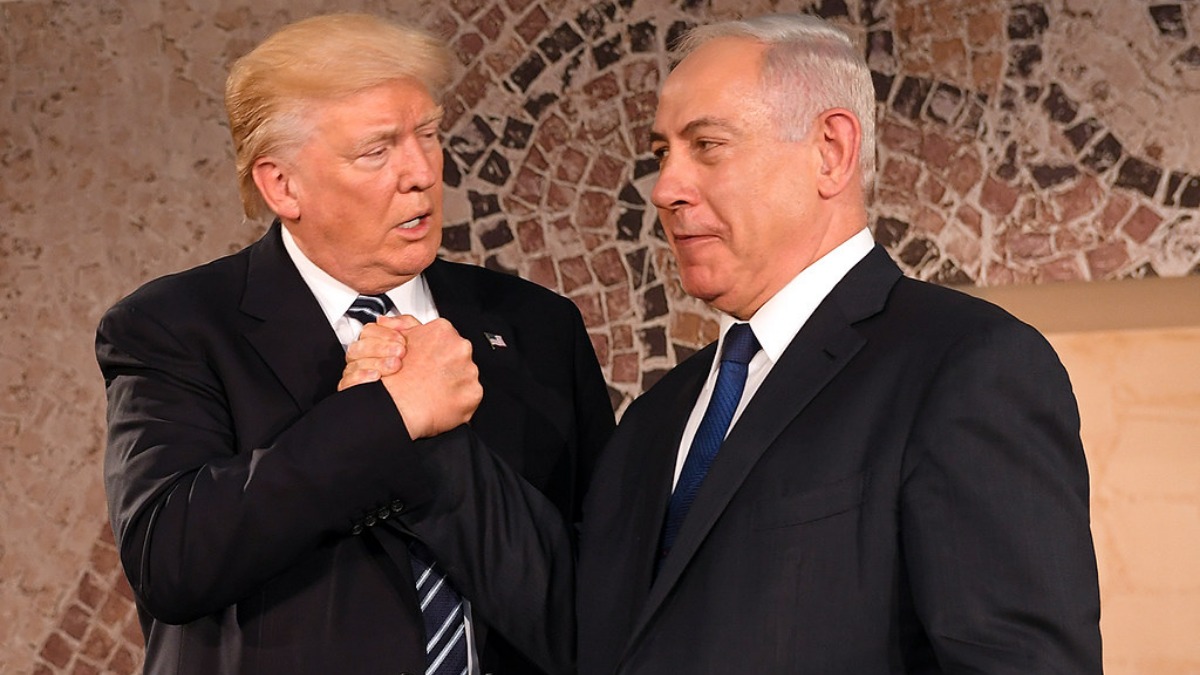

US President Donald Trump caught Muslim leaders off guard during a conference call. He asked them to join the Abraham Accords and sign peace agreements with Israel, but only if a deal to end the Iran war is reached first. This move signals Trump’s push for a historic Saudi-Israeli peace agreement, which has been one of his key foreign policy goals since returning to office.
According to two US officials with direct knowledge of the call, the leaders of Saudi Arabia, the UAE, Qatar, Pakistan, Turkey, Egypt, Jordan, and Bahrain were on the call to discuss the emerging deal with Iran. UAE President Mohammed bin Zayed, who has taken a harder stance on the Iran war, expressed support for the deal. However, when Trump asked them to join the Abraham Accords and normalize relations with Israel, there was an awkward silence on the line.
Trump then joked, “Are you still there?”, a clear sign that the leaders were not expecting the request. Trump also told the leaders that his envoys, Jared Kushner and Steve Witkoff, would follow up on the issue in the coming weeks. The two envoys have been deeply involved in Trump’s broader Middle East diplomacy efforts, reports Axios.
Trump’s Abraham Accords push faces real obstacles in the Muslim world
Trump’s request was especially surprising for Saudi Arabia, Qatar, and Pakistan, which do not have formal diplomatic relations with Israel. These countries have been cautious about normalizing relations with Israel, particularly given the ongoing conflict in Gaza and the wider political tensions across the region.
Saudi officials have been demanding that Israel commits to an irreversible and time-bound path toward a Palestinian state as a condition for normalization, something the Israeli government refuses to agree to. Earlier, Trump had also considered launching a full military assault on Iran before pulling back from the decision.
Sen. Lindsey Graham (R-S.C.), a leading supporter of expanding the Abraham Accords, wrote on X that he backs Trump’s request to the Arab and Muslim leaders. Graham said that if these countries agree to join the Abraham Accords, it would make the agreement “one of the most consequential in the history of the Middle East.” Graham has long pushed for broader Arab-Israeli normalization and sees this as a major opportunity.
Graham also warned that if Saudi Arabia and other countries refuse, it would have “severe repercussions” for their future relationships with the US and would make the peace proposal unacceptable. He called on these countries to follow through on Trump’s request and suggested that the window for such a deal may not stay open for long.
The broader context here is important. Trump’s Abraham Accords, first signed during his earlier term in office, brought Israel into formal diplomatic relations with the UAE, Bahrain, Sudan, and Morocco. Bringing Saudi Arabia into the fold would be a far bigger and more significant achievement, given the kingdom’s influence across the Muslim world.
In a separate development, Israeli Prime Minister Benjamin Netanyahu told Trump during a phone call that Israel would remain free to act against threats in Lebanon, even as Washington pursues an agreement with Iran, according to Reuters.
Reports also indicate that Trump’s team was sent to Pakistan to negotiate an Iran deal, though Tehran reportedly viewed the move with deep suspicion. Netanyahu made clear that Israel will maintain freedom of action “against threats in all arenas, including Lebanon,” and Trump reiterated his support for this principle.
The US is keeping Israel updated on the Iran negotiations. Trump has also made it clear that he will not back down from his demand for the full dismantling of Iran’s nuclear program and the removal of all enriched uranium from its territory. Trump wrote on Truth Social that his call with Netanyahu had gone “very well,” suggesting that the two leaders remain aligned on the key issues despite the ongoing complexity of the regional situation.









Published: May 25, 2026 11:15 am