



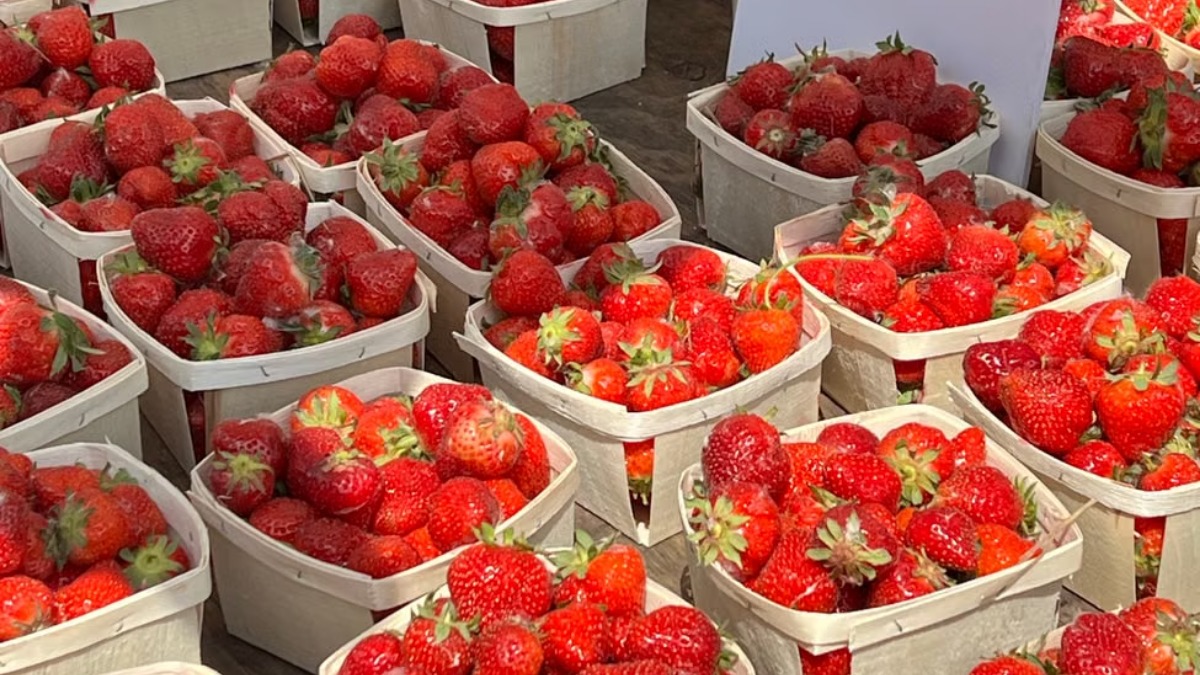

A content creator recently shared a video after visiting an Idaho farmers market, where he came across a stand selling chocolate-covered strawberries that was pulling in surprisingly large numbers. The clip, posted to X and first surfaced by Daily Dot, highlighted just how low the barrier to entry can be for this kind of small business. The vendors, he said, were bringing in far more than most people would expect from a farmers market stand.
In the video, the creator described the vendors as “these dudes making $3 to $4k per day at a random Idaho farmers market.” He noted that startup costs for the stand were around $200. The figures quickly caught attention online, with many viewers surprised by how much revenue the two-man operation was generating.
The story behind the stand carries a bit of a full-circle element. The creator had previously posted a video about the business concept, and the two men running the strawberry stand said they had seen it before deciding to leave the restaurant industry and start their own venture. When the creator met them in person, one of the vendors told him, “He’s always saying you can just do things,” crediting the earlier video with giving them the push to get started.
The vendors turned online advice into a thriving strawberry stand
Some commenters pushed back on the idea, arguing that buying supermarket strawberries to resell was simply repackaging rather than a real product. The creator responded to the criticism by saying, “Everything is repackaging.” Despite the pushback, the stand reportedly sells around 400 servings of chocolate-covered strawberries during a typical market day.
The stand’s success is aided by Idaho’s cottage food laws, which make it relatively easy for small producers to sell homemade goods directly to consumers. As outlined by the Institute for Justice, the state does not require special licenses, registrations, or kitchen inspections for cottage food operations, and the rules were last updated in 2016.
Stories about unexpected side income have circulated widely on social media in recent months, amid other viral posts such as one involving a Costco seafood boil that also sparked debate over pricing online. Reactions to both posts show how closely people online tend to scrutinize the economics behind viral food content.
Under Idaho’s cottage food rules, producers can sell baked goods, jams, jellies, and confections like chocolate-covered strawberries at farmers markets, roadside stands, or through mail order. The only requirement is a placard or label at the point of sale listing contact information, allergen details, and a notice that the food was made in an unregulated home kitchen.
Debates over online advice and career choices have also surfaced in unrelated viral posts recently, amid a separate story about a woman’s second day job loss that drew similarly mixed reactions from commenters. Idaho places no annual sales cap on cottage food producers, allowing operations like the strawberry stand to expand as demand grows.







Published: Jul 25, 2026 06:30 am