



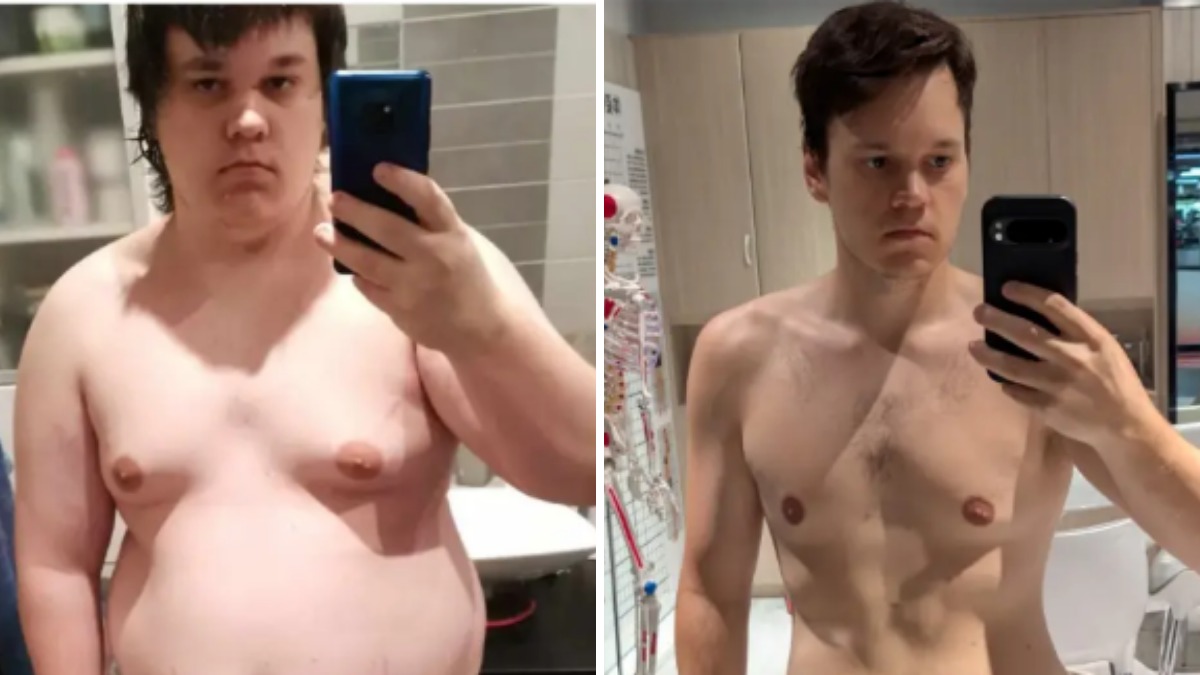

A Swedish man’s dramatic weight-loss transformation is going viral after he documented his time at a brutal four-week “fat camp” in China. André Helgesen, a former system technician, had already dropped from over 21 stone (133 kg) to around 13 stone (82 kg) before deciding to push further during a backpacking trip across Asia.
As detailed by Bored Panda, Helgesen found the program, called Jianfeidaren, in Shenzhen after researching weight-loss options on Reddit. The four-week course combined daily exercise, structured meals, medical checkups, and mental health support, all shared through his TikTok page, @imhelgis.
The camp’s daily schedule ran from 7:30 AM to 9:30 PM, and Helgesen said the environment was less restrictive than he expected. Participants technically had the freedom to cheat on their diets, mirroring the temptations they would face once they returned home.
The camp tested more than his willpower
Helgesen said the biggest surprise was realizing how much of the program relied on self-discipline rather than supervision. “They laid out the schedule and the meals, but if I’d wanted to, I could have cheated on everything,” he said. He added that the realization surprised him, since it mirrored the same personal responsibility he would need once he returned home.
Three intensive workouts made up each day, and Helgesen noted that the personal trainers took part in every session rather than just instructing from the sidelines. Consumer disputes involving unclear billing have also drawn attention lately, including one Planet Fitness member’s $500 charge that staff refused to explain, though that incident is unrelated to Helgesen’s experience. “They suffer, we suffer,” he joked, praising the staff for being kind and helpful despite the language barrier. The program also included badminton classes and a buffet that featured pasta.
The hardest part of the camp, according to Helgesen, was its fasting rules. Participants were kept to roughly 1,300 calories a day, a 1,000-calorie deficit, with dinner served at 5:00 PM and the next meal not until 8:00 AM. He admitted he could not fully stick to the 15-hour fasting window and sometimes ate an apple to get through it.
The results paid off physically and mentally
After the 28 days, Helgesen lost another half a stone (about 3.2 kg), calling the outcome a “huge relief.” He said the experience changed more than his body, describing a shift in how he saw himself after years of feeling insecure about his weight.
“Not just the camp, but that whole identity of being overweight. I can finally stop thinking of myself as the big person and just be myself,” he said. He described the overall experience as “absolutely wonderful,” adding that the self-consciousness he had carried for years had finally faded.
A 2020 study published in the National Library of Medicine found that combining diet and exercise produced better weight-loss outcomes than either approach alone. Wellness routines do not always go smoothly, though, as shown by a Pennsylvania student’s ER visit after a massage appointment turned into a medical emergency, an unrelated reminder that not every wellness experience goes as planned. Dr. Donald Hensrud of the Mayo Clinic Healthy Living Program said diet tends to play a bigger role than exercise for initial weight loss, though both matter for keeping results long-term.
Helgesen encouraged others to prioritize themselves without distractions or excuses, framing his transformation as proof of what focused effort can accomplish. He has not indicated whether he plans to continue his backpacking trip or pursue additional fitness goals following the program.





Published: Jul 26, 2026 12:15 pm