



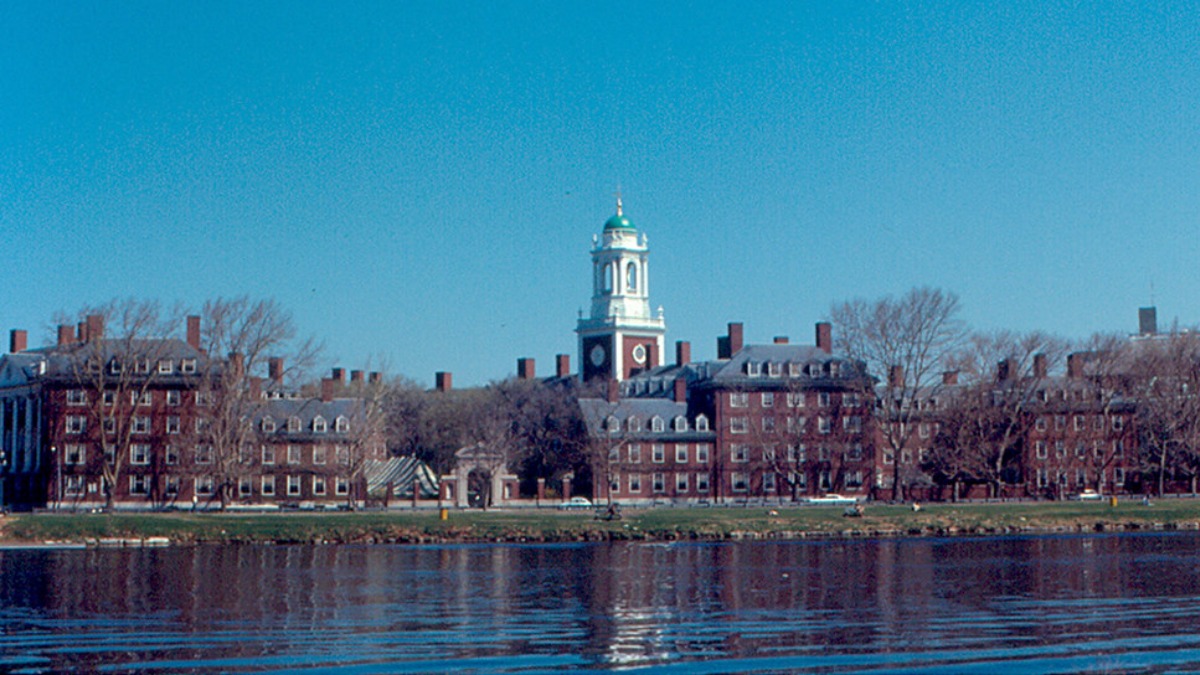

A federal judge has dismissed the lawsuit brought by the Trump administration against Harvard University regarding allegations that the school failed to protect Jewish and Israeli students, The Guardian reported. US District Judge Richard Stearns issued the ruling on Thursday morning in Boston, effectively ending the legal challenge that was originally filed in March.
The case was part of a much broader strategy to pressure the university on various fronts, including diversity, equity and inclusion policies, as well as race in admissions. While the administration has been pushing to force Harvard to align with its specific expectations, this particular attempt to leverage federal civil rights law has hit a major wall.
In his four-page ruling, Judge Stearns emphasized that the administration failed to plausibly demonstrate an ongoing violation of federal civil rights law on the Harvard campus. The judge noted that the complaint relied heavily on a handful of incidents that occurred in March 2025. He characterized these specific events as being “too isolated and episodic” to support a claim that the university is currently engaged in ongoing civil rights violations.
DOJ signals it is not done with this legal battle yet
The original complaint filed by the Department of Justice painted a very grim picture of campus life following the 7 October 2023 attack by Hamas. Government lawyers argued that Jewish and Israeli students were harassed, physically assaulted, stalked, and spat upon. They further claimed that the university administration chose to do nothing in response to these incidents. The Department of Justice maintained that this inaction constituted a violation of Title VI of the 1964 Civil Rights Act, which prohibits discrimination in federally funded programs based on race or national origin.
Judge Stearns was careful to clarify that he was not diminishing any concern arising from the events that occurred on campus in the immediate aftermath of the Hamas attacks. However, he concluded that the Department of Justice had fundamentally misconstrued the purpose of Title VI.
He explained that when Congress framed the 1964 legislation, the intent was not to penalize a wayward funding recipient. Instead, the law was meant to incentivize institutions to bring themselves into compliance. The judge noted that the legislation is forward-looking rather than backward-looking.
The ruling highlighted that the examples provided by the Trump administration were almost entirely restricted to the 2023-24 period. Even after the administration amended its complaint, the judge found it to be devoid of any factual allegations or evidence of noncompliance occurring after Harvard was placed on notice in June 2025. He even went as far as to describe “the government’s presentation as a fevered forewarning of potential havoc” that simply failed to meet the necessary threshold for an enforcement action.
Following the decision, the Department of Justice indicated that the legal battle may not be over yet. Harmeet Dhillon, who serves as the assistant attorney general for civil rights at the Department of Justice, issued a statement on Thursday. She said, “We disagree with the ruling and are assessing next steps.








Published: Aug 13, 2026 06:15 pm