



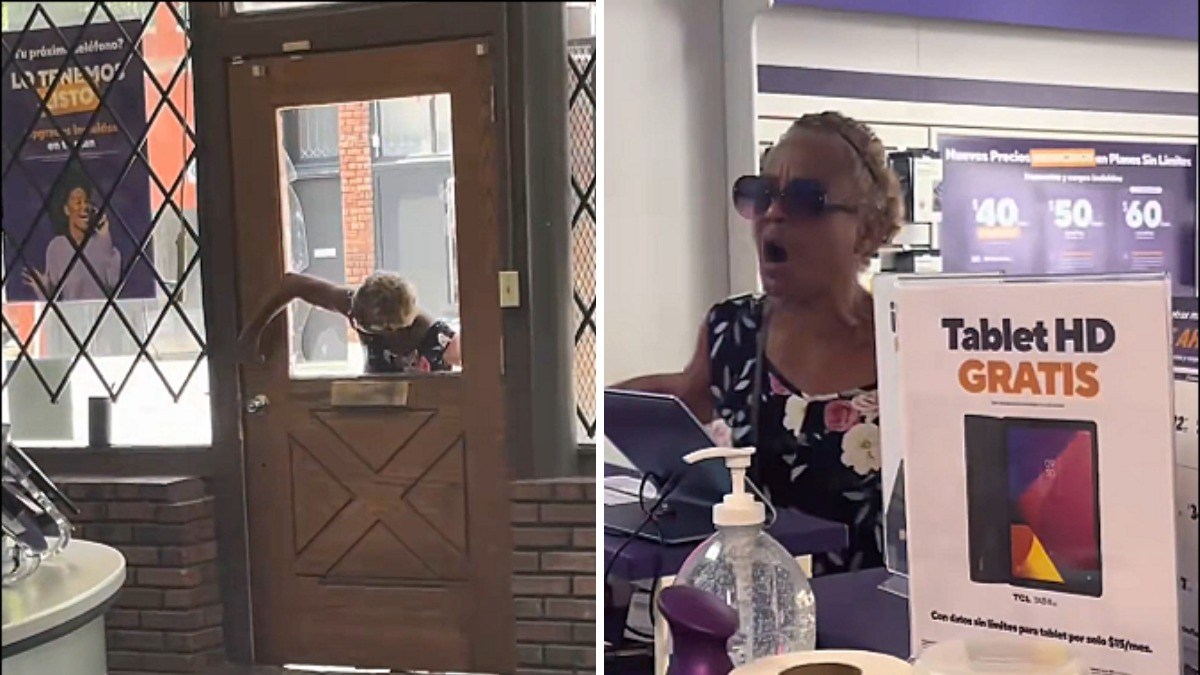

A Missouri woman was recently captured on video allegedly breaking into a store in Kansas City, where video shows her causing significant destruction while staff members looked on in fear. As reported by The Nerd Stash, the incident shows the woman marching into the business after the glass on the front door appears shattered in the footage. She spent the duration of the encounter demanding that employees return an item she believed belonged to her.
She even went as far as to threaten the staff with further destruction of their property if they did not meet her demands. The situation reportedly began after the woman had previously visited the store to purchase a discounted phone to replace one that had broken. It remains unclear exactly what prompted her return or why the confrontation escalated the way it did. When she reached the front counter, she began swiping equipment off the surface.
The staff, understandably caught in a high-stress situation, made no attempt to intervene physically. They remained behind the counter, shouting as the chaos unfolded, until the recording eventually ended. A similar wave of customer-directed hostility drew attention when a compilation video showed workers refusing to accept verbal abuse, sparking a broader conversation about how retail and service employees are treated.
What Missouri law says about this kind of destruction
While we do not have specific details on whether police have taken action as of this writing, the legal ramifications for this kind of behavior in Missouri are quite serious. Under Missouri law, property damage is categorized into two main degrees, along with specific provisions for institutional vandalism. Property damage in the second degree, defined under RSMo 569.120, covers incidents where someone knowingly damages the property of another, provided the damage is under $750.
This is generally classified as a class B misdemeanor. However, if the damage reaches $750 or more, it is elevated to first-degree property damage under RSMo 569.100, which is typically a class E felony. The legal definition of knowingly, as outlined in RSMo 562.016.3(1), is crucial here. It means a person is aware of the nature of their conduct or is aware that their actions are practically certain to cause a specific result.
Essentially, an accident defense generally does not hold up if a person’s actions show a clear intent to destroy property. It is also worth noting that intoxication is not a valid defense in these cases, even if someone claims their capacity was limited at the time. While municipal ordinance violations are sometimes used for less serious property damage, they are usually reserved for minor offenses that carry small fines rather than significant jail time.
Given the nature of this incident, authorities would typically look at the total value of the items destroyed when determining the appropriate level of a charge. In cases where property damage is disputed, defense attorneys often challenge the valuation of the items, as property owners’ estimates can sometimes be inaccurate. The footage shows the woman appearing to knock items off the counter, which would be a factor a prosecutor could point to regarding intent, though how any case would ultimately be argued or resolved remains to be seen.
As of now, there is no public information regarding the aftermath of this specific event or if a formal investigation is underway.







Published: Aug 20, 2026 03:45 pm