


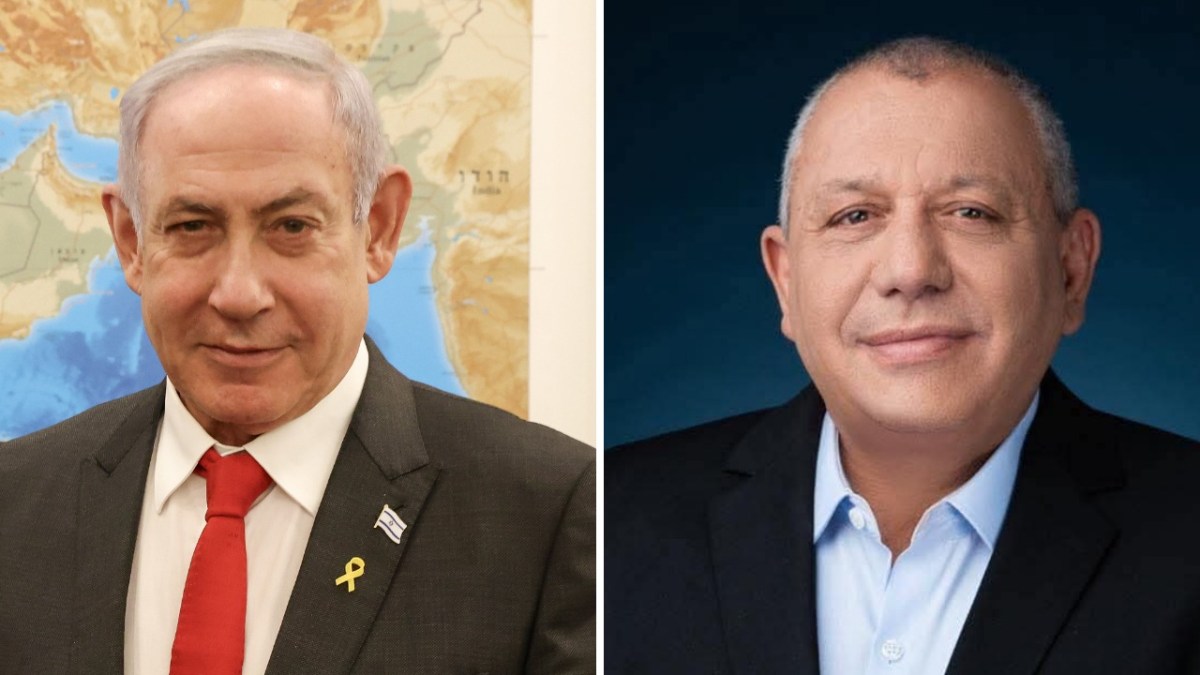

Israel is currently facing deep political uncertainty after the final election results left no clear winner. CNN reported that the country faces weeks, and potentially months, of political limbo because neither the right-wing bloc led by Prime Minister Benjamin Netanyahu nor the opposition alliance led by Gadi Eisenkot reached the 61-seat majority needed to form a government in the 120-seat parliament, the Knesset.
The stalemate has led Netanyahu’s Likud party to claim that the Arab-led parties “stole” the election, per CNBC. CNN reported that Palestinian citizens of Israel, who make up 20% of the population, came out in record numbers, with turnout reaching nearly 80% compared to 53% in the last elections. They are descendants of Palestinians who were able to keep their homes when Israel was formed in 1948. The shift gave Arab parties 19 seats in the Knesset, an all-time high for those parties.
Many voters were reportedly motivated by rising crime, a desire to end Netanyahu’s coalition, and a feeling that they could no longer sit on the sidelines. Dr. Ahmad Tibi, a leader of the Joint List, which holds 11 seats, said his community “wanted to bring down this criminal government,” pointing to the policies of Netanyahu, Smotrich, and Ben-Gvir.
The path forward is complicated by ideological divides
CNBC reported that Likud and its allies secured 53 seats, while the opposition bloc led by Eisenkot won 48. However, the opposition is split on whether to rely on Arab-led parties, which leaves Eisenkot with a very difficult path toward a majority.
The Joint List has reportedly expressed a willingness to support an opposition-led minority government to combat crime and stop home demolitions and raids, which reportedly escalated after a deadly Hebron checkpoint shooting. Many Jewish opposition leaders have historically ruled out such partnerships. Tibi signaled the party’s openness, saying, “If they want us to help, we will be there,” and adding that it wants to back the opposition’s candidate.
CNBC noted that Likud claimed, without evidence, that the Arab-led parties’ rise resulted from foreign interference aimed at “a foreign takeover of the Knesset” and at toppling the right-wing government. Since then, the chair of the Central Elections Committee, Noam Sohlberg, has asked the Shin Bet to investigate the allegations.
Sohlberg said he could not attest to the substance of the suspicions. Qatar, which was accused of trying to mobilize Arab voters, denied the allegations, calling them “ridiculous and dangerous in equal measure.”
CNN reported that President Isaac Herzog is expected to begin consultations with party leaders next week to determine who has the best chance of building a coalition. If the designated leader fails to form a government within 28 days, with a possible 14-day extension, the mandate could pass to another candidate.
If all efforts fail, Israel may be headed toward its seventh general election in eight years. The outlet noted two other coalition options. One is a union of the right-wing and opposition blocs, though Eisenkot has specifically ruled out partnering with Netanyahu. The other is Netanyahu persuading opposition members and individual lawmakers to defect and join him.
For now, CNBC noted that Netanyahu remains the caretaker prime minister. P R Kumaraswamy, emeritus professor at Jawaharlal Nehru University, described him as a “comeback kid.” He added, “He did not become the longest-serving prime minister by accident.”









Published: Oct 31, 2026 06:45 am