



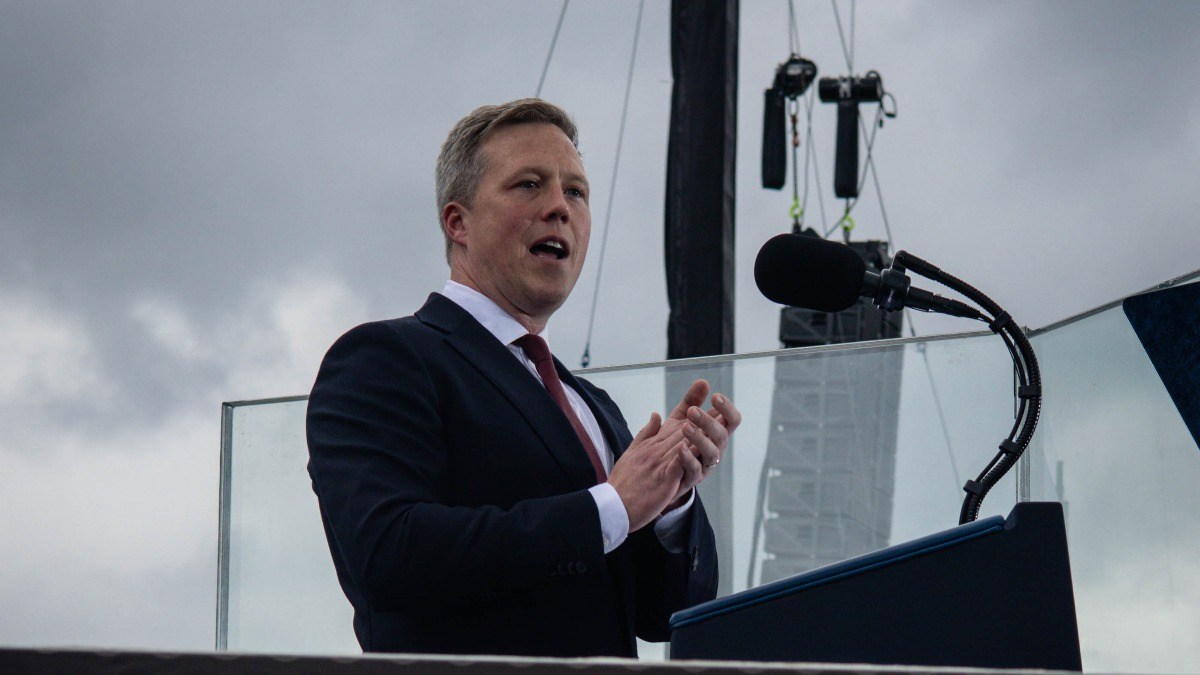

Army Secretary Dan Driscoll reportedly raised concerns about the Army’s future under Defense Secretary Pete Hegseth directly with President Donald Trump during a White House meeting last week, according to four people familiar with the conversation, The Atlantic reports. Those people said the meeting showed how far tensions between the two Pentagon leaders had grown. They also described dysfunction inside the building.
One of the people said Trump appeared surprised when Driscoll told him how many generals and other top officers had been fired, pushed out, or passed over for promotion under Hegseth. Driscoll argued that the Army could not transform itself as needed because so many leaders had left, this person said. The same person said Trump expressed concern about the deep cuts to the Army’s senior leadership.
Driscoll informed the president that he intended to resign. By today, he was on his way out. A person familiar with the resignation said Driscoll had “brought up concerns with the administration surrounding Army transformation and readiness and Hegseth’s blocking those efforts specifically by firing the Generals who were responsible.”
Leadership vacancies and personnel clashes followed Driscoll’s exit
With Driscoll gone, the Army is left without a top civilian leader, a Senate-confirmed top general, a confirmed Army general in charge of operations, or a confirmed commander of Army troops in Europe, people familiar with the matter indicated. Because of firings across the service over the past year, the Army now has fewer generals than at any point in recent history, those accounts suggested. The service has more than 450,000 active-duty soldiers.
White House spokesperson Anna Kelly said Driscoll had been “highly effective” in improving soldier readiness and advancing other administration priorities. “The United States Army is more powerful than ever thanks to his work alongside the Commander-in-Chief and Secretary of War,” Kelly wrote in a statement. Driscoll’s spokesperson declined to comment, and Driscoll did not respond to a call seeking comment. Hegseth did not have an immediate response to the departure.
Driscoll arrived at the Pentagon in February 2025. People familiar with the matter said he often reminded others that he had a direct line to Vice President JD Vance and that he had served at times as a counterweight to Hegseth.
Some current and former defense officials said they believe Driscoll’s friction with Hegseth had the unintended effect of widening the purge of uniformed leaders. A defense official said of a possible replacement more aligned with Hegseth, “What happens then? Generational damage.”
The friction between Driscoll and Hegseth is part of a broader pattern of dissent at the Pentagon, as top military leaders reportedly warned Hegseth that the Iran operation was too much for too long, but he extended forces anyway.
Hegseth has sought to reshape the Army since arriving at the Pentagon early last year, according to people familiar with the effort. They said he placed like-minded generals in influential roles, intervened in promotions, and ended diversity initiatives.
Defense officials said the two men were often at odds over personnel. Hegseth fired Army Chief of Staff Gen. Randy George in April after Driscoll had advocated for him, those officials said. Gen. Chris Donahue, who headed U.S. Army Europe and Africa, left several months later. Hegseth was also reportedly terrified of losing his job to Driscoll.
The Army has been without a confirmed top commander since George’s firing. Gen. Christopher LaNeve has been acting in that role and has often gone straight to Hegseth, bypassing Driscoll, according to defense officials. Hegseth is expected to nominate LaNeve to lead the Army, those officials said. One congressional staffer said, “We are not going to reward Hegseth for what he did to the Army.”
Army Undersecretary Michael Obadal is expected to take over in the near term. Many Pentagon officials said they fear the administration may nominate Pentagon spokesperson Sean Parnell, an Army veteran who previously ran unsuccessfully for U.S. Senate in Pennsylvania.
Officials said Parnell shares Hegseth’s focus on culture and personnel issues and has no experience managing a large organization. They said a more politically driven successor could keep the Army focused on cultural fights rather than the long-term planning Driscoll and others said the service needs.






Published: Sep 1, 2026 01:00 pm