



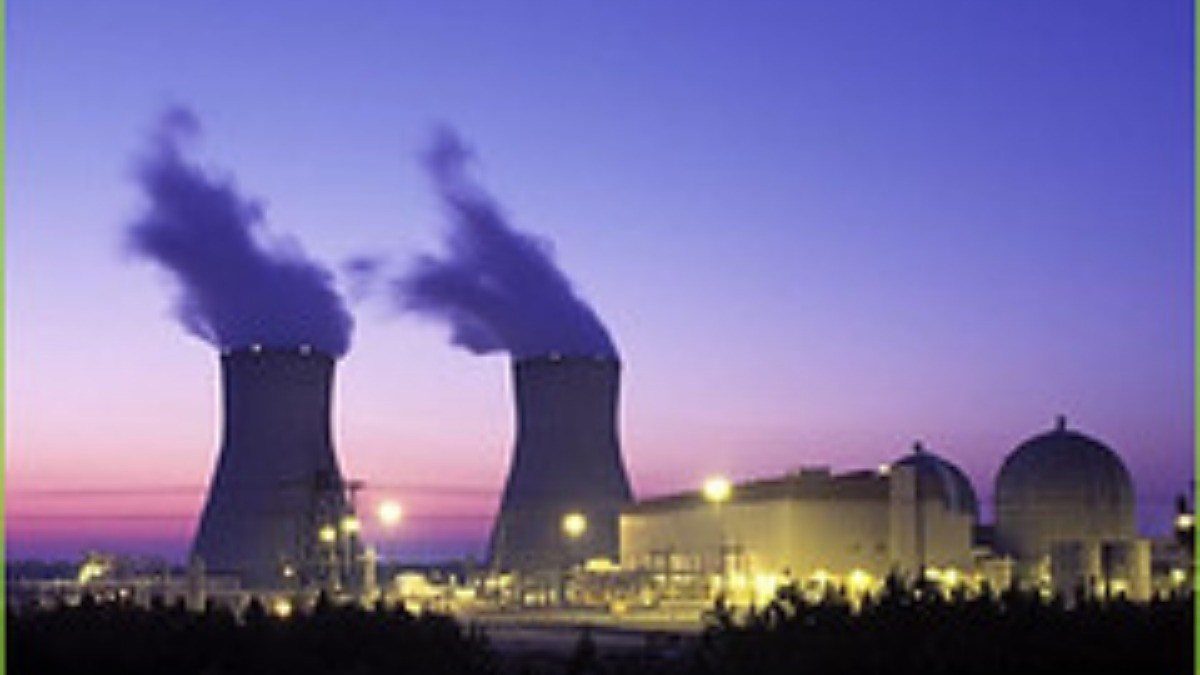

Two people familiar with the proposal told The New York Times the Trump administration plans to announce Monday that the United States will no longer limit the planet-warming pollution power plants send into the air when they burn coal and gas. Those people asked not to be named so they could describe the plan before it became public. Electricity generation is the second largest source of carbon dioxide and other greenhouse gases in the United States.
The Environmental Protection Agency change would finish the administration’s rollback of the most consequential climate policies put in place under Presidents Joseph R. Biden Jr. and Barack Obama, the article said. If the plan holds up against the legal fights that are expected, it could also stop later administrations from setting greenhouse gas limits on power plants.
Lee Zeldin, the E.P.A. administrator, is expected to make the announcement at a gathering of energy ministers from the Group of 20 nations in Houston, the two people familiar with the matter indicated. E.P.A. representatives did not immediately reply to a request for comment late Sunday evening.
Environmental groups and energy experts have flagged the U.S. power sector’s global emissions rank
The plan has drawn opposition from environmentalists and energy experts and has been in development since last spring. They have noted that if the U.S. power sector were treated as its own country, it would rank as the fifth-largest climate polluter in the world after China, the entire United States, India, and Russia.
President Trump has derided climate change as a “hoax.” In his second term, the E.P.A. has taken apart policies meant to slow global warming that oil, gas, and coal companies have called costly. The administration has worked to make fossil fuel production and use cheaper and easier, especially for the electricity needed by growing artificial intelligence data centers.
Earlier this year, the E.P.A. dropped greenhouse gas standards for car tailpipes and relaxed limits on planet-warming chemicals used in air conditioners and refrigerators. The most far-reaching step was the agency’s repeal of the scientific finding that had given it legal power to write climate rules in the first place.
Power plants would still face some limits on mercury, arsenic, and other contaminants under the plan expected Monday, though the E.P.A. has already eased how much mercury they may release. The Biden administration’s power plant climate rules, finalized in 2024, covered coal plants already running and gas plants that might be built later.
Coal plants could have met those rules by adding technology to capture carbon before it leaves the smokestack and store it underground. Gas plants could have run on cleaner fuels such as hydrogen, which gives off no emissions when burned. The Biden administration estimated the regulation would also keep other pollutants, such as soot, out of the air and produce $120 billion in public health benefits by 2047.
That estimate included a projection that in 2035 alone the rule would prevent up to 1,200 premature deaths, 870 hospital and emergency room visits, 360,000 asthma attacks, 48,000 school absence days, and 57,000 lost workdays. The Trump-era E.P.A. has stopped counting public health gains from cutting pollution in the cost-benefit reviews required for clean-air rules. The agency now counts only the expenses businesses incur in following the rules.
The coal industry said the Biden-era emission limits were expensive and unworkable. It was predicted that many coal plants would shut down rather than spend billions of dollars on new pollution controls.
The industry has long argued that coal is essential for affordable energy, a stance echoed by recent federal actions, such as when Trump used wartime powers to invest in coal. Coal is the dirtiest fossil fuel and, when burned, produces more air pollution and more greenhouse gases than any other energy source.
Experts say the economics of coal are poor as well, with new coal plants costing more to build and run than gas plants or renewable sources such as solar and wind. Coal’s share of U.S. electricity has fallen for decades. It supplied more than half of the nation’s power in 1990 and dropped to roughly 17 percent in 2025.
A large share of U.S. coal plants are more than 40 years old and are slated to close in the years ahead. The Sierra Club, an environmental group, said 330 coal plants have retired since 2010 and 60 more have announced plans to close by 2031. Many utilities are rushing to build new gas plants to serve power-hungry A.I. data centers. Cleanview, an energy data company, said more than two dozen gas plants went up in the United States last year.
Democratic-led states and environmental groups have said they plan to take the E.P.A. proposal to court. Legal experts have called the plan vulnerable. Courts have spent more than a decade wrestling with the E.P.A.’s power to regulate climate pollution from the electricity sector. In 2016, the Supreme Court blocked the Clean Power Plan, President Obama’s main effort to cut carbon emissions from coal plants.
The Supreme Court ruled in 2022 that the E.P.A. could limit those emissions but could not require a nationwide shift away from coal. The court said the agency could use only narrower rules that govern how individual power plants operate.









Published: Sep 14, 2026 12:00 pm