



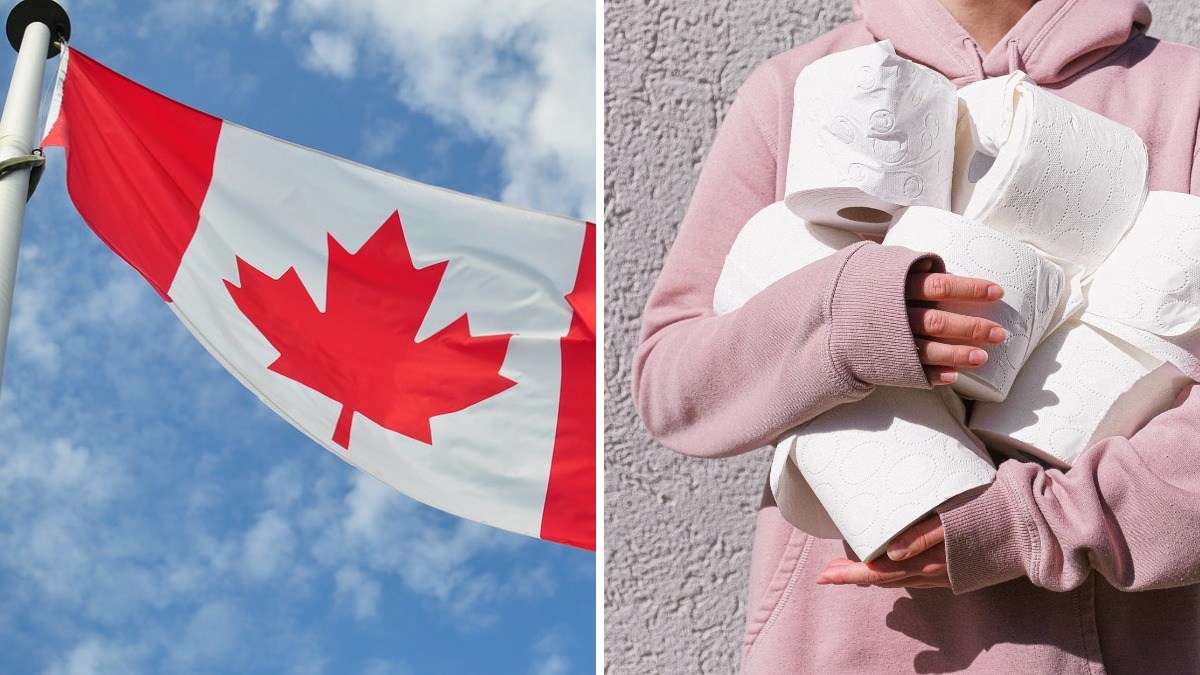

As trade negotiations between the two nations collapsed last weekend, the cost of everyday essentials is set to rise. Starting on 8 September, Canada plans to impose tariffs ranging from 25% to 50% on “toilet paper and face tissue stock,” The Guardian reported. This move serves as retaliation for a 50% tariff hike implemented by Washington DC.
It is easy to assume that American-made products are safe from international trade disputes, but the reality is that our manufacturing supply chain is deeply intertwined with our northern neighbor. Even if your preferred brand is produced domestically, those companies rely heavily on lumber-rich Canada for the raw materials needed to create paper products.
We already saw a preview of this trouble last year when Procter and Gamble, the company behind Charmin, noted that it would need to raise prices due to existing tariffs. The United States imported 328 million dollars worth of toilet paper from Canada in 2024, as per the World Bank. Retailers like Costco depend on this supply, and when the cost of raw goods goes up, you can expect those prices to be passed directly to you at the checkout counter.
Toilet paper seems like the first victim of the trade war with Canada, but it’s not the only one
The United States accounts for more than 20% of global tissue consumption despite having only 4% of the world population, as per Statista. On average, an American uses 141 rolls of toilet paper every single year, placing the country at the top of the list for usage, just ahead of Germany. With these kinds of numbers, even a small percentage increase in price per roll will translate into a significant dent in your wallet over the course of a year.
The trade war extends far beyond the bathroom, touching everything from your dinner plate to your garage. President Donald Trump has introduced a 50% tariff on nearly all Canadian dairy products, though he opted to exclude Canadian cheese.
In a direct response, Canada has applied its own 50% tariff on American dairy and a 25% tariff on American cheese. Seafood is also on the chopping block, with Canada placing a 25% tariff on American fish and lobster. This specific move caught the attention of Republican Senator Susan Collins, who represents the lobster-rich state of Maine and has described the move as a mistake.
Automotive manufacturing is also facing a major hurdle. A 25% tariff on Canadian cars and auto parts is already in place, and the administration has threatened to double that to 50% if a deal is not reached by 1 January 2027. Since the American auto industry relies so heavily on parts sourced from Canada, this could make buying or repairing a vehicle much more expensive for everyone.
Despite these clear economic warning signs, the administration remains optimistic about the outlook for consumers. Jamieson Greer, the United States trade representative, stated, “The fundamentals are good,” and added, “I don’t think this is going to affect anything.” He further claimed that “there’s no possible way” the dispute will impact those of us shopping for daily goods.
As of now, Canadian Prime Minister Mark Carney has vowed to match American tariffs “dollar for dollar,” and he has unveiled a list of nearly 900 American goods that will face these new costs.









Published: Aug 27, 2026 12:00 pm