



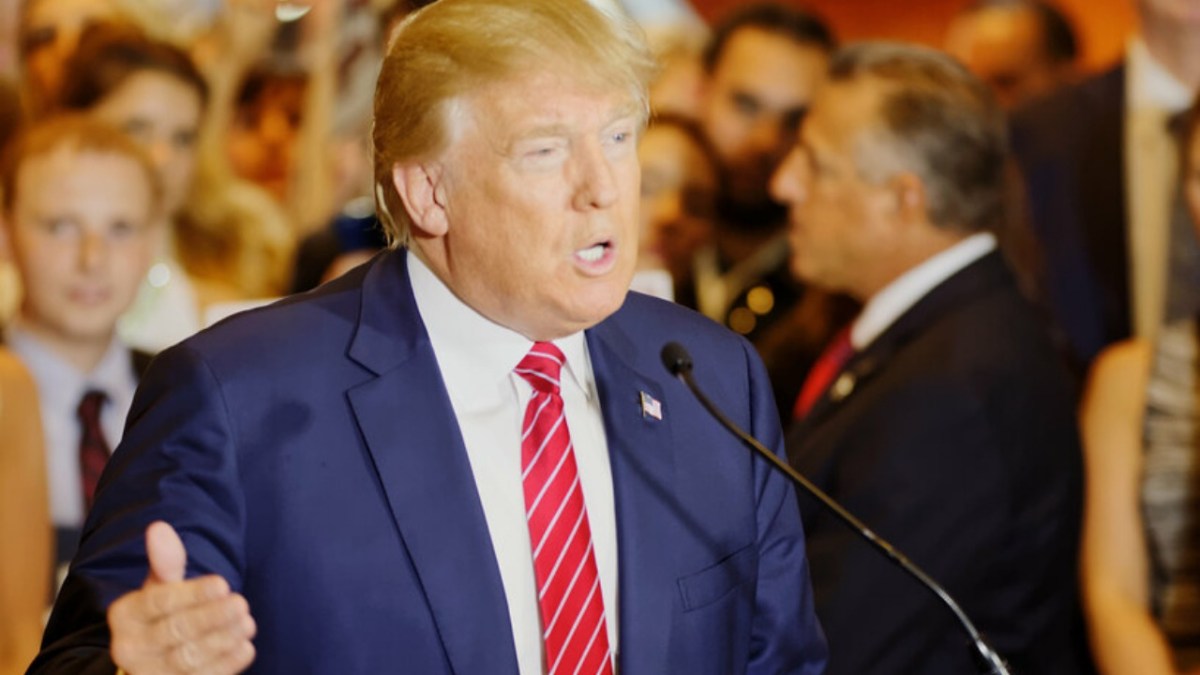

The Trump administration’s decision on Monday to formally rescind carbon rules for power plants may complicate its own legal strategy heading into the Supreme Court. As reported by Politico, stepping back from regulating emissions from power plants, the largest industrial source of climate pollution in the United States, could weaken the administration’s argument against pending state-level climate lawsuits.
The administration has relied on the argument that the Environmental Protection Agency holds exclusive authority over greenhouse gas emissions, a position that has been central to its efforts to block climate lawsuits from moving forward in state courts. By stepping back from the specific climate rules it once used to justify that authority, legal analysts say the administration’s own actions could complicate the legal foundation it has built to keep those cases out of state jurisdictions.
Sean Donahue, an attorney who has previously defended federal limits on carbon pollution from power plants, said he expects the administration to attempt some “fancy footwork” to argue the Clean Air Act still blocks state climate action even as it rolls back the rules tied to that argument. Legal observers are watching closely to see how the administration reconciles that tension as its Supreme Court case approaches.
A landmark climate case is set for oral arguments in October
The situation is notable given the pending Suncor v. Boulder case, scheduled for oral arguments at the Supreme Court on October 5. The case is expected to determine whether local and state governments have the legal standing to sue fossil fuel companies over the costs of climate-related disasters, and its outcome could set a precedent for roughly two dozen similar accountability lawsuits moving through courts across the country, a case drawing comparisons to other Supreme Court fights.
Fossil fuels, including coal, oil, and gas, are linked to roughly 68 percent of global greenhouse gas emissions and nearly 90 percent of carbon dioxide emissions, according to the report. Nikki Reisch, director of the climate and energy program at the Center for International Environmental Law, said the lawsuit is aimed at ensuring companies that have caused harm pay their share rather than leaving the burden on the public and local governments facing escalating climate impacts.
According to Time, the Supreme Court faces the broader question of whether state courts have the authority to issue money damages for climate change impacts, or whether that responsibility belongs exclusively to federal courts, Congress, or the president. Michael Gerrard, founder of Columbia University’s Sabin Center for Climate Change Law, has suggested the court could also decide the case is premature since it has not yet gone to trial in Boulder.
The administration has also pursued other climate-related actions this year, including an executive order last April aimed at halting enforcement of state-level climate laws, with particular focus on California, New York, and Vermont, along with efforts to block offshore wind projects in favor of fossil fuel investment.
Justice Samuel Alito has faced calls for recusal from the Suncor case over his financial investments in fossil fuel companies, though a court spokesperson said in a May statement that Alito does not have a financial interest in any party involved and that recusal is not required.








Published: Sep 18, 2026 05:30 am