


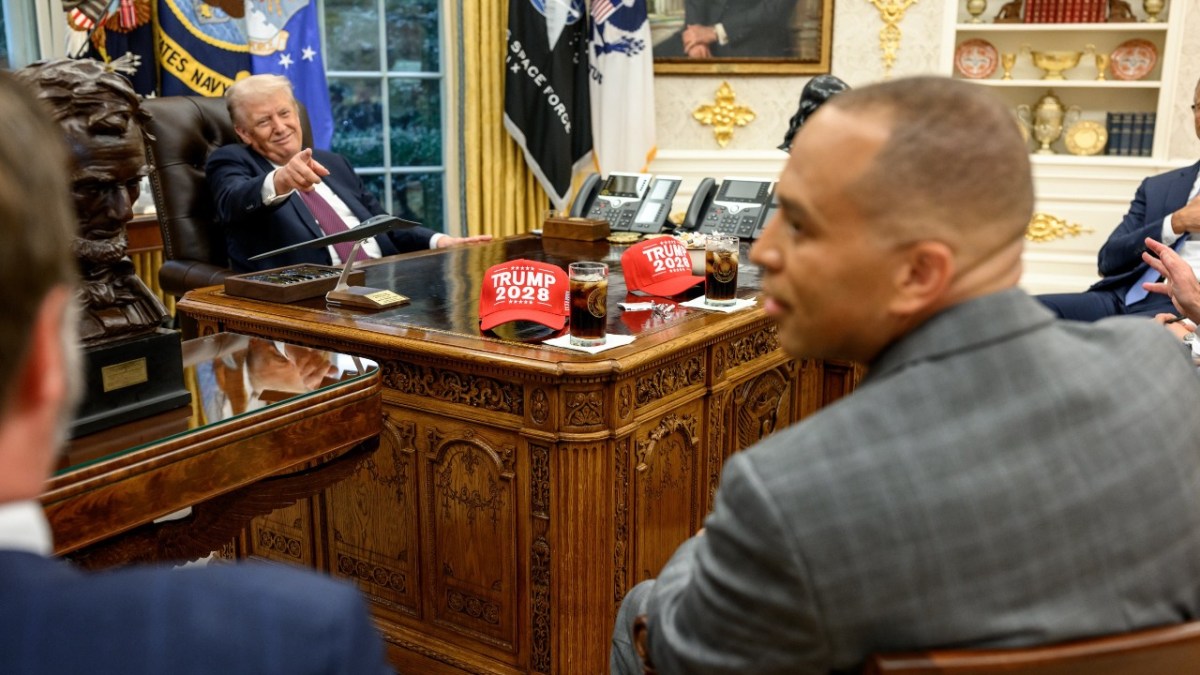

President Donald Trump said in a 60 Minutes interview that aired on Sunday that his administration’s deportation efforts might have gone too far and contributed to Republican losses in the midterms. In his first major interview since his party lost control of both the House and the Senate, Trump indicated he sees room to reach an understanding with Democrats on immigration. He described the idea as something that could actually happen.
Trump told the program he thinks a deal is possible with the incoming Democratic majority. “The deal would be we would work something out. And I think it’s something — I think that’s something that’s actually doable,” he said. He offered no details on what such an agreement might contain.
Shortly after the interview was taped on Friday, Trump named Stephen Miller, the main designer of his hard-line immigration approach, as his new chief of staff. The timing came even as Trump suggested the current policy had been overly strict.
Trump’s interview also covers 2028 succession plans and personal finances
Senate Democratic Leader Chuck Schumer responded on social media Sunday after the interview aired. “Trump says his immigration crackdown went too far,” Schumer wrote. “Apparently, his solution was to put the man responsible for it in charge of the White House. That’s not a course correction. That’s a promotion.”
The immigration enforcement push has been a major part of Trump’s return to office, featuring large-scale operations in several cities that raised arrest numbers sharply.
Two U.S. citizens, Renee Good and Alex Pretti, were killed by federal officers during protests tied to those operations. Democrats have stated that oversight of Immigration and Customs Enforcement and the Department of Homeland Security will be a priority in the new Congress. Ahead of the midterms, Trump had said he would become Mr. Veto if Democrats took over.
Trump said he still wants “killers” and “drug dealers” who are in the country illegally to be deported. At the same time, he indicated openness to letting others remain under certain conditions. He described possible exceptions for “if they’re good people working in a landscaping company, or working in a hotel, or doing something, right? And in some cases, paying taxes.”
On the question of who might succeed him in 2028, Trump suggested he could stay out of the Republican contest. Asked if he would endorse a potential successor, he replied “probably, not necessarily.” He said, “We have a tremendous bench. I have so many people that I have great relationships with.”
When asked about candidates besides Vice President JD Vance, Trump named only Secretary of State Marco Rubio. “I think Marco’s great,” Trump said. “But there are many others and I’d rather not mention their names. There’s some senators that are excellent. I know ’em all, I like ’em a lot. So I may or may not get involved. I don’t know. Maybe I’m better off not getting involved.”
Democrats made Trump’s personal wealth an issue during the midterms. According to the AP Voter Poll, about half of voters nationally said government corruption was “crucial” for their vote for Congress. Asked about reports that his net worth had increased by $3 billion since he returned to the White House, Trump said he pays little attention to it and that his sons handle the family business.
“I devote almost no time to my net worth. I don’t care. I make — I have a lotta money, and far more than I ever thought I’d have. And I guess it’s gone up. I don’t even know,” he said. When asked whether foreign investors in the company he co-owns with his sons might be seeking influence, Trump answered, “I don’t know. But that’s true — look, every president has a problem.”
Trump, who survived an assassination attempt while campaigning in 2024, was also asked if he could forgive his political enemies. He said it would be easy to claim that he could. He then added, “I probably cannot do that, no, because I do hate some of my enemies, and I always will.”








Published: Nov 9, 2026 12:00 pm