



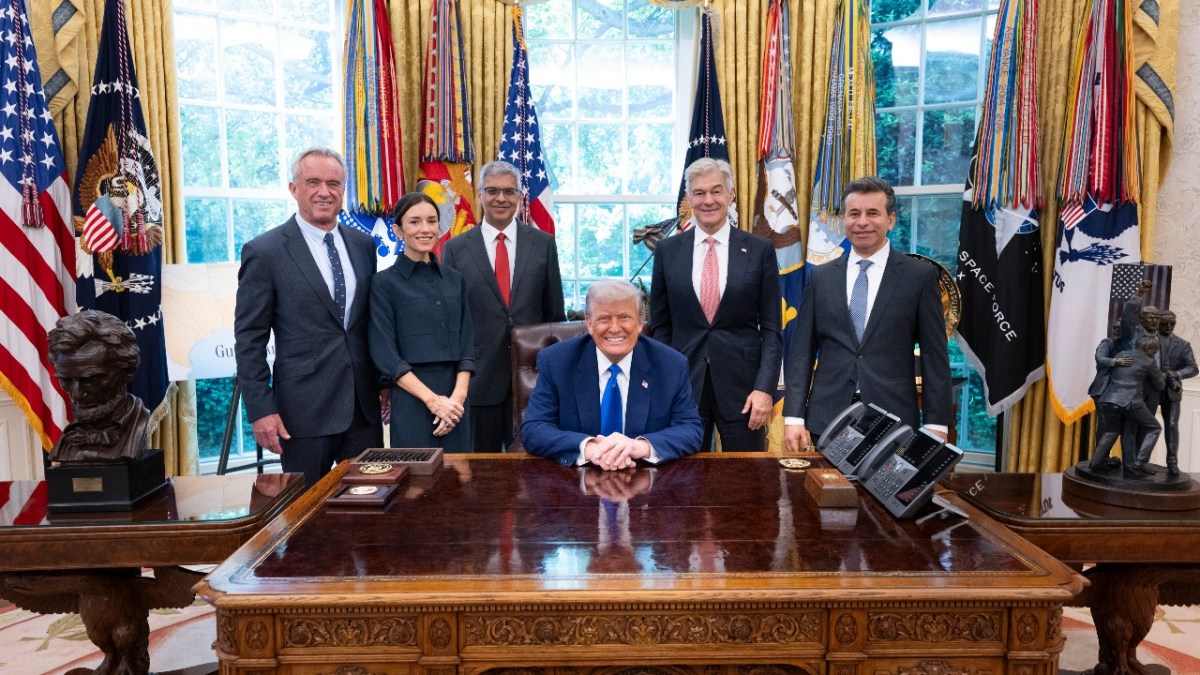

Federal officials have started work on a new executive order that could tighten President Trump’s hold over billions of dollars in National Institutes of Health research grants. The plan was discussed during a tense White House meeting on Friday.
People familiar with the effort said the order would establish an outside committee that could block awards across the country’s large biomedical research portfolio if those awards do not align with Mr. Trump’s political agenda.
The Washington Post first reported that the meeting took place. The Office of Management and Budget is writing the order and declined to comment. N.I.H. spokesman Joshua Pradko also declined to describe what happened in the session.
OMB director and NIH chief collide over political review of science grants
“N.I.H. remains committed to its mission of funding biomedical research to benefit the health of the American people,” Mr. Pradko said in a text message, according to The New York Times. Referring to reports that Russell T. Vought, director of the O.M.B., wants to rescind N.I.H. funding, Mr. Pradko added, “There will be no rescissions to N.I.H. grant monies. All N.I.H. grant monies will be spent.”
The order, if issued, would represent another move by the Trump administration to place political review above how the N.I.H. selects projects. The agency has a $48 billion budget and sends most of it to laboratories across the country for studies on heart disease, cancer, and infectious diseases.
For years, the N.I.H. has picked grants through expert review of scientific merit. In his second term, Mr. Trump has used a string of directives to pull that process under political review. He has argued in part that the government has been paying for “woke” liberal priorities.
The Friday session brought months of strain into the open between two people in the room: Mr. Vought of the O.M.B., who wants tighter political control over N.I.H. grant approvals, and N.I.H. Director Dr. Jay Bhattacharya, who has pushed back, according to two people close to Dr. Bhattacharya.
The people said the relationship had grown so strained that Mr. Vought had refused to meet with Dr. Bhattacharya. At Friday’s meeting, Mr. Vought accused the N.I.H. director of backing projects that clashed with administration priorities, including research tied to diversity and equity.
On his first day back in office, Mr. Trump signed an executive order ending all administration programs involving “diversity, equity and inclusion.” That order has had wide effects on N.I.H. work, including studies of “health disparities” that look at why people of certain races and ethnicities may face a higher risk of some diseases or worse outcomes.
Dr. Bhattacharya, a former Stanford University economist, has conducted research on health disparities and has sought to maintain N.I.H. funding for similar studies. In 2011, he and colleagues reported on “persistent racial disparities in survival after heart transplantation.” That N.I.H.-funded study found that Black heart-transplant patients faced a higher risk of death than similar white patients.
As N.I.H. director, Dr. Bhattacharya has also backed ending funding for work he sees as low-quality or ideologically driven. Early in his tenure, in a short talk with reporters, he said the cancellations were aimed at “politicized expressions of devotion to a particular ideology” as opposed to “good science.”
Mr. Vought also asked on Friday for access to funds from the current fiscal year that have not yet been spent, but he did not receive it. The administration has pursued similar funding leverage elsewhere, such as when it threatened to cut federal support for the Smithsonian over alleged ideological activism.
The core dispute appears to be a difference in approach: Mr. Vought wants to reduce federal research spending, while Dr. Bhattacharya does not. Congress also rejected Mr. Trump’s plan last year to cut biomedical research spending.
Dr. Bhattacharya opposes giving political appointees the last word on all federal spending, including health and science research. Earlier this year, a proposed rule would have built political review into the full federal grant process and called for “ending government sponsorship of gender ideology and other radical doctrines,” including diversity, equity, and inclusion projects.
Scientists and medical researchers widely denounced the plan, and lawmakers from both parties in Congress blocked the White House from moving ahead.
The White House has also issued several executive orders to halt research that conflicts with the administration’s priorities. Thousands of grants were ended for that reason. Before Friday’s meeting, the administration already faced multiple lawsuits challenging those steps.
Last week, the American Civil Liberties Union filed a class-action lawsuit in a California district court on behalf of scientists who allege that the N.I.H. was unconstitutionally censoring scientific research.
The case covers researchers working on health disparities, Alzheimer’s disease, and sexual harassment, among other topics. It argues that the agency’s existing screens for political priorities violate scientists’ free-speech rights.
“What the First Amendment does not allow is the government’s use of its funding power to target or silence the expression of disfavored viewpoints within the biomedical research community,” the lawsuit said.






Published: Sep 21, 2026 09:00 am