




A 29-year-old tourist from Kansas died after being struck by lightning on Mount Etna in Sicily, The Independent reported. Italian firefighters confirmed the incident occurred on Sunday evening, marking a tragic end to what was likely intended to be a memorable hike.
The man was hiking in an area that had been strictly closed to visitors due to ongoing volcanic activity. He was positioned in an exposed section above the tree line when the lightning strike hit. Emergency responders managed to reach him by helicopter, but medical personnel ultimately declared him dead. Authorities have not yet released his identity, as they are currently in the process of notifying his next of kin.
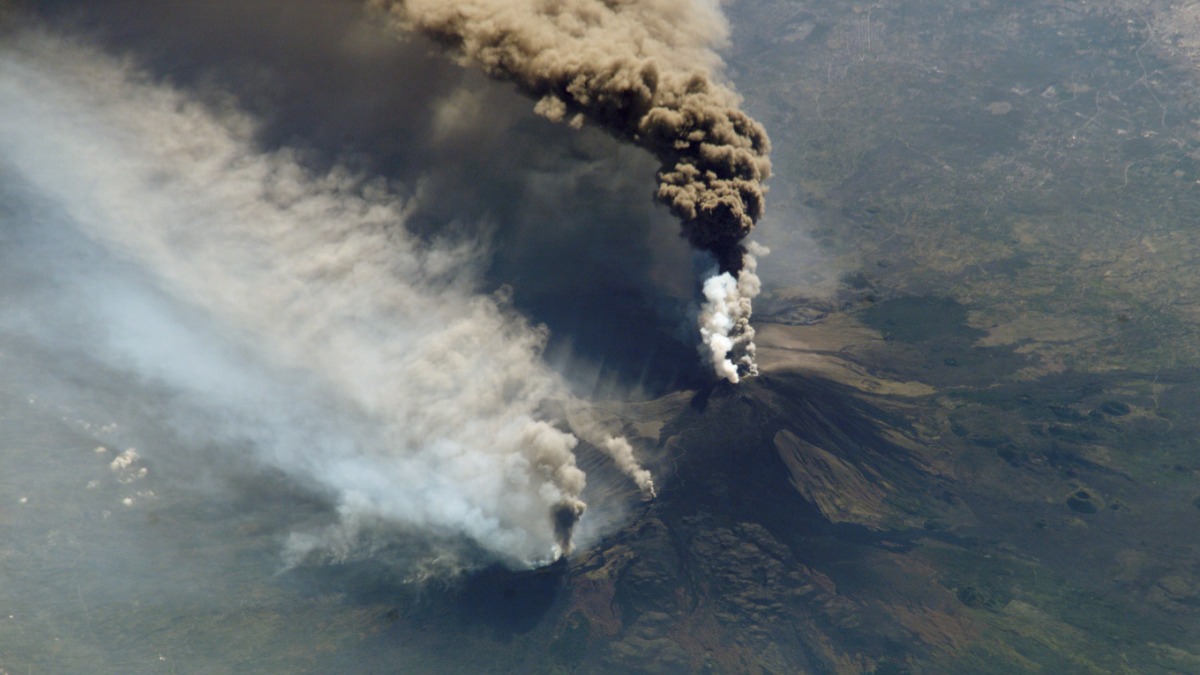
Mount Etna’s currently persistent volcanic activity has caused significant issues in the region lately. This unrest has been particularly unusual because of the constant ash emissions. These emissions have caused major problems for the nearby Catania airport. The airport was forced to close for most of last week, which is the longest emergency closure since 2002. It is a massive disruption considering the airport is the fifth-busiest hub in Italy. Nearly 2,000 flights were either canceled or rerouted during this period.
Mount Etna has been dealing with persistent volcanic activity
Boris Behncke, a researcher at the National Institute of Geophysics and Volcanology’s Etna Observatory, explained why the situation is so serious for aviation. He said, “Volcanic ash can be a great risk for aircraft.” He added, “It can be sucked into the motors, and force them to stall. This is why everyone is so very cautious with aircraft when there is a volcanic ash emission.”
The persistence of these emissions sets this event apart from other recent activity on the volcano. Regarding the nature of the current unrest, Behncke noted, “There have been many shorter interruptions — and stronger eruptions — over the past few decades, but this event is different because the ash emission from Etna’s summit has been much more persistent.” The ash has even reached as far as Malta and northern Africa, carried by northerly winds.
While the volcanic activity itself has been the primary focus for local authorities and the aviation industry, it is worth noting that lightning is a very real threat on the mountain. Officials pointed out that lightning strikes have actually caused more fatalities on Etna over the last few decades than the volcano’s eruptive activity. It has been nearly 40 years since the last time someone died due to an eruption on the mountain, with that event taking place in 1987.
Catania airport did resume normal flight operations on Saturday after the volcanic alert was downgraded. However, the tragedy on the slopes serves as a somber warning for anyone planning to visit active natural sites. You should always check local warnings and stay clear of restricted zones, even if you think you have found a perfect trail. The risks are there for a reason, and it is always better to be safe than sorry when you are exploring such a volatile environment.









Published: Aug 17, 2026 04:00 pm