



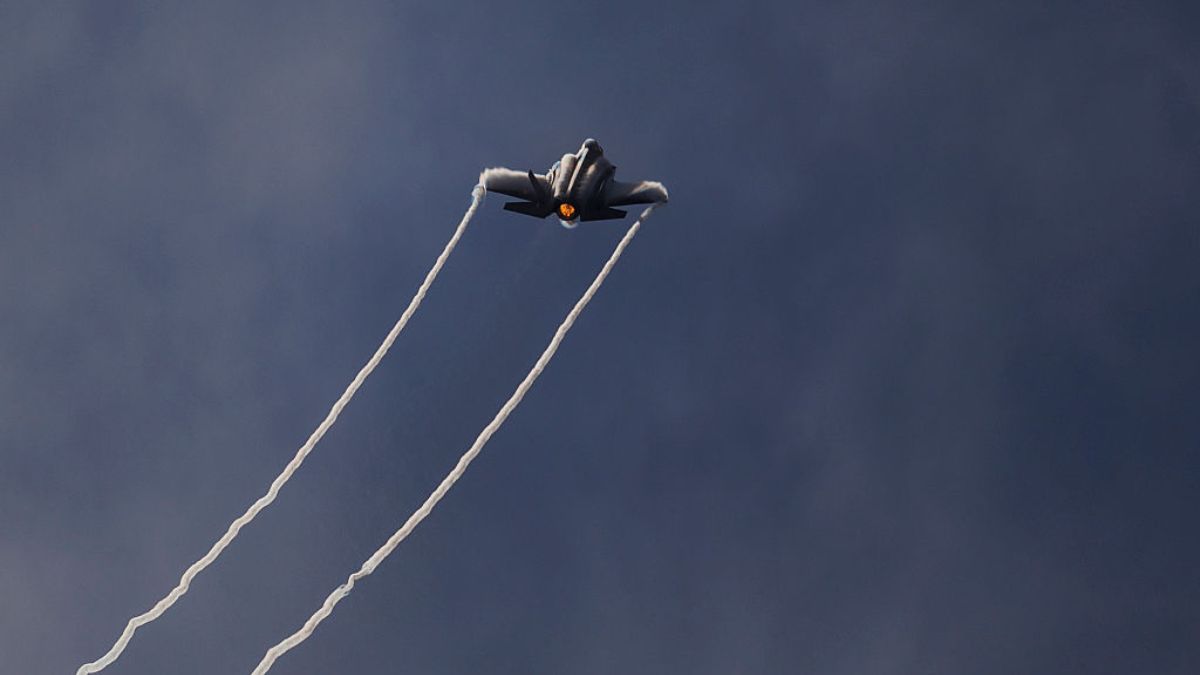

The United States is prepared to change its long-standing defense agreement with Canada if the country reduces its planned purchase of 88 advanced F-35 fighter jets. U.S. Ambassador to Canada Pete Hoekstra issued a strong warning that if Canada doesn’t follow through with the deal, the U.S. will have to increase its own military presence in Canadian airspace to cover security gaps.
According to The Independent, Ambassador Hoekstra made it clear that any change in Canada’s aircraft fleet would require a complete overhaul of the North American Aerospace Defense Command, or NORAD, which has managed shared defense since the Cold War. Right now, NORAD allows both the U.S. and Canada to fly into each other’s airspace to track and stop threats.
If Canada buys fewer jets, Hoekstra said the U.S. might need to purchase more F-35s for itself and fly more often in Canadian airspace. This would require new terms for the agreement. The ambassador’s main concern is about how well different military equipment works together.
The F-35 debate highlights growing tensions over defense spending and job creation
He didn’t hold back when talking about the alternative fighter Canada is considering, calling it an “inferior product.” If Canada chooses the Saab Gripen E jets from Sweden instead, Hoekstra warned the U.S. would have to completely rethink its security relationship with Canada.
“If they decide they’re going with an inferior product that is not as interchangeable, interoperable as what the F-35 is, that changes our defense capability,” Hoekstra stated. “And as such, we have to figure out how we’re going to replace that.”
Canada’s review of the F-35 deal comes from major cost concerns. In 2022, the Canadian government agreed to buy 88 Lockheed Martin F-35A jets, initially funding 16 units. However, the program has faced manufacturing delays and huge cost increases.
An audit in 2025 showed the total program price had jumped to $27.7 billion, far higher than the original $19 billion commitment. This follows Canada’s major trade shift with China that has already reshaped economic relationships.
Because of these financial problems, Canadian officials are now looking at other options, including the Saab Gripen E. The Swedish manufacturer has offered to build the jets inside Canada, which would create around 12,600 jobs across the country.
Canadian Prime Minister Mark Carney started the review of the jet contract because of budget issues. Mélanie Joly, the Minister of Industry, confirmed that Canada is trying to balance security needs with job creation.
She noted that while they “can’t control President Trump,” they can control their own defense spending, including who gets the contracts and how they create jobs at home. The tensions echo Trump’s sharp warning to Carney delivered at Davos earlier. Ambassador Hoekstra’s warning shows how the U.S. is using national security pressure to push allies toward American contracts.







Published: Jan 27, 2026 02:15 pm