



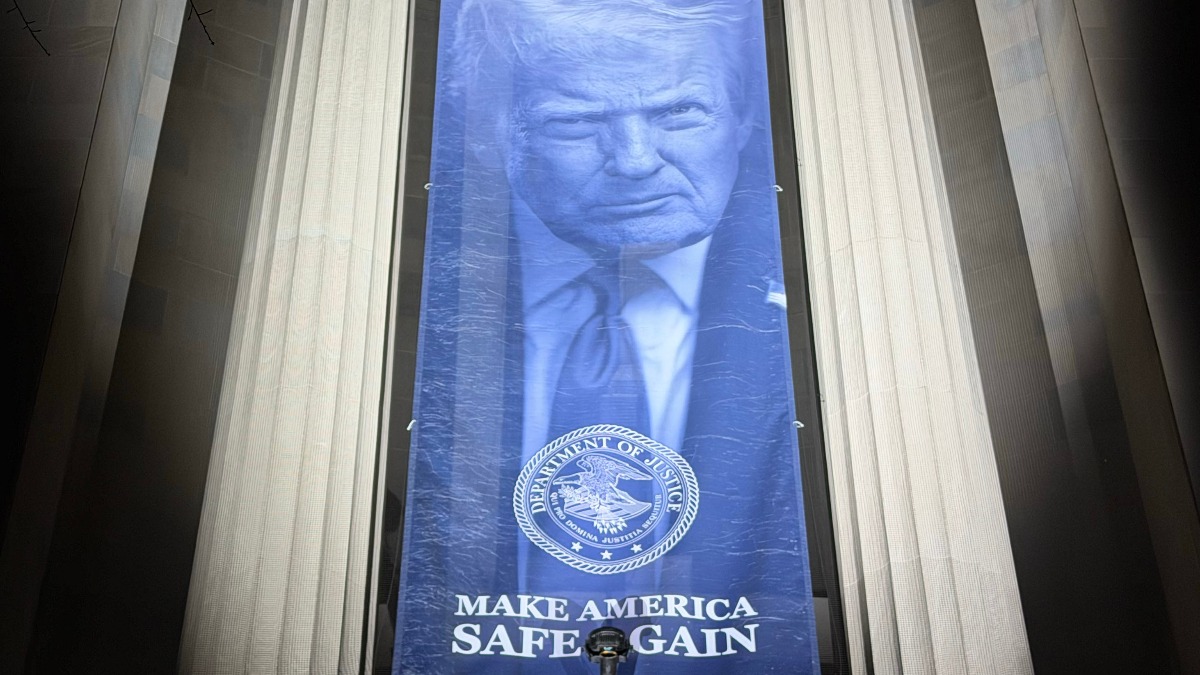

According to a legal expert, President Donald Trump is pushing to establish personal ownership over his presidential records, a move that could create a permanent barrier against future investigations. The effort aims to limit the reach of subpoenas relating to his time in the White House, which could give him the power to determine which documents remain accessible and which do not.
The push relies on a Justice Department opinion released in April that labeled the Presidential Records Act of 1978 as unconstitutional. The opinion, authored by a Trump loyalist within the Office of Legal Counsel, argues that the existing law interferes with the constitutional independence of the executive branch.
According to Raw Story, if this legal interpretation holds, it would effectively dismantle the safeguards put in place after Watergate to prevent presidents from controlling or destroying records of their official conduct.
Trump’s record ownership push can block public and legal access to White House documents
The administration’s effort has already faced resistance in the courts. Judge John D. Bates of the U.S. District Court for the District of Columbia issued a ruling in May rejecting the administration’s position. In the opening of his decision, Judge Bates quoted George Orwell’s “1984,” writing, “Who controls the past controls the future: who controls the present controls the past.” The White House has indicated it intends to appeal the ruling.
Jason R. Baron, a former director of litigation at the National Archives, told the New York Times that the stakes go well beyond what ends up displayed in a presidential library. Baron said that if Trump prevails, he could assert personal property rights to block any future investigation seeking access to his records.
“There is no guarantee that those records will ever be made accessible to the public,” Baron warned. The roots of this conflict go back to Trump’s first term, when the National Archives requested records that had been moved to Mar-a-Lago, an action that eventually led to a federal indictment on classified documents charges.
Since winning the 2024 election, Trump has moved to reshape the agencies that previously challenged him on records issues. He fired the nation’s chief archivist and appointed Secretary of State Marco Rubio to oversee the National Archives. Separately, leaked government documents suggest federal agencies have been tracking and targeting critics of emerging technologies, raising broader concerns about government oversight and transparency.
Rubio subsequently delegated operational control of the Archives to a 33-year-old former executive from the Nixon Foundation. The structural changes to the agency reflect the administration’s broader effort to consolidate control over how presidential records are managed and preserved.
The Presidential Records Act was originally enacted in 1978 to ensure that presidential records remained public property, specifically in response to Richard Nixon’s efforts to retain control over the Watergate tapes. By challenging the constitutionality of this law, the current administration is seeking to overturn protections that have governed presidential record-keeping for nearly five decades.
Critics have also raised concerns about how courts have handled voting rights data in recent rulings, as part of a wider debate about institutional accountability. With the White House planning to appeal Judge Bates’ ruling, the legal battle over the ownership and accessibility of presidential records is ongoing. The final outcome of the appeals process will likely determine how accessible presidential documents remain to the public and to investigators going forward.







Published: Jun 1, 2026 08:30 am