



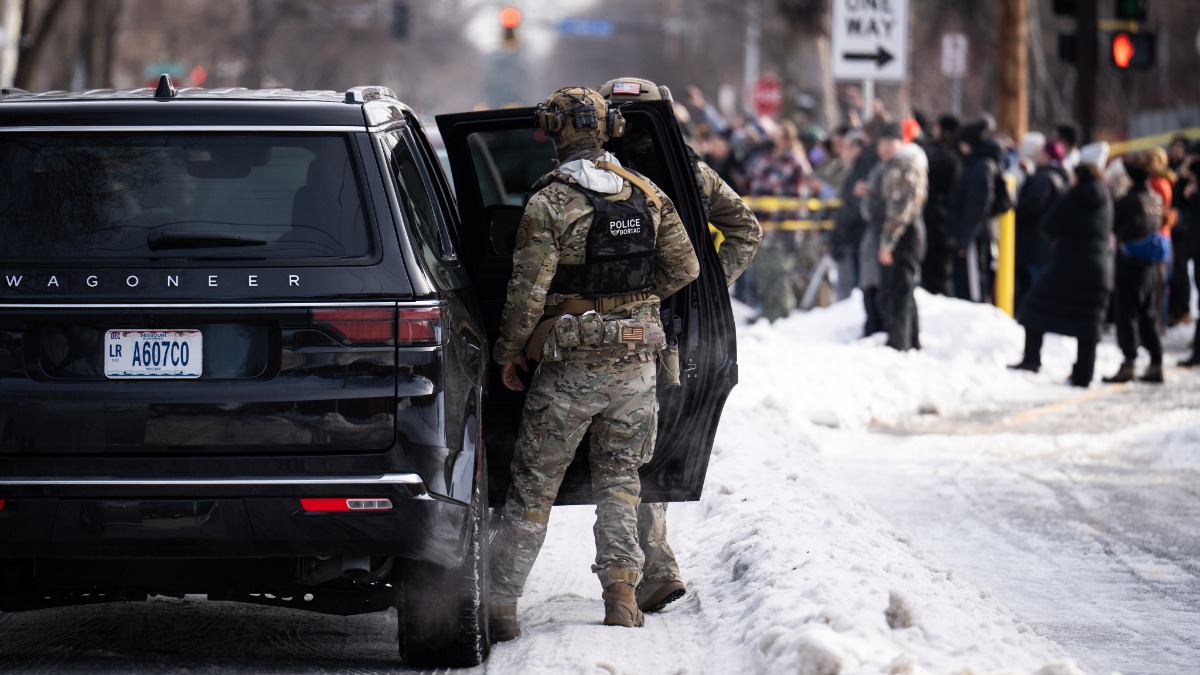

Minnesota authorities are now investigating the January ICE detention of a US citizen as a potential kidnapping, burglary, and false imprisonment, as reported by The Guardian, and the situation is escalating into a major legal showdown. ChongLy “Scott” Thao, a 56-year-old Hmong American and naturalized citizen, was dragged from his St. Paul home in sub-freezing temperatures while wearing only underwear and a blanket, all without a warrant, according to his family.
Now, Ramsey County officials are demanding answers from the Department of Homeland Security (DHS) after it allegedly ignored their request for details about the incident, with a grand jury potentially convening as early as May. The arrest happened during Operation Metro Surge, a federal crackdown in Minneapolis and St. Paul that has drawn intense criticism for its aggressive tactics.
Thao’s case became a flashpoint after videos surfaced showing masked ICE agents breaking down his door, pointing guns at his family, and hauling him into the street while neighbors blew whistles and screamed at the officers to leave. Thao told reporters he was then driven “to the middle of nowhere,” forced out of the car in frigid weather for photographs, and only released nearly two hours later after agents realized their mistake. The entire ordeal left him shaken, and he’s since said he no longer feels safe in his own home.
At a press conference, Ramsey County Attorney John Choi and Sheriff Bob Fletcher made it clear they’re treating this as a serious legal matter, and not just a political dispute
Fletcher pointed out the obvious: “There’s no dispute that he was taken out of his house, forcibly taken out of his home and driven around. Is that good law enforcement, to take an American citizen out of their home and drive them around aimlessly, trying to determine what they can tell them?”
DHS, however, is pushing back hard. In a statement, the agency denied any wrongdoing, calling the investigation a “political stunt to demonize ICE law enforcement.” They claimed their agents were executing a warrant tied to two convicted sex offenders who they believed had ties to Thao’s property. According to DHS, Thao was present during the operation but refused to be fingerprinted or identified, which is why he was detained.
The agency also insisted that holding individuals during a raid is standard protocol for safety reasons. But Thao’s family has vehemently disputed this version of events, calling the DHS account “false and misleading.” Thao himself has said he never saw the two individuals ICE was allegedly looking for, and that they didn’t live with him. His family also pointed out that neither he, his son, nor the property owner are listed on Minnesota’s sex offender registry.
The fallout from Thao’s arrest isn’t happening in a vacuum. It’s part of a broader pattern of tension between federal immigration agents and Minnesota communities, especially after the fatal shootings of anti-ICE protesters Renee Good and Alex Pretti earlier this year.
Hennepin County, which includes Minneapolis, has already sued the Trump administration to access evidence related to those shootings, arguing they need it to conduct independent investigations. Meanwhile, newly released footage from another January incident involving federal agents has raised doubts about the official narrative surrounding the deaths of two Venezuelans, further fueling distrust.
The legal battle over jurisdiction is heating up, too. The Trump administration has argued that local authorities don’t have the power to investigate federal officers, claiming they’re protected from prosecution. But Ramsey County Sheriff Bob Fletcher dismissed that idea outright. “There is no such thing as absolute immunity for federal agents,” he said. “There’s qualified immunity for all law enforcement in a lot of different capacities. But seizing a person out of their home who’s an American citizen, they’re not immune from that.”
Thao’s case has also reignited concerns about the broader treatment of detainees in ICE custody. Since the start of the current administration, the number of deaths in ICE facilities has climbed toward 50, with at least 15 reported in 2026 alone.
Just this month, a 49-year-old Mexican migrant, Alejandro Cabrera Clemente, was found unresponsive at the Winn Correctional Center in Louisiana, marking the 47th death during this term. Another detainee, José Guadalupe Ramos, died in March after being found unconscious at the Adelanto ICE detention center in California. These incidents, combined with Thao’s high-profile detention, are painting a troubling picture of how immigration enforcement is being carried out.








Published: Apr 15, 2026 09:15 am