



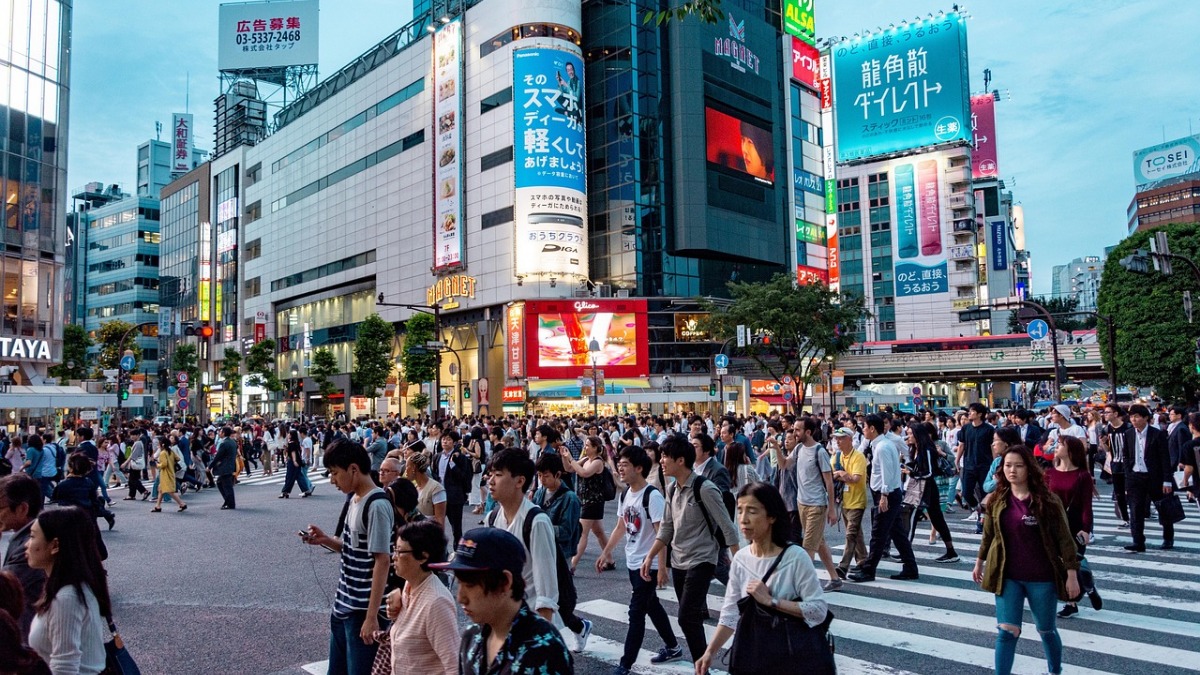

An investigation is underway in Tokyo, Japan, after 25 people were rushed to hospital on May 25 following an incident at a bustling shopping complex in the city’s upscale Ginza district. As detailed by LADbible, chaos broke out when a man allegedly sprayed an unknown substance near a bank ATM on the ground floor of a mall adjacent to a luxury department store. Japanese fire department officials confirmed that more than 20 people quickly developed sore throats after the incident.
Nippon TV obtained footage showing dozens of emergency responders at the scene, with at least one person in a hazmat suit appearing to wipe a stain from a wall. Others in hazmat suits were seen entering the mall. The Tokyo Fire Department reported that 26 individuals complained of suddenly developing throat pain and feeling unwell near the Ginza Six shopping complex, adding that all but one were taken to hospital.
The Yomiuri newspaper reported that police found traces of pepper spray on the wall in Ginza. Other reports suggest the substance was an irritant spray, with authorities identifying capsaicin, the chemical found in chili peppers, as a likely component. Public broadcaster NHK stated that police are still searching for the suspect.
What witnesses described at the Ginza Six mall
Yuzo Tsuda, a 78-year-old man, told The Associated Press that he was walking toward the shopping center after lunch when he noticed the commotion and suddenly felt a sharp pain in his throat. He could not stop coughing, though the ache subsided about an hour later. A 70-year-old woman at the mall told AFP that her throat began stinging as she walked near the ATM. “By the time I arrived, the commotion had already started,” she said. “Once I went into the ATM corner, my throat felt scratchy, almost numb.” Officials reassured the public that those taken to hospital are believed to have mild symptoms, with NHK adding that injuries appeared light.
Emergency workers hung sheets of tarp around a section of the shopping center as a precautionary measure, and surrounding roads were temporarily closed. Dozens of fire engines and ambulances were parked outside the Ginza Six complex. Despite the road blockages, shoppers could still access the building through side entrances. Amid a fatal shooting near the White House that same weekend, the Tokyo incident added to a series of public safety events drawing international attention.
Pepper spray is classified as a lacrimator, meaning it stimulates the eyes to produce tears. Its main active component is oleoresin capsicum, derived from plants in the Capsicum genus, and it contains far higher concentrations of capsaicin than any food-grade chili pepper. For context, a jalapeño measures around 2,500 to 5,000 Scoville heat units (SHU), while the pepper spray used by law enforcement can reach up to 5.3 million SHU.
When pepper spray contacts the eyes, it causes immediate closure, acute pain, and temporary blindness. Beyond the eyes, it can trigger a dry cough, shortness of breath, a burning throat, a runny nose, gasping, dizziness, and in some cases loss of consciousness. Skin contact can result in rashes, blisters, or burns, and corneal abrasions have been reported from rubbing affected eyes.
Symptoms are typically self-limiting and usually resolve within 30 minutes without medical treatment. However, individuals with pre-existing lung conditions such as asthma or chronic obstructive pulmonary disease may experience more severe breathing complications. In rare cases involving large amounts of spray in an enclosed space, serious complications affecting the eyes, skin, and respiratory tract are possible, including glaucoma, eye scarring, and respiratory failure.
The use of pepper spray in crowd control has long drawn scrutiny from human rights organizations. Amnesty International raised concerns during the 2020 Black Lives Matter protests, documenting instances where law enforcement allegedly used pepper spray as a first-resort tactic against peaceful demonstrators. A Harvard University study also found that police in the US are more likely to deploy pepper spray against Black individuals than white individuals. Amid ongoing scrutiny of security responses, including an IRGC-linked assassination plot uncovered the same week, discussions around the use of force and public safety have been front of mind internationally. A 2017 review concluded that while pepper spray may have limited utility in crowd control, there is significant potential for misuse leading to unnecessary harm.
Violent crime in Japan is relatively rare, with the country maintaining a low murder rate and some of the world’s strictest gun laws. Both fire department and police officials have confirmed the investigation into the Tokyo incident is ongoing.






Published: May 25, 2026 06:15 pm