




The battle over the future of prediction markets just reached a boiling point. On Tuesday, the Trump administration officially sued the state of Minnesota, arguing that a newly signed law meant to ban these platforms is a direct violation of federal authority, The Hill reported.
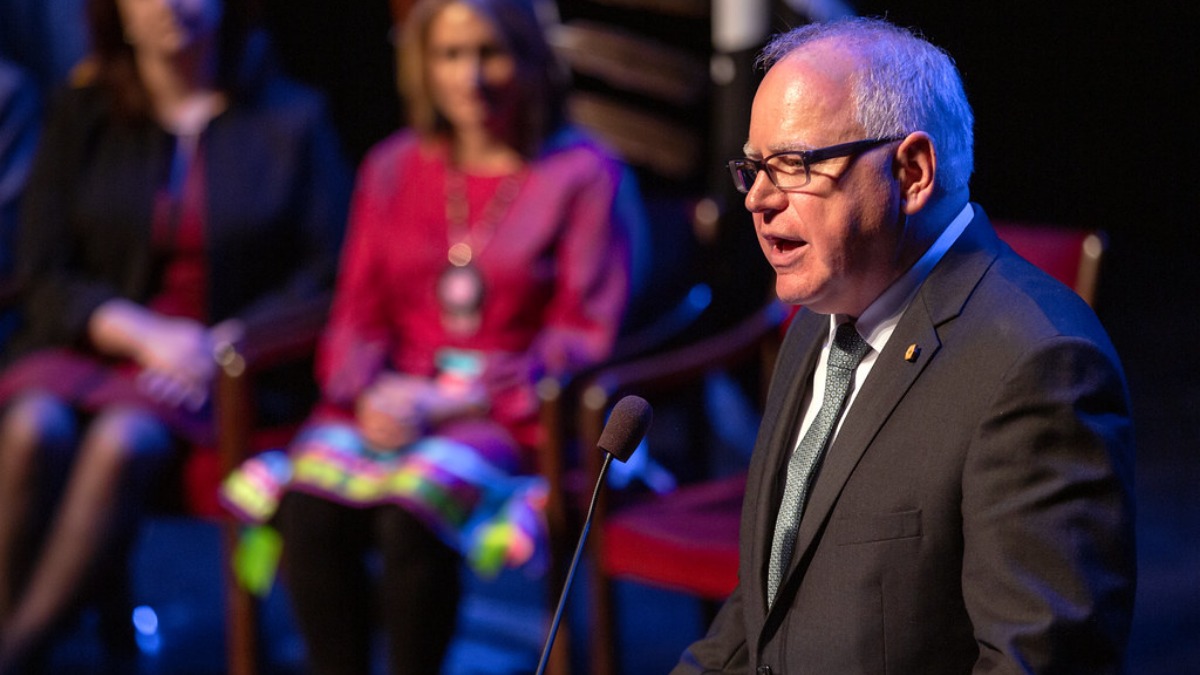
Minnesota Governor Tim Walz signed the bill earlier this week, and it’s scheduled to take effect on August 1. Under this new legislation, operating or even advertising a prediction market within the state becomes a felony. This move doesn’t just target the platforms themselves but also opens the door for prosecuting anyone providing supportive services or data to these companies. This could reach as far as news organizations, financial institutions, and professional sports leagues that provide the real-time data these markets depend on to function.
The Justice Department isn’t pulling any punches in its filing. “Minnesota’s attempt to criminalize derivatives contracts is precisely what Congress sought to prevent,” the Justice Department wrote in the lawsuit. They further argued that the law creates an impossible situation for these companies, stating, “If Minnesota’s law is permitted to go into effect, the exchanges that offer these longstanding contracts—as well as those who partner with them—can be prosecuted as felons,” and that “This flagrant and unprecedented incursion into the Commission’s exclusive regulatory sphere must be preliminarily and permanently enjoined.”
This legal showdown is essentially a tug-of-war between state-level regulations and federal oversight, with the fate of popular platforms like Kalshi and Polymarket hanging in the balance
At the heart of the conflict is the Commodity Exchange Act, which was originally put in place during the Great Depression. The Trump administration contends that this act grants the Commodities Futures Trading Commission (CFTC) exclusive authority over these types of markets. The federal government views Minnesota’s new statute as a “massive short-circuiting” of the CFTC’s role.
CFTC Chairman Michael Selig has been very vocal about this, stating, “This Minnesota law turns lawful operators and participants in prediction markets into felons overnight.” He added, “Minnesota farmers have relied on critical hedging products on weather and crop-related events for decades to mitigate their risks. Governor Walz chose to put special interests first and American farmers and innovators last.”
The industry itself is pushing back hard. Elisabeth Diana, a spokeswoman for Kalshi, didn’t mince words, saying, “Minnesota banning prediction markets is like trying to ban the New York Stock Exchange,” and noting that “this actively harms users because it reduces competition and drives activity offshore.” A spokesperson for Polymarket also weighed in, claiming the ban runs counter to the established federal framework for these services.
On the other side, state officials are standing their ground. Minnesota Attorney General Keith Ellison expressed his concerns clearly: “I’m very concerned about the harms of prediction markets on Minnesotans.” He continued, “Prediction markets are designed to be addictive and prey especially on young people and low-income folks. They help the ultra-rich get richer and the rest of us get poorer. My office and I are reviewing this lawsuit and will respond in court.” Minnesota Representative Emma Greenman, who introduced the measure, echoed this sentiment, stating, “We as a state should decide how best and what regulations we think should attach to gambling, to protect public safety, to protect our kids.”
This isn’t an isolated incident. The CFTC has already been busy filing federal lawsuits against Arizona, Connecticut, Illinois, New York, and Wisconsin to block similar state efforts. With trading volume on these platforms hitting billions of dollars per month, the pressure is mounting. While some states are trying to use their own laws to limit the reach of these markets, the CFTC maintains that it has exclusive jurisdiction. The legal landscape is getting incredibly messy, with over 20 lawsuits already triggered by the uncertainty of who actually holds the keys to regulation.
The case has been assigned to U.S. District Judge Laura Provinzino, who serves in St. Paul, Minnesota. As the August 1 start date approaches, the industry is watching closely. Experts like Melinda Roth, a professor at the Washington and Lee University School of Law, suggest that the rapid growth of these sites makes them difficult to stop.
“The states are using any tactic they can to go after the prediction market companies,” Roth said. “But they’ve embarked on a too big to fail strategy and have become quite mainstream. It will be hard to put that genie back in the bottle.”








Published: May 20, 2026 05:30 pm