



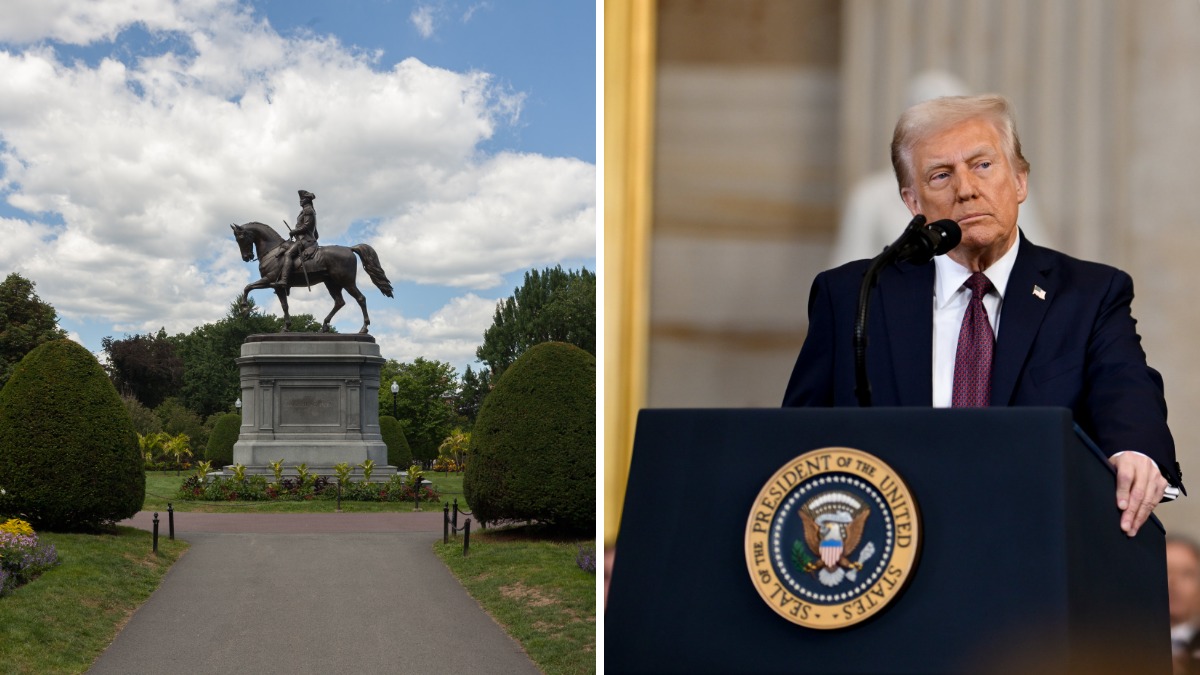

The Trump administration replaced an exhibit on slavery at the site of George Washington’s home in Philadelphia this Wednesday, NBC News reported. The change occurred at the location where the Declaration of Independence was adopted on July 4, 1776. This move is part of a broader push by the administration to shift how national historic sites present American history.
Philadelphia Mayor Cherelle L. Parker criticized the timing and the manner of the installation. “Overnight, under the cover of darkness, the federal government removed panels at the President’s House that told a thorough history of Philadelphia,” Parker said. She added, “It was allowed to do this by the decision of the federal court, but that it did so at night shows it understands this action is shameful, that it violates community trust.”
The original panels, installed in 2010, focused on the lives of nine enslaved people who lived with George and Martha Washington during the 1790s when Philadelphia served as the nation’s capital. The administration first attempted to replace these panels earlier this year, but a lower court blocked the effort in February. That changed on July 3, when a three-judge panel of the 3rd U.S. Circuit of Appeals ruled that the work could proceed. The appellate judges described the new plans as being full of historical context.
This project aligns with an executive order President Donald Trump issued in 2025
The directive mandates that federally controlled historic sites avoid displaying information that might disparage Americans past or living. Instead, the order emphasizes focusing on the greatness of the achievements and progress of the American people. This approach has sparked significant debate regarding the potential sanitization of darker chapters in the nation’s history.
The Interior Department maintains that the new installation remains educational. In a statement provided on Wednesday, the department noted that the “panels are full of historical context and highlight the momentous events that took place in the President’s House and the other sites at Independence National Historical Park.” The department also stated, “They acknowledge the evils of slavery, including its injustices and hypocrisies, and, by telling the stories of the nine slaves that Washington kept in the President’s House, remind us of their essential humanity.”
While a government website indicates the new panels still mention enslaved people, the abolitionist movement, and the end of slavery in Pennsylvania, critics point to what is missing. The replacement panels omit certain details found in the previous version, such as a timeline on slavery and a map of slave trade routes. They also exclude specific critical headlines like “The Dirty Business of Slavery.”
President Donald Trump has pursued similar changes elsewhere. In March, he announced plans to target programs at the Smithsonian Institution that he claimed advanced divisive narratives and improper ideology. He has also pressured universities and other organizations to eliminate practices he deems discriminatory.
Legal battles over the site continue. The city of Philadelphia argued that the federal government was required to consult with local officials before modifying the President’s House site. Justice Department lawyers countered that the administration maintains sole authority over the narratives presented at National Park Service properties.
Mayor Parker stated that the city plans to seek a rehearing on the legal issues involved. Michael Coard, an attorney and founder of the Avenging The Ancestors Coalition, suggested that these actions set a concerning precedent for other historical landmarks.
“What if there’s a president next time who doesn’t like the Liberty Bell because the Liberty Bell was used by abolitionists to support the end of slavery?” he said. “What if there’s a president who doesn’t like the Statue of Liberty because too many immigrants come in? Do we remove the Statue of Liberty?”







Published: Jul 16, 2026 04:30 pm